

News • Mitosis profiling
AI tool helps grade cancer based on cell divisions
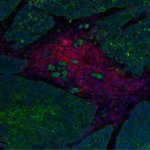
Ahead of World Cancer Day on 4 February, scientists are revealing a cutting-edge artificial intelligence (AI) tool designed to help grade cancer, by analysing cell division.

Ahead of World Cancer Day on 4 February, scientists are revealing a cutting-edge artificial intelligence (AI) tool designed to help grade cancer, by analysing cell division.

AI technology holds promise for personalised cancer therapies. However, rigid and slow approval requirements impede its introduction, say experts – and point out how this might be changed.

On the occasion of World Cancer Day on February 4, the Union for International Cancer Control points out persisting care gaps across Europe due to disparities in income, education and other factors.

Researchers in Japan and the US have developed technology to robustly augment the amount of MHC class I molecules in cancer cells. This makes them easier to find and destroy for the immune system.

Digital pathology brings benefits for sample management and optimisation, lets pathologists work on samples remotely: The UK Government has now approved the use of the technique for cancer samples.

Academic labs and biotech firms pioneer multi-cancer early detection with emerging technologies. Screening for multiple cancers with a simple blood or urinary draw could be a game-changer. Two research teams in particular have advanced the field.

Chemotherapy against cancer can lead to the generation of senescent tumour cells, which can help the tumour survive. A new immunotherapy approach to eliminate these cells shows promise in animal models.

A simple blood test could help diagnose patients with glioblastoma, the deadliest form of brain cancer, sparing them from undergoing invasive and highly-risky surgery, report UK researchers.

Using a unique new technique, US researchers hope to offer a safer and more effective alternative to current cancer treatments, reporting promising first results in mice.

Men with gynaecomastia (non-weight-related enlarged breast tissue) may be at heightened risk of an early death before the age of 75, suggests the first study of its kind.

New research demonstrates how tiny nanomachines could greatly reduce bladder cancer by precisely targeting the tumour and attacking it with a radioisotope carried on their surface.

An Italian research team has introduced a new MRI-based method for assessing water water exchange to estimate the degree of malignancy and the success of treatments in tumors.

A research team has successfully developed “NK cell-engaging nanodrones” capable of selectively targeting and eliminating cancer cells, offering a potential solution for intractable cancer types.

Researchers and clinicians at Washington University in St. Louis found a way to improve diagnostic accuracy of potentially cancerous lesions in the ovaries and adnexal regions, or the fallopian tubes.

In a new study, UCLA researchers demonstrated how small cell neuroendocrine prostate cancer tumor cells can arise from less aggressive prostate tumors.

Research from Shenzhen proposes an integrated diagnosis model for automatic classification of adult-type diffuse gliomas directly from annotation-free standard whole-slide pathological images.

New research suggests a new approach to precision radiotherapy can reduce the risk of swallowing problems for patients, without impacting the success of treatment.

New tissue-equivalent materials developed at the University of Surrey could pave the way for a new generation of flexible X-ray detectors, with potential applications in cancer treatment.

A multinational study confirms a strong and clear association between exposure to radiation from CT scans in young people and an increased risk of blood cancers.

Pancreatic cancer is not just one disease, but that’s the way it is currently treated. New work from Columbia University could help pave the way for a change.

Diagnosing early-stage lung cancer with low-dose CT screening dramatically improves the long-term survival rate of cancer patients, a large-scale, 20-year international study shows.

In a new study, researchers from Fudan University have developed a novel urine-based prognostic model that promises to transform the management and treatment of bladder cancer.

Inspired by the enhanced visual system of butterflies, researchers have developed an imaging sensor to “see” into the UV range for differentiating between cancer and normal cells.

Bioethics researchers call on medical societies, government leaders, clinicians, and researchers to work together to ensure AI-driven healthcare preserves patient autonomy and respects human dignity.

A paper published in Trends in Cancer explains the advantages of RENACER, the world’s first repository of brain metastases live samples, created by researchers at CNIO.