



Photo:

Digital pathology

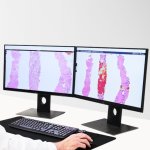
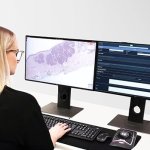
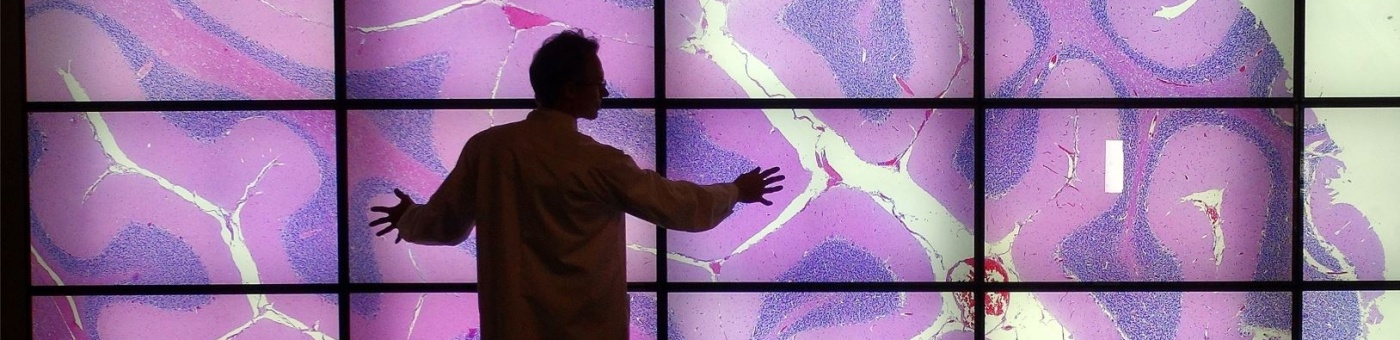
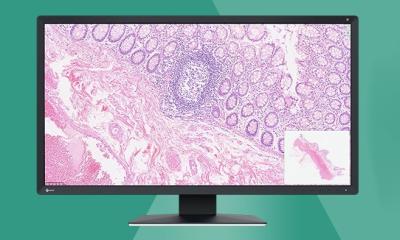
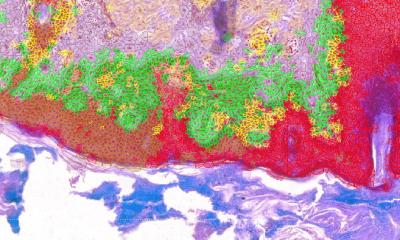
Step aside, glass slides: Digital pathology opens up a whole new world of possibilities in diagnosis, prognosis, and prediction of diseases, which is only furthered by the use of AI and Machine Learning. In our information channel, we have assembled some of the most exciting applications for digital pathology.

Photo

Article • Advancing kidney disease investigation

Digital spatial profiling: new ways for diagnostic histopathology

Digital spatial profiling (DSP) is emerging as a powerful technology in helping specialists investigate complex kidney disease, according to a leading expert. Professor Renate Kain believes spatial…

Photo

News • From slide preparation to imaging

New global partnership addresses digital pathology workflow

Sakura Finetek and Hamamatsu Photonics K.K. have announced a collaboration aimed at standardising slide preparation and digitisation to support diagnostic accuracy in pathology.


Photo

Article • Digital pathology and AI

Finding new biomarkers to match the biological complexity of cancer

Advances in artificial intelligence and multimodal data integration are poised to revolutionise cancer diagnostics – but significant challenges remain before these technologies can be routinely…

Photo

Article • From observation to action

The rise of agentic AI in pathology

Computational pathology is becoming increasingly important in helping deliver precision medicine to a wider range of patients. Experts at the 37th European Congress of Pathology in Vienna discussed…

Photo

Article • From H&E to multiplex

Self-learning AI: a boost for digital pathology

Self-learning artificial intelligence approaches are offering a number of advantages for digital pathology when compared to established AI options. The benefits, which range from greater speed and…

Photo

News • Predictive phenotypes

Ovarian cancer: new insights into immune landscapes

Defining four different immunologic subtypes of recurrent ovarian cancers, researchers pave the way for more personalized treatment.

Photo

Article • Digital pathology discussion panel

The AI tools pathologists want and need

The evolving role of AI tools in digital pathology was explored at an open discussion during the annual Digital Pathology and AI Congress in London with a high-level panel of practitioners looking at current and future technology options. The panel of pathologists, scientists and academics from Europe and the USA assessed the tools they currently use and are available to them, and those they…

Photo

Article • Point-of-care diagnostics

Improving women’s health in remote regions with digital pathology

Point-of-care diagnostics based on a combination of mobile-sized scanners and artificial intelligence (AI) are helping save the lives of women in low-resource settings. The AI technique is being applied in Kenya and Tanzania to deliver screening for cervical cancer – now the leading cause of cancer-related deaths in women in that region and a bigger cause of death than childbirth.

Photo

Article • Molecular meets digital

Single-cell multiplex imaging: a powerful tool for digital pathology

Multiplex imaging can play a critical role in unravelling the tumour microenvironment. The potential and benefits of the emerging approach – a way to extract information from human tissue samples by visualising many more biomarkers than traditional microscopy – was highlighted in presentations during the 36th European Congress of Pathology in Florence, Italy. Speakers also discussed novel…

Photo

Article • Transformative technology

Debating the case for AI in pathology

Artificial Intelligence (AI) remains a divisive topic within the discipline of pathology with a range of opinions over its current value and applicability in clinical settings. While most experts agree that the technology will not replace pathologists, it might still spell bad news for those who do not embrace AI in their daily practice. On the other hand, reservations persist about whether…

Photo

Article • Digital pathology

Cutting the time to therapy for breast cancer patients

Centralized review of slides combined with telepathology has opened up the potential for a dramatic reduction in the waiting times for breast cancer patients to start their therapy. Jan Hudecek from the Netherlands Cancer Institute outlined his team’s framework for multi-centre clinical trials with centralized digital pathology review at the 9th Digital Pathology and Artificial Intelligence…

50 show more articles
Subscribe to Newsletter