



Medical technology

Photo

Article • Vital sign monitoring

Multi-chip LEDs read disease risk through the skin

A compact LED module pairs UV-A, green and IR light with a matched photodiode to detect AGE autofluorescence — bringing biochemical risk screening to wearables and point of care testing.

Photo

News • Lung function analysis

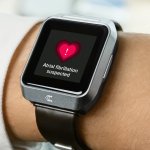
Wearable RFID tags can monitor breathing

RFID – the same wireless technology that can track pets or locate items – can also be used to measure breathing in patients with impaired lung function contactlessly – in hospital or at home.

Photo

News • Medical Equipment and Instruments Trade Fair

Register now for Salmed Connect 2026

Registration has officially opened for the International Trade Fair of Medical Equipment and Instruments Salmed Connect 2026, taking place on 19–20 May 2026 at the Poznań Congress Center.

Photo

News • Sexually transmitted infections

“Cervix-on-a-chip” to help discover new STI treatments

Scientists from the University of Maryland School of Medicine and colleagues create the first-ever immune-capable “Cervix-on-a-chip” to study sexually transmitted infections (STIs).

Photo

News • Ophthalmology

Portable AI-powered scanner to facilitate access to eye care

Researchers are developing a portable AI-powered scanning slit-light device, designed to make ophthalmic care more accessible, so patients can be assessed any place, and any time.

Photo

News • Medical computer models

Digital twin hearts succeed in arrhythmia trial

Working with “digital twins” of patients’ hearts, doctors improved cardiac ablation outcomes for patients with life-threatening arrythmias.

Photo

Article • ECR 2026 imagines the future of the field

Enhanced by AI, but guided by humans: Radiology’s vision for 2050

Diagnostic imaging without actual images, but with sleek and shiny scanners; no more radiology and pathology departments, but virtual patient models and AI-enhanced surgical precision: At this year's European Congress of Radiology (ECR) in Vienna, two leading experts envisioned 2050 as a radically different future of medicine – less Grey's Anatomy, more Star Trek. They made it clear…

Photo

News • Laboratory equipment and technology fair

Labs Expo 2026: Two Days of Practical Knowledge, Technology, and Expert Discussions for Laboratories

On March 18–19, 2026, Poznań will host the fourth edition of the Laboratory Equipment and Technology Trade Fair, Labs Expo – an event combining presentations of modern technological solutions with an intensive, content-rich conference program. This year’s agenda has been designed for practitioners, including laboratory managers, QC and R&D specialists, metrologists, auditors,…

Photo

Sponsored • Healthcare technology exhibition

Taiwan’s MedTech Ecosystem Draws Global Interest Ahead of Medical Taiwan 2026

As healthcare systems worldwide accelerate digital transformation, international buyers and healthcare providers are increasingly seeking reliable partners capable of delivering innovative medical technologies, integrated digital solutions, and resilient supply chains. In recent years, Taiwan has emerged as a key hub for medical technology development and manufacturing in Asia.

Photo

Article • The 2025 Kraft Prize for Excellence and Innovation in Community Health

Harnessing AI to serve the medically underserved

The Kraft Center for Community Health has launched a new prize to recognise organisations using technology to transform healthcare access for underserved populations. At the 2025 World Medical Innovation Forum in Boston, ThriveLink – an AI-powered telephonic enrolment platform – was announced as the inaugural winner, receiving US $100,000 to further its mission of connecting families to vital…

Photo

Article • Low-field imaging from Shanghai: engineering portable precision

Moving MRI closer to the patient – one hand-pushed scanner at a time

Can a full MRI scanner be shrunk to fit through a hospital door, moved by hand, and still produce diagnostic images – including 3D and DWI sequences? At the ESMRMB 2025 Congress in Marseille, Zhiyong Zhang, researcher at Shanghai Jiao Tong University, offered a detailed demonstration that the answer is yes – if you re-engineer every layer of the machine, from magnets to mobility.

1540 show more articles
Subscribe to Newsletter