

News • Diabetes
Biomarker for steatohepatitis
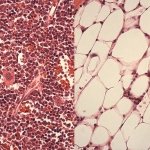
40 percent of people in the EU suffer from non-alcoholic steatohepatitis, a disease which is becoming increasingly more frequent as a result of diabetes and excess weight in an affluent society.

Molecular profiling is transforming brain cancer management and radiologists must get to grips with the upcoming paradigm that will affect the way they report findings. Renowned neuroradiologist Professor Anne G. Osborn from the University of Utah, School of Medicine, Salt Lake City, unveiled the latest advances in brain pathology during the Nikola Tesla Honorary Lecture last week at ECR…

The ‘MRI of the Adnexa, Essentials and Beyond’ session from at the MR 2015 symposium held in Garmisch, Austria, presented tips and tricks in clinical routine before moving to research that combines imaging and genomic data to better evaluate ovarian cancer. Report: John Brosky

Spring can be felt, though many visitors of ECR 2015 probably only have time to enjoy the floral decorations in the conference center. The program of the conference is packed full of topics that promise exciting days and many discussions.
People have highly variable views on how much overdetection is acceptable in cancer screening, finds a UK survey. The authors say invitations for screening "should include clear information on the likelihood and consequences of overdetection to allow people to make an informed choice."

A surgical algorithm developed and implemented by ovarian cancer specialists at The University of Texas MD Anderson Cancer Center dramatically increases the frequency of complete removal of all visible tumor - a milestone strongly tied to improved survival.

Findings of a recent study say that environmental stress is a major factor for DNA damage and therefore the reason for accelerated tissue aging and probably cancer. Good sleep prevents this DNA damage.

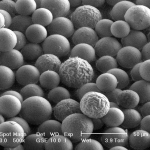
Researchers at University Medical Center (UMC) Utrecht are developing an innovative cancer treatment with the help of a grant from Alpe d’HuZes/Dutch Cancer Society (KWF) of nearly 300,000 euros. The treatment involves the injection of radioactive beads into tumors, thereby enabling a very precise localized radiotherapy.

Carestream will show enhancements to its digital breast tomosynthesis (DBT) module including a slabbing tool, improved workflow capabilities and the display of DICOM-compliant 2D synthetic views (which are generated from the 3D dataset) at the 2015 European Conference of Radiology. The latest DBT module is currently available.

Researchers at the Hubrecht Institute and the University Medical Center (UMC) Utrecht successfully developed a culturing system for human liver stem cells as well as stem cells from pancreatic cancer. They describe the development of these culturing systems in two articles in this week’s edition of Cell magazine.

Scientists from the German Cancer Research Center in Heidelberg and from the Medical Faculty Mannheim of Heidelberg University treated mice with a combination of a low-dose metronomic chemotherapy and an antibody against Ang-2, a regulatory protein of the blood vessel lining cells. The treated animals had significantly less metastases.

The term ‘cancer’ describes more than 200 different diseases and every single one needs to be clearly understood and requires, ideally, individual treatment. To do this we need to deepen our understanding the cancer genome. Report: Anja Behringer

Patients are no longer content to be passive recipients of medical care, and are instead taking a more active role in their treatment, says Kathy Oliver, Chair co-director of the International Brain Tumour Alliance (IBTA). Report: Frank Swain

Among updates on breast cancer diagnostics and treatments aired at the 33rd German Society for Senology meeting last year was SpheroTest, an evidence-based tool that helps select the most effective drug for each individual cancer patient. Report: Anja Behringer

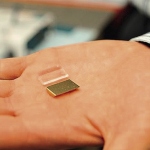
A tiny nanoscale device can accurately measure a patient’s blood for methotrexate – a commonly used but potentially toxic cancer drug – in under 60 seconds, according to biomedical instrument designer Jean-François Masson, and Joelle Pelletier, a DHFR enzyme specialist, both at the Chemistry Department, University of Montreal.
Approach could improve treatment of drug-resistant infections. Combining a PET scanner with a new chemical tracer that selectively tags specific types of bacteria, Johns Hopkins researchers - working with mice report - have devised a way to detect and monitor in real time infections with a class of dangerous Gram-negative bacteria.

Founded in Germany 25 years ago, EKF Diagnostics’ PLC HQ is currently in Cardiff, Wales, where the firm is pursuing the development of a molecular assay for specific cancer types.

In studies on prostate cancer, scientists from the German Cancer Research Center (DKFZ) simultaneously investigated the genetic and epigenetic development of the tumors.

A recent study from the Heidelberg-based company Sciomics, a spin-off from scientists from the German Cancer Research Center (DKFZ), has presented an advanced method to predict the recurrence of bladder cancer after surgery. The method, which can help avoid frequent cystoscopy examinations in a majority of patients, is based on an analysis of the protein composition of cancer tissue obtained…

Having convinced medical labs across Denmark that its suite of image analysis software can provide a solution to the crushing burden of in vitro diagnostics (IVD), VisioPharm is offering it to pathologists worldwide

Finnish pharma company Orion and German healthcare giant Bayer have entered into an agreement for the development and commercialisation of a novel drug targeting prostate cancer.

IBA (Ion Beam Applications S.A., EURONEXT), the world’s leading provider of proton therapy solutions for the treatment of cancer, today announces that it has signed final contracts concluding the Essen project negotiation with the University Hospital of Essen (UK Essen).

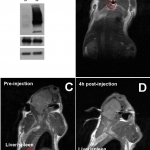
In a series of studies involving 140 American men and women with liver tumors, researchers at Johns Hopkins have used specialized 3-D MRI scans to precisely measure living and dying tumor tissue to quickly show whether highly toxic chemotherapy – delivered directly through a tumor’s blood supply – is working.

‘The disease “cancer” is increasingly classified into sub-groups. Today, we are already dealing with a number of orphan diseases,’ says Professor Richard Greil MD, head of LIMCR at University Hospital Salzburg.

Today is World Cancer Day 2014 and COCIR wants to take this opportunity to raise awareness of what our sector (medical imaging and health ICT) is contributing to the fight against cancer, by providing solutions for the prevention, early diagnosis and treatment of this devastating, ever-rising chronic disease.