

News • Mechanopathology
'Dengue-on-a-chip' to study infection mechanisms
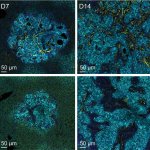
Due to the effects of climate change, dengue is spreading worldwide. Now, researchers have developed a 'dengue-on-a-chip' model that helps study the virus more effectively.

Due to the effects of climate change, dengue is spreading worldwide. Now, researchers have developed a 'dengue-on-a-chip' model that helps study the virus more effectively.

New research reveals a method that uses pulsed infrared light to identify molecular profiles in blood plasma that could indicate the presence of certain common cancers.

In a new study, researchers show that the emergence of antibiotic resistance can be understood in the mechanism of how bacteria build up defences against being infected by viruses.

Fighting pancreatic cancer can feel like a race against time. A new discovery could give clinicians a head start - by targeting precancerous lesions before they become much more aggressive.

A new method to quickly and accurately analyze the structure of collagen in tissue shows promise to improve the diagnostics of cancer and other diseases.

The evolving role of AI tools in digital pathology was explored at an open discussion during the annual Digital Pathology and AI Congress in London with a high-level panel of practitioners looking at current and future technology options. The panel of pathologists, scientists and academics from Europe and the USA assessed the tools they currently use and are available to them, and those they…

The location and timing of breast cancer recurrence may allow AI to predict the risk of metastasis, a new study shows. This is an essential step towards developing personalised treatment strategies.

A new rapid diagnostic test can identify pregnant women at elevated risk of transmitting hepatitis B to their babies. This could help prevent mother-to-child transmission during childbirth.

In today’s fast-paced healthcare landscape, efficiency and accuracy are essential in overcoming workload challenges. Pathology laboratories are under pressure to keep up with growing demands, all while ensuring standardised, consistent and high-quality results.

Researchers have succeeded in producing sensors from single-wall carbon nanotubes that are suitable for detecting even minute changes in specific substances in the body, such as female hormones.

New research reveals that self-generated electrical activity of small cell lung cancer (SCLC) directly promotes tumor metastasis and progression. This may provide new avenues for future treatments.

For patients, a liquid biopsy which checks for circulating tumour DNA of colon cancer, resembles a standard blood test. However, the method helps avoid chemotherapy for many, a new study finds.

There is no known cure for Alzheimer’s disease (AD), although prescription drug-based treatments that can slow AD progression in some patients are starting to enter clinical use. Biomarkers, quantifiable characteristics of biological processes or pathological conditions of the body, are making it possible to help identify and measure the presence and extent of AD and its degenerative…

Blood-based biomarker (BBB) tests may represent the best weapon to combat the soaring rates of Alzheimer’s disease (AD) throughout the world. Existing clinically validated tests are currently deployed to facilitate diagnosis, to monitor disease and effectiveness of treatments, to quantify progression, and to determine if a patient is appropriate for treatment or participation in a clinical…

Researchers developed an advanced AI tool for automatic analysis of colorectal cancer tissue slides. The new model outperformed all predecessors in the classification of tissue microscopy samples.

New research uncovers the hidden diversity of adrenal gland tumors, shedding light on how they cause unusual medical symptoms and paving the way for new drug treatments.

A new blood test, using neurofilament light chainproteins as biomarker, could lead to better diagnosis and management of amyotrophic lateral sclerosis (ALS).

New research highlights the potential of circulating tumor DNA (ctDNA) analysis as a non-invasive method to identify actionable biomarkers for breast cancer, enabling individualized therapies.

MRC Holland recently announced that five SALSA MLPA assays for the detection of hereditary breast and ovarian cancer (HBOC) syndrome were recently CE-marked for in vitro diagnostic (IVD) use under the new In-Vitro Diagnostic Regulation EU 2017/746 (IVDR).

Molecular changes associated with brain inflammation and dementia can be detected in the blood. Researchers want to use this to establish blood tests as an alternative to more costly brain scans.

The discovery of a 'biomarker panel' could have a profound impact on the ability to identify patients at risk of developing pancreatic cancer at an earlier stage, researchers hope.

Researchers have created a landmark atlas of how healthy breast tissue ages, revealing key cellular, molecular, and genetic changes that may tip the balance toward breast cancer development.

Traumatic brain injury (TBI) increases dementia risk, but the reasons are poorly understood. Now, a study explores the role of the brain's blood vessels as drivers of Alzheimer's disease.

Microbiologists have just shown that people with diabetes are more likely to develop antibiotic-resistant strains of Staphylococcus aureus, a leading cause of AMR-associated infections and deaths.

When multiple myeloma cancer cells break out and multiply outside the bone marrow, a wide variety of tumor cells arise, accompanied by a significantly altered immune response, new research shows.