
News • Inexpensive invention
Test kit enables quick and accurate screening of diseases
Test results are denoted by a colour change and could be further analysed by a smartphone app, making it attractive as a point-of-care diagnostic device.



Test results are denoted by a colour change and could be further analysed by a smartphone app, making it attractive as a point-of-care diagnostic device.

Alzheimer’s is the most common form of dementia. The US Centers for Disease Control and Prevention reports as many as five million Americans had the disease in 2013. They estimate that by 2050, nearly 14 million will have it. Age is the best known risk factor and memory loss is at the forefront of symptoms. Researchers of the Michigan Technological University investigate how technology can…

Driving breast cancer screening compliance is an essential part of improving clinical outcomes, and one way to do this is to educate women about their breast density, advises Tracy Accardi, Hologic’s Global Vice President of Research and Development for Breast Health & Skeletal Solutions.

Tomosynthesis is under international review, with a surprising number of enticing studies carried out in Northern European countries, among them one headed by Professor Sophia Zackrisson at Lund University, Sweden. In our interview, she not only revealed surprising trial results, but also shared her thoughts on practical implementation and unusual speed-reading methods. ‘Our institute’s…
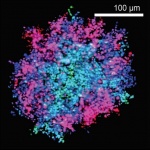
Cancer is a disease often driven by mutations in genes. As researchers learn more about these genes, and the proteins they code for, they are seeking smarter drugs to target them. The ultimate goal is to find ways to stop cancer cells from multiplying out of control, thereby blocking the growth and spread of tumors. Now researchers from The Scripps Research Institute are reporting an innovative…
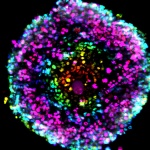
A multidisciplinary team of scientists share recent advancements in innovative in-vitro cancer biology methods for screening drug-like molecules in cancer tissue relevant models in a new report published online ahead-of-print at SLAS Discovery. Entitled Advanced Development of Primary Pancreatic Organoid Tumor Models for High-Throughput Phenotypic Drug Screening, the report can be accessed for…

What beats digital mammography to detect breast cancer in asymptomatic women? Digital breast tomosynthesis (DBT) – was a big discussion at RSNA 2017. Sarah M Friedewald MD, medical director of the Lynn Sage Comprehensive Breast Center of Northwestern Memorial Hospital in Chicago and its division chief of breast and women’s imaging, discussed the clinical implications of DBT for routine…

Using self-sampling followed by HPV testing, more than twice as many women at risk of developing cervical cancer could be identified and offered preventive treatment. This is shown by researchers at Uppsala University in the first randomised study in the world comparing two ways of identifying cervical cancer, published in the British Journal of Cancer.

Although modern medicine has made progress in the fight against cancer, the fear of cancer diseases is widespread. Still, regular screenings are no matter of course. Only almost every fifth person over 55 years has undergone a colonoscopy even though it is recommend for this age group as cancer prevention. What influences people to undergo these screenings? Screening or not? In making this…
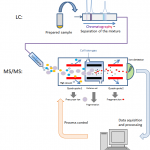
Up to the early 16th century, essentially medical diagnostics was limited to uroscopy – the observation of a urine sample in a uroscopy flask with a candle providing light. One hundred years later, the first microscopes were developed and from then on the development of technical devices and instruments boomed. Combining chromatography instruments and mass spectrometers began with the sole…
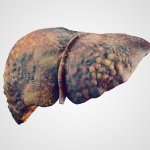
Patients with cirrhosis should be screened regularly for liver cancer, though few are – in part because busy physicians often don’t order the screening tests, said UT Southwestern oncologists. “The frequency of liver cancer is increasing rapidly in the U.S. and liver cancer-related mortality has nearly doubled over the past decade. The poor prognosis of the disease is largely driven by the…
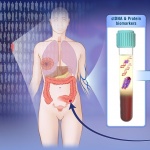
Johns Hopkins Kimmel Cancer Center researchers developed a single blood test that screens for eight common cancer types and helps identify the location of the cancer. The test, called CancerSEEK, is a unique noninvasive, multianalyte test that simultaneously evaluates levels of eight cancer proteins and the presence of cancer gene mutations from circulating DNA in the blood. The test is aimed at…

A new score for predicting a man’s genetic risk of developing aggressive prostate cancer could help guide decisions about who to screen and when, say researchers in The BMJ today. Prostate cancer is the most frequently diagnosed cancer in males in developed countries, with over a million new cases and over 300,000 associated deaths estimated worldwide in 2012. Screening for prostate specific…
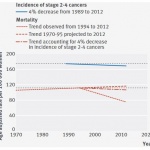
Breast screening in the Netherlands seems to have had a marginal effect on breast cancer mortality over the past 24 years, suggests research in The BMJ. Their findings show that screening would be associated with up to 5% reductions in breast cancer mortality in women aged 50 and over, whereas improved treatments would be associated with a 28% reduction. And they point out that overdiagnosis…
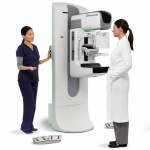
Hologic, Inc. announced that it will provide all mammography systems for the Dutch Breast Cancer Screening Program in partnership with Tromp Medical, Hologic’s distributor in the Netherlands. Under the tender, Hologic’s new, state-of-the-art 3Dimensions mammography systems will be installed in mobile and stationary screening facilities across the country, starting in 2018. The multi-year…
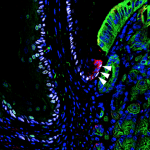
Columbia University Medical Center (CUMC) researchers have identified cells in the upper digestive tract that can give rise to Barrett’s esophagus, a precursor to esophageal cancer. The discovery of this “cell of origin” promises to accelerate the development of more precise screening tools and therapies for Barrett’s esophagus and esophageal adenocarcinoma, the fastest growing form of…

With one in five Americans experiencing clinical depression in their lifetime, should Google offer an online screening test for depression? US based clinical psychiatrist Ken Duckworth says providing a screening test to people who are already seeking information online “could raise awareness to improve identification and treatment.”
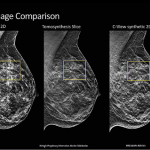
The European Society of Breast Imaging (ESOBI) promotes high quality breast imaging across Europe by developing education and training, encouraging research and promoting guidelines and standards. This year’s meeting (23-24 September) was held in collaboration with the French Society La Société d’Imagerie de la Femme (SIFEM) and drew around 600 radiologists. The event included a two-day…
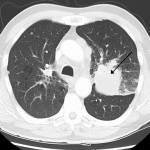
Lung cancer is the cancer that causes the highest mortality worldwide, claiming an estimated 1.7 million patients annually, with 270,000 of those deaths in Europe.
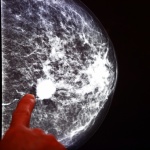
Biannual mammography can help to reduce breast cancer mortality by 40% in women aged 50-69, but the benefits for women under 35 years old are questionable, eminent Spanish radiologists highlighted during a session held by SERAM, their national society of radiology, last November, during the International Radiology Day.
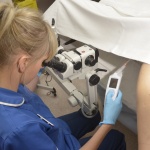
A pioneering diagnostic device identifies more abnormal cells on the cervix than standard colposcopy, according to data published in two European clinical papers.
Pancreatic cancer is one of the most deadly types of malignancies, with a 5-year survival rate after late diagnosis of only about 5%. The majority of patients—about 80%—receive their diagnosis too late for surgery. The disease spreads quickly and resists chemotherapy. In short, there is an urgent need for diagnostic tools to identify this cancer in its earliest stages.
People with the movement disorder Parkinson’s disease have a much higher risk of the skin cancer melanoma, and vice versa, a Mayo Clinic study finds. Yet the results of the study argue against the Parkinson's drug levodopa as the cause.

Comprehensive examinations of 143 refugee patients hailing mostly from Afghanistan and Syria, which were conducted between June and December 2015, showed a high prevalence of MRSA, ESBL and MDRGN upon hospital admission. The figures exceed not only those of the general population but, alarmingly, also those found in high-risk groups, such as residents of nursing homes or home care service…

Thousands upon thousands of humans have taken and are continuing to take flight from wars, persecution and economic stress, seeking the chance of survival in European and other countries. They arrive not only physically exhausted, but also in mourning for those killed in their own countries, or during hellish journeys – therefore many also suffer unimaginable mental traumas. Clearly they need…

