

Sponsored • Digital Pathology
Take the next step in Digital Pathology
Digitizing pathology is not just a transformation of technology, the major change and benefits lies in the change to a more efficient workflow – enabled by the new technology.

Digitizing pathology is not just a transformation of technology, the major change and benefits lies in the change to a more efficient workflow – enabled by the new technology.

Dr Gerald Antoch, professor of radiology and chairman of the department of diagnostic and interventional radiology at Düsseldorf University Hospital and active member of several scientific societies, delivered the prestigious Wilhelm Conrad Röntgen Honorary Lecture at ECR 2015 on ‘Hybrid imaging: Let the two worlds of radiology and nuclear medicine come together’. Report: Marcel Rasch

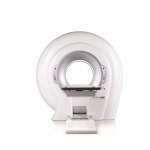
Shimadzu, worldwide leading manufacturer of diagnostic imaging equipment, has released the new digital radiography system RADspeed Pro EDGE in 2015 – the year of Shimadzu’s 140th anniversary. The system provides a wide range of functionalities: from tomosynthesis via dual-energy subtraction to modern auto-stitching to support diagnostics in clinical applications.

Degeneration of the white matter of the brain may be an early marker of specific types of Alzheimer's disease (AD), including early-onset AD, according to results of a new study published in the journal Radiology.

The tremendous progress of ultrahigh field magnetic resonance (UHF-MR) is a powerful motivator to transfer the lessons learned from basic research into the clinic. These efforts are fueled by the quest for advancing the capabilities of biomedical and diagnostic MRI, today. With this in mind momentum is gathering for broader clinical studies and applications. Realizing these opportunities, MAGMA -…

DITTA, the Global Diagnostic Imaging, Healthcare IT and Radiation Therapy Trade Association is, for the first time, attending the World Health Organization’s (WHO) Sixty‐Eighth World Health Assembly (WHA) from 18-26 May 2015 since DITTA granted the status of NGO in official relationship with WHO.

Results from a randomised controlled trial to compare the use of permanent radioactive implants (brachytherapy) with dose-escalated external beam radiotherapy in patients with prostate cancer show that the men who received brachytherapy were twice as likely to be cancer-free five years later. These results presented Professor James Morris, from the Department of Radiation Oncology, Vancouver…

Manuela Messmer-Wullen awoke in her hotel room one morning, during a business trip, and realised she was hemiplegic. There were also cognitive impairments and she could not articulate. Diagnosis: Stroke. ‘In the very first period after the stroke, contact with radiologists was very strange and mysterious for me.’ Report: Michael Krassnitzer

Women may have a more difficult time than men in recovering from concussion, according to a new study published online in the journal Radiology.

Dr Paul Klein, team doctor of the Bundesliga football club 1.FC Köln for over 11 years, has recently taken advantage of the loan of a Fujifilm SonoSite Edge point-of-care ultrasound system to monitor players during a training camp in the United States. The ten-day trip to Orlando, Florida, was in preparation for the second half of the football season, and Dr Klein was keen to have a diagnostic…

Imaging the head and neck is only rarely practised in radiology training and is highly complex and particulate, which is why, during our discussion with Professor Birgit Ertl-Wagner, Head of MRI at the Institute for Clinical Radiology at Grosshadern Hospital, Ludwig Maximilian University, Munich, she pointed out that many radiologists are not comfortable with orientation around this area. When…

Nine out of 10 hospitals in western Europe have a fully operational picture archiving and communications systems (PACS) to manage and exchange medical images. The integration has become so routine that now other physicians are asking why they can not as easily share with others the images they generate with non-radiology devices. Report: John Brosky

The European Congress of Radiology (ECR), Europe’s largest medical imaging conference, took place on March 4–8 in Vienna, Austria, with an all-time high number of participants and various innovations. ECR 2015 also marked the 10th anniversary of its organiser, the European Society of Radiology (ESR).

Before 2013, when Professor Dietmar Dinter became partner of Radiologie Schwetzingen, a multi-discipline group practice specialised in radiology and nuclear medicine, he was senior resident at the Institute of Clinical Radiology and Nuclear Medicine at University Hospital Mannheim (2003-2012) and head of its Nuclear Medicine Department (2009-2012). Was his work in nuclear medicine altered by the…

Seeing a substantially increasing importance of the cardiac MRI procedure, cardiologists have developed a specialist cardiac MRI training programme for their colleagues.

At ECR 2015 Esaote, a world leading manufacturer of medical diagnostic systems, introduced Evolution’15 (EVO’15) as the latest upgrade in its dedicated MRI Evolution program. EVO’15 combines software updates and new hardware features to provide superb image quality and increases productivity by almost 50%.

Injecting toxic chemicals into the body to kill cancer cells is a physically and mentally brutal experience for patients. The treatment cost is equally brutal for healthcare systems. Yet, often after six months of difficult treatment, patients may hear that the chemotherapy did not stop or kill the cancer. There is now a way to find out, in just 30 days and at a cost of just €183, whether the…

Molecular profiling is transforming brain cancer management and radiologists must get to grips with the upcoming paradigm that will affect the way they report findings. Renowned neuroradiologist Professor Anne G. Osborn from the University of Utah, School of Medicine, Salt Lake City, unveiled the latest advances in brain pathology during the Nikola Tesla Honorary Lecture last week at ECR…

The appetite for mobile information technology (IT) seems insatiable. Boosted by the sales of the iPhone 6 Plus, Apple generated a record $18 billion profit in 2015’s first quarter alone. Social media use is exploding, and dedicated professional platforms, such as Figure 1, a sort of Instagram for doctors, increasingly emerge. These changes are affecting our daily lives, and this is also true…

The ‘MRI of the Adnexa, Essentials and Beyond’ session from at the MR 2015 symposium held in Garmisch, Austria, presented tips and tricks in clinical routine before moving to research that combines imaging and genomic data to better evaluate ovarian cancer. Report: John Brosky

MRI is increasingly relevant to cancer management, especially to detect breast carcinoma. Professor Christiane K Kuhl from the department of diagnostic and interventional radiology at the University of Aachen, Germany, strongly advocated in favour of MRI in breast cancer screening during a dedicated Satellite Symposium organised by Bracco at ECR 2015. Report: Mélisande Rouger

Women over the age of 50 are not only at higher risk of developing breast cancer but also osteoporosis. Would it not be practical to use the same method to detect both diseases early on? Definitely, decided Sectra, the Swedish company specialising in PACS and mammography systems.

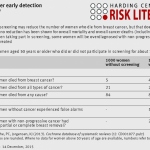
It is tough enough to be a clinician reading dozens of mammograms every day to detect early signs of breast cancer. Now those same radiologists must become statisticians in order to decrypt dozens of studies, challenging whether it is worth reading mammograms in the first place. Report: John Brosky

For medical ultrasound it’s quick, easy and portable – and so popular with Professor Christoph Dietrich, chief of Medical Department 2 at Caritas Hospital, Bad Mergentheim, one of the first physicians worldwide to test the M9 in clinical routine. ‘The compact Mindray colour Doppler system is about the same size as a notebook computer. The imaging suite comes to the patient,’ the…

Ask about UltraFast ultrasound and you might expect a technical answer explaining why the ultrasound is faster. However, for Stéphanie Franchi-Abella MD, fast means just fast, an ultra-quick acquisition she can take of a squirming, agitated new-born in the blink of an eye. ‘These babies are small and breathing rapidly, the organs are moving fast in the image and it’s sometimes difficult to…