

News • University of Surrey
Mass spectrometry to analyse Covid-19 samples
Researchers from the University of Surrey are applying specialist skills in mass spectrometry to assist in accelerating the search for a Covid-19 vaccine.

Researchers from the University of Surrey are applying specialist skills in mass spectrometry to assist in accelerating the search for a Covid-19 vaccine.

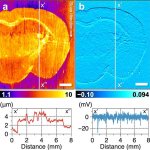
Doctors have reported that partial or total loss of the sense of smell is often an early symptom of infection with SARS-CoV-2, the virus that causes COVID-19. Now, researchers reporting in ACS Chemical Neuroscience have shown that in mice, two proteins required for SARS-CoV-2 entry are produced by cells of the nasal cavity that contribute to odor detection.

Almost five years ago, the plan to implement a wide-ranging digital pathology approach across the Netherlands began to take shape. As more labs across the country acquire digital pathology capability, with steps to create a strong and accessible image repository and a national image exchange platform, one of the project leaders, Professor Katrien Grünberg, offered an update and spoke of some…

A course of action to early detect and treat severe courses of COVID-19 infections has been developed by an expert-team of the University Medical Center Goettingen (UMG). A simple urine test is intended to help medical professionals to recognize warning signs of future decompensation of COVID-19 infections earlier. With the help of a few parameters, the treatment of imminent complications can…

Bringing molecular and digital pathology closer together through a more integrative approach can lead to clear advantages for diagnostic and research workflows. During the recent Digital Pathology and AI Congress (London), Professor Viktor Koelzer explored the benefits and paid particular attention to colorectal cancer (CRC).

Researchers in virology and veterinary bacteriology at the University of Bern have cloned the novel coronavirus (SARS-CoV-2). The synthetic clones are being used by research groups worldwide to test corona samples, find antiviral drugs and develop vaccines as quickly as possible. The method developed in Bern can also be used in future to combat other highly infectious viruses. In the…

The number of ridges has been increased and they have been made deeper to provide improved grip and comfort for the user. In addition, the cap rim overlaps the top of the tube, providing a better grip for the user of the Greiner Bio-One product.

Siemens Healthineers announced it is expanding its infectious disease testing capabilities to aid in the COVID-19 pandemic.

Until recently, the major challenges surrounding Point-of-Care-testing (POCT) concerned the quality of the results and improving the reagents and the procedures in order to optimise patient care. In the modern clinical environment, however, IT security of POCT devices is becoming increasingly important, in Germany also due to new industry-specific safety standards under the Act on the Federal…

The Central Laboratory at the Medical University Hanover, Germany, is prepared to handle virtually any clinical chemistry task, from a routine test to the most complex analysis. Equipped with state-of-the-art technology and thanks to a high degree of automation, the team can process more than 3,000 specimens, mostly blood and urine, in a single day. Professor Ralf Lichtinghagen, European…

Computational pathology has increased applications for diagnosis, prediction of prognosis and therapy response, facilitating the movement of healthcare towards personalised medicine. Coupled with deep learning, such tools are ever more efficient and robust within research and clinical settings. The growing role of computational pathology was highlighted by Professor Andrew Janowczyk at the…

Olympus has announced the winners of its first Global Image of the Year Life Science Light Microscopy Award, a competition that recognizes the best in life science imaging worldwide.

European photonics scientists are developing an ultrasensitive laser sensor that detects coronavirus at the earliest point of infection from a saliva or nasal swab in minutes.

Hamamatsu and KiKo Knowledge Hub Join Inspirata’s Initiative to Offer Free Remote Pathology Solution for Healthcare Institutions Affected by COVID-19. Inspirata gains strategic support in its initiative to allow pathology departments across the world to offer work-from-home opportunities for their pathologists during the COVID-19 pandemic crisis.

In diagnostics, it sometimes makes sense to follow your nose. During the Labmed Forum at Medica, Dr Beniam Ghebremedhin and Dr Simona Cristescu discussed the diagnostic potential of breathomics – the analysis of a patient’s exhaled air for disease indicators.

Scientists on Standby has been rapidly conceptualised and launched in response to the COVID-19 crisis and in anticipation of the increasing pressure on UK diagnostic testing laboratories and facilities in the coming weeks and months. The portal enables scientists with relevant skills and experience to volunteer their time, expertise and support for COVID-19 screening and testing.

In response to the global COVID-19 pandemic, Beckman Coulter announced that it is developing assays to identify IgM and IgG antibodies to the coronavirus or SARS-CoV-2. The assays will be designed for use on any of its high-throughput Access family of immunoassay systems, including the Access 2 and DxI series installed globally. Research has shown that after infection with SARS-CoV-2, viral…

Siemens Healthineers announced that its latest critical care testing solution, the RapidPoint 500e Blood Gas Analyzer, has received clearance from the U.S. Food and Drug Administration (FDA), and is now available in the U.S., Europe and countries requiring the CE mark. The analyzer generates blood gas, electrolyte, metabolite, CO-oximetry, and neonatal bilirubin results, which are used to…

Researchers at the German Red Cross Blood Donor Service in Frankfurt headed by Professor Erhard Seifried, and the Institute for Medical Virology at the University Hospital Frankfurt at Goethe University headed by Professor Sandra Ciesek succeeded in developing a procedure that makes it possible to immediately and dramatically increase worldwide testing capacities for detecting SARS-CoV-2.

Researchers have developed the first blood test that can accurately detect more than 50 types of cancer and identify in which tissue the cancer originated, often before there are any clinical signs or symptoms of the disease. In a paper published in the leading cancer journal Annals of Oncology, the researchers show that the test, which could eventually be used in national cancer screening…

Big data makes big promises when it comes to providing insights into human behavior and health. The problem is how to harness the information it provides in an efficient manner. An international team of researchers has proposed a microbiome search-based method, via Microbiome Search Engine (MSE), to analyze the wealth of available health data to detect and diagnose human diseases. They published…

French in vitro diagnostics company bioMérieux announced that its subsidiary, BioFire Defense, has received Emergency Use Authorization (EUA) by the U.S. Food and Drug Administration of its BioFire COVID-19 test for use in CLIA moderate and high complexity clinical laboratories to detect the novel coronavirus SARS-CoV-2. The test detects SARS-CoV-2 in approximately 45 minutes from a…

The Government and the UK’s Chief Scientific Adviser have backed the UK’s leading clinicians and scientists to map how COVID-19 spreads and behaves by using whole genome sequencing. Through a £20 million investment, the consortium will look for breakthroughs that help the UK respond to this and future pandemics, and save lives. COVID-19 Genomics UK Consortium - comprised of the NHS, Public…

To provide reliable information about the coronavirus disease COVID-19, Professor Giuseppe Lippi, Director of the Laboratory for Clinical Chemistry and Hematology at the University Hospital of Verona, Italy, gives an overview on the current state of scientific knowledge on COVID-19 and the SARS-CoV-2 virus. The video was provided by the American Association for Clinical Chemistry (AACC), who…

Though the coronavirus disease COVID-19 so far appears to be largely sparing children, researchers are cautioning that it is critical to understand how the virus affects kids to model the pandemic accurately, limit the disease’s spread and ensure the youngest patients get the care they need. The warning comes from Steven L. Zeichner, MD, PhD, the head of UVA Health’s Division of Pediatric…