

News • Diffusion-based generative model
Better MRI scans of beating hearts with AI
An AI-assisted model can take low-quality MRI heart scans and turn them into high quality images, while reducing the time needed to scan the heart by about 90%.

An AI-assisted model can take low-quality MRI heart scans and turn them into high quality images, while reducing the time needed to scan the heart by about 90%.

A new PET imaging technique can accurately detect and monitor Mycobacteroides abscessus lung infections—one of the most difficult-to-diagnose conditions in patients with lung diseases.

Ground-breaking innovation for endovascular surgery: The new software package Endovascular Navigation supports physicians in their interventions with planning, navigation and fusion imaging.

What if every radiographer could help combat climate change while performing their daily work? Following the congress theme of ECR 2025, experts revealed how small changes – from education initiatives to simple workflow adjustments – can collectively transform the environmental impact of radiology.

United Imaging, a global leader in cutting-edge diagnostic imaging and radiotherapy solutions, proudly unveils two groundbreaking additions to its portfolio — the uMI Panvivo and the uMR Ultra — both newly CE-marked and set to redefine the standards of precision and performance in medical imaging.

Medical device manufacturer Medtron is expanding its portfolio with two new reusable syringe models. The new products will be presented to the public for the first time at the German Radiology Congress in Wiesbaden.

Experts from the University of Nottingham have proven that multiple sclerosis can successfully be diagnosed using an MRI scan, meaning patients no longer need to undergo a painful lumbar puncture.

A new 4D flow MRI method could accelerate diagnosis of aortic stenosis, a progressive and potentially fatal heart condition.

Announcing the first edition of the MSK Imaging in Sports Medicine, with the unrestricted support of Esaote. The event will take place on May 30, 2025, in Florence, Italy, at Viola Park, one of the largest sports centers in Europe.

Bringing diagnostics and therapy closer together - that is the basic concept behind theranostics. Through further development of its PET/MR scanners, Siemens Healthineers aims to advance this approach. Andreas Schneck, Head of the MRI Division at Siemens Healthineers, talks about the new system, which was also presented at the European Congress of Radiology (ECR) in Vienna, and its advantages in…

Using an advanced PET scanner, US radiologists explore how cancer, neurodegenerative diseases and other systemic conditions, can affect the brain by assessing the impact on the blood-brain barrier.

United imaging announces the successful installation of their digital PET/CT system uMI 550 at Centre Mèdic Alomar in Barcelona. Equipped with comprehensive cardiac imaging features, its use extends beyond cardiology.

Despite their improving diagnostic accuracy, medical AI systems are often met with skepticism by radiologists. Their patients, however, seem more inclined to embrace this technology, a study shows.

Using the COX-2 enzyme, a new PET imaging approach offers a never-before-seen view of inflammation in the brain, opening the door for clinical and research settings for various brain disorders.

A greater emphasis on AI and sustainability, new approaches to mitigating staff shortage and more: At the European Congress of Radiology (ECR) 2025 in Vienna, Philips showcased its approaches to several critical issues in diagnostic imaging. The global healthtech company presented solutions addressing today's healthcare challenges while aligning with the congress's "Planet…

For Esaote, a leading Italian innovator in medical imaging - ultrasound, dedicated magnetic resonance and medical IT - the mission is to develop new technologies that can help advance diagnosis and improve patient care. Esaote has always leveraged continuous innovation as the key driver of its business strategy. This approach is also embodied in its three business areas.

A new PET tracer has the potential to play a critical role in the diagnosis, treatment, and monitoring of aggressive triple-negative breast cancer (TNBC), improving clinical outcomes for patients.

Researchers developed a new scanning method that combines light and ultrasound to non-invasively monitor cerebrovascular changes in the early stages of an ischemic stroke in real time.

Anatomically accurate 3D-printed phantoms for CT imaging and AI training show promise as an alternative to cadavers. The new technology allows for patient-specific phantoms with realistic radiopacity.

MRI is an essential tool for clinicians, but the variability of image acquisition protocols is a challenge for achieving consistent and reliable interpretation. A new study intends to fix this issue.

United Imaging, a global leader in manufacturing advanced medical imaging and radiotherapy equipment, showcases a range of cutting-edge technologies aligned with sustainable values. Notably, the company achieves an A rating in the MSCI ESG ratings, highlighting its unwavering commitment to transforming medical diagnostics and patient care worldwide through a holistic, sustainable approach.

Researchers developed an AI-based system which has has a broad ability to identify even subtle differences between medical images taken at different times, and to predict related outcome measures.

Using a prototype field cycling imager (FCI) scanner to examine breast cancer tissue, scientists distinguish tumour material from healthy tissue with more accuracy than current MRI methods.

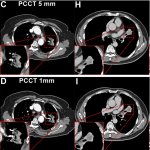
Pancreatic cystic lesions – indicating an increased risk of pancreatic cancer – are an occasional incidental finding in routine computed tomography (CT) abdominal imaging. New research suggests that the superior image quality of photon-counting CT (PCCT) can help detect more of these lesions. At the RSNA annual meeting, an expert outlined the benefits and limitations of the imaging technique…

Science, sustainability, and society – these are the three cornerstones of this year’s European Congress of Radiology (ECR) in Vienna, Austria. Following the motto “Planet Radiology”, the congress focuses on the environmental impact of diagnostic imaging while exploring ways to advance equitable global healthcare access.