News • Deep learning model
AI detects fatty liver disease with chest X-rays
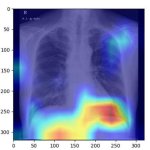
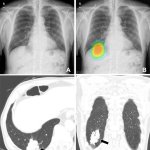
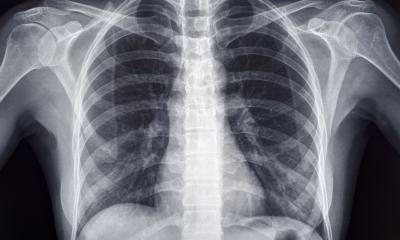
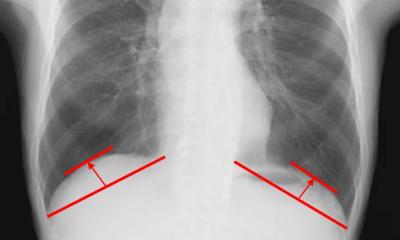
A research group at Osaka Metropolitan University developed an AI model that can detect the presence of hepatic steatosis (fatty liver disease) from chest X-ray images.

A research group at Osaka Metropolitan University developed an AI model that can detect the presence of hepatic steatosis (fatty liver disease) from chest X-ray images.

Pulmonary embolism (PE) remains one of the leading causes of maternal mortality. At the French Thoracic Society Spring Days in May, Dr Aurélie Dehaene, radiologist at European Hospital in Marseille, France, reviewed diagnostic strategies for suspected PE during pregnancy, with a focus on clinical algorithms and optimized imaging protocols.

Patients attending GP practices with the highest chest x-ray usage are more likely to be diagnosed with lung cancer at an earlier, more treatable stage, a new study finds.

As new research shows, low-dose chest computed tomography (CT) can identify coronary artery calcium, a strong risk factor for coronary artery disease (CAD), in patients without cardiac symptoms.

When an AI advisor points out an area of concern in a chest X-ray, radiologists are sometimes all too eager to follow their lead, a new study finds. This may lead to incorrect diagnostic decisions.

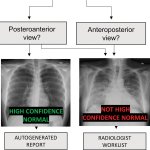
Radiology practices have a high volume of chest X-rays without clinically significant finding, which take up a lot of time. A new AI tool could improve workflows by providing an automatic report.

A new artificial intelligence (AI) model combines imaging information with clinical patient data to improve diagnostic performance on chest X-rays, a new study finds.

Reports of AI gaining the upper hand in diagnostic imaging interpretation are piling up, but there are still areas where the eye of a trained human radiologist remains superior.

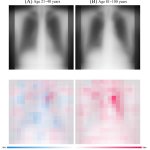
Osaka Metropolitan University scientists have developed an advanced AI model that utilizes chest radiographs to accurately estimate a patient’s "true" age.

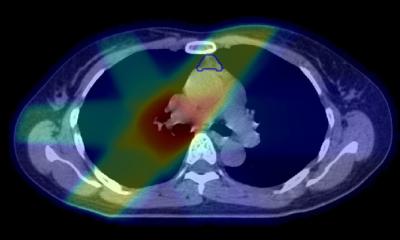
Experts presented state-of-the-art and emerging techniques to treat chest tumours and discussed common issues in the management of pneumothorax at RSNA 2022. Current ablation methods in the thorax include radiofrequency ablation (RFA), microwave ablation (MWA), cryoablation (CRYO), irreversible electroporation (IRE) and pulsed electric field.

Assistance from an AI algorithm with high diagnostic accuracy improved radiologist performance in detecting lung cancers on chest X-rays and increased human acceptance of AI suggestions.

An artificial intelligence tool can accurately identify normal and abnormal chest X-rays in a clinical setting, according to a new study. The tool identified abnormal X-rays with a 99.1% sensitivity.

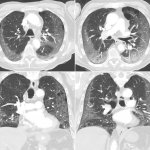
The results of a large-scale study indicate that the introduction of an AI-powered solution by healthcare software company Radlogics into radiology workflow to analyze Chest-CT scans during the Covid-19 pandemic reduced report turnaround time by an average of 30 percent, which is equivalent to 7 minutes per case.

Medtech company BellaSeno announced the initiation of a first-in-human trial of its novel, absorbable soft tissue reconstruction scaffold (Senella). A patient with Pectus Excavatum congenital defect has undergone surgery at Princess Alexandra Hospital in Brisbane, Australia, earlier this month. The procedure was performed by Dr. Michael Wagels, Principal Investigator of the trial and Plastic and…

Chest X-ray is the first imaging method to diagnose COVID-19 coronavirus infection in Spain, but in the light of new evidence this may change soon, according to Milagros Martí de Gracia, Vice President of the Spanish Society of Radiology (SERAM) and head of the emergency radiology unit at La Paz Hospital in Madrid, one of the hot spots for viral re-production of COVID-19.

As a highly innovative medical specialisation, radiology increasingly takes advantage of the possibilities offered by artificial intelligence (AI). Yet, there is no risk for the future of the specialty. Demands on this discipline are too complex, too communicative. Thus, machines will not replace a radiologist any time soon – of that Uwe Joseph Schöpf, professor of radiology, cardiology and…

A new radiomics study could help unlock one of the more challenging issues facing thoracic radiologists. Distinguishing non-small cell lung cancer from benign nodules is a major challenge due to their similar appearance on CT images. Now, however, researchers from Case Western Reserve University in Cleveland, Ohio, have used radiomic features extracted from CT images to differentiate between…

First thing on a recent Monday morning, Professor Tomasz Grodzki could be found performing a lung resection in an operating theatre at the Regional Hospital for Lung Diseases in Szczecin-Zdunowo. Just two days earlier he was in a meeting with Senator John McCain, in Washington D.C.

Emergency medicine requires smooth, patient-oriented and perfectly timed cooperation of several clinical disciplines.