News • Neonatology
Portable MRI in pediatric ECMO patients: promising premiere
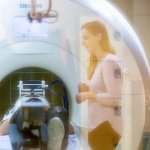
The neonatology team at the University Hospital Bonn (UKB) has conducted the world's first study of children receiving ECMO therapy using a mobile MRI scanner.



The neonatology team at the University Hospital Bonn (UKB) has conducted the world's first study of children receiving ECMO therapy using a mobile MRI scanner.
Ultrasound is an effective standalone diagnostic method in patients with focal breast complaints, according to a study published in Radiology, a journal of the Radiological Society of North America (RSNA). Focal breast complaints can refer to pain, lumps, nipple discharge or other symptoms and conditions confined to a specific area of the breast.

Dunlee unveiled its new oncology bundles onsite at ECR. The bundles combine components that have been tested and verified to work together so clinicians can offer state-of-the-art onboard Cone Beam CT (CBCT) in facilities.
A UK research team has developed a new technique that combines machine learning with short-wave infrared (SWIR) fluorescence imaging to detect precise boundaries of tumors.

It’s clear that radiology is lacking in the “green” department: healthcare still causes a large share of global greenhouse gas (GHG) emissions, not least due to diagnostic imaging. Dr Sarah Sheard from Imperial College Healthcare, UK, invited her ECR audience to take a closer look at radiology’s climate footprint – and revealed ways to make the field more sustainable.
Omar Darwish, PhD student at King's College London, is researching new approaches to 3D MRE sequences for measuring liver fibrosis and inflammation simultaneously in obese patients.
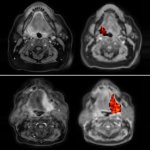
Imaging researchers have taken a major step towards their ultimate goal of identifying cancers that are starved of oxygen so that altered treatment can be used to target them more effectively.
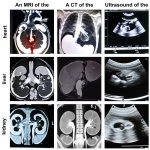
A new paper describes how generative AI text-to-image models such as DALL-E 2 could represent a promising future tool for image generation, augmentation, and manipulation in health care.
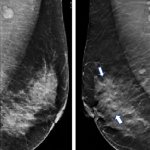
In a study of over a million women, digital breast tomosynthesis (DBT) showed improved breast cancer screening outcomes over screening with standard digital mammography alone.

At ECR in Vienna, Carestream presented the latest additions to their product portfolio, and gave insights into their commitment to tackling a devastating lung disease.
Radiology practitioners have highlighted the benefits of cone beam CT in delivering high resolution at a low dose. Delegates at ECR 2023 in Vienna heard how cone beam CT (CBCT) could replace multidetector CT (MDCT) in some areas and is already showing cost-effectiveness benefits.
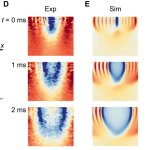
A new ultrasound method that can measure the level of tension in human tissue for the first time - a key indicator of disease - has been developed by researchers from the University of Sheffield.
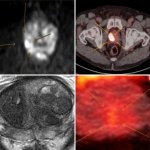
An advanced imaging method is showing promise as a way to improve the diagnosis of prostate cancer by giving clinicians a clearer view of suspected tumours during biopsy.
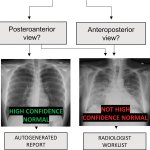
An artificial intelligence tool can accurately identify normal and abnormal chest X-rays in a clinical setting, according to a new study. The tool identified abnormal X-rays with a 99.1% sensitivity.

The future of medical imaging will be shaped by AI, according to an expert panel hosted by Bayer at ECR in Vienna. Participants explored key trends in radiology and how AI innovation can help patients and their treating physicians.
According to an accepted manuscript published in the American Journal of Roentgenology (AJR), using a dual-source CT (DSCT) scanner for coronary CTA can facilitate clinical processes by eliminating the need to administer beta-blockers for heart rate control while decreasing nondiagnostic examinations.

Carestream Health is funding and participating in an innovative pilot with OSIC that could lead to radiographs providing an early window into manifestations of IPF that are currently undetected.

Climate change will impact health and complicate access to care for the most vulnerable, but radiologists can do more than just sticking to their jobs. They should step outside the confines of their specialty and promote health and wellbeing in their communities, an eminent American radiologist explained at the annual meeting of the Radiological Society of North America (RSNA).
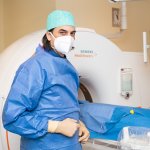
Using imaging guidance, interventional radiology – a sub-discipline of diagnostic imaging – allows targeted and ultraprecise diagnostic and therapeutic procedures without anesthesia and without large incisions. Nevertheless, surgery continues to be widely considered the procedure of choice, making interventional radiology the Cinderella of the discipline. Professor Dr. Marco Das, Medical…
French radiologists received prizes for the best interventional radiology toolkit for use in space travel at the JFR 2022, the annual meeting of the French Society of Radiology (SFR).

ECR 2023 returns to its traditional date in March, but delegates can expect novelties with sessions touching not just cutting-edge science, but also archaeology and palaeontology, and putting trainees in the spotlight, Congress President Professor Adrian Brady told Healthcare in Europe in an exclusive interview.

Radiation exposure in diagnostic and interventional radiology is steadily being reduced, but some important parameters have hardly been taken into account so far, says Dr Kerstin Jungnickel. The medical physics expert explains how patient-specific protocols can improve radiation protection and outlined new findings on the radiosensitivity of certain body regions and their impact.
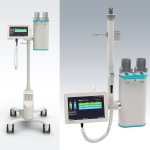
The Accutron CT-D Vision is the next generation of the leading contrast agent injector for computed tomography from Medtron AG. Focusing on the needs of the user, the latest development stage of the Accutron CT-D improves the usability of the CT double-piston contrast agent injector and optimizes its integration into the radiological environment.
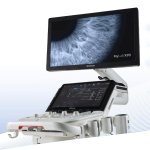
Italian biomedical and imaging company Esaote will be present at the ECR radiology congress in Vienna on March 1st - 5th, Expo X5 - Booth 517, to show its latest ultrasound, MRI and medical IT.
The world's first MRI scanner with a magnetic field strength of 14 Tesla will be built in Nijmegen. Its high sensitivity will allow scientists to image the brain in more detail.

