

News • Neurology
Biologists find new source for brain’s development
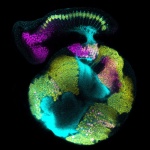
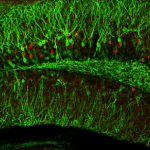
A team of biologists has found an unexpected source for the brain’s development, a finding that offers new insights into the building of the nervous system.

A team of biologists has found an unexpected source for the brain’s development, a finding that offers new insights into the building of the nervous system.

A new study suggests that middle-aged people who report that they are slow walkers could be at higher risk of heart disease compared to the general population.

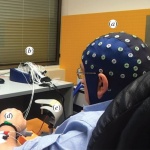
University of Adelaide researchers have shown that it is possible for stroke patients to improve motor function using special training involving connecting brain signals with a computer.

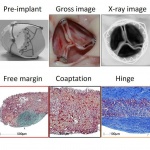
Electrospun materials bring a spark of hope to a cardiovascular landscape darkened by setbacks for reabsorbable stents. It was famously said that implanting a device in a person to cure a disease is to implant a new disease. Simply put, the human body will continually fight against foreign materials, leading to chronic inflammations or repeated interventions.

Patients with unresectable, or inoperable, lung cancer are often given a dismal prognosis, with low rates of survival beyond a few years. Researchers exploring combination therapies have recently discovered improved survival rates by up to one year when patients treated with a newly formulated chemotherapy regimen are also given radiation therapy.

Columbia University Medical Center researchers have found that it may be possible to access memories “lost” to Alzheimer’s disease, if their discoveries about memory loss in mice also apply to people with the disease.

German researches have linked the increased production of a certain enzyme in the liver to fatty liver and insulin resistance.

Could a new weapon in the fight against arthritis be found somewhere beyond the sea? New research from Switzerland encourages this idea.

The stimulant methamphetamine, also popularly known as ‘speed,’ ‘ice’ and ‘meth,’ is linked to a heightened risk of stroke among young people, reveals a review of the available evidence, published online in the Journal of Neurology Neurosurgery & Psychiatry.

Researchers at the Swedish Medical Nanoscience Center at Karolinska Institutet have developed an innovative way of hacking conducting plastics so as to prevent bacterial growth.

There are various concepts about how blood cells develop. However, they are based almost exclusively on experiments that solely reflect snapshots. In a publication in Nature, scientists from the German Cancer Research Center in Heidelberg now present a novel technique that captures the process in a dynamic way.

Scientists from the University of Würzburg have synthesized a complex sugar molecule which specifically binds to the tumor protein Galectin-1. This could help to recognize tumors at an early stage and to combat them in a targeted manner.

A new study suggests that a single exposure to e-cigarette (e-cig) vapor may be enough to impair vascular function.

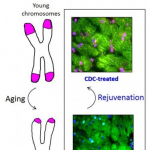
Cardiac stem cell infusions could someday help reverse the aging process in the human heart, making older ones behave younger, according to a new study from the Cedars-Sinai Heart Institute.

A protein found in the edible mushroom known as "shaggy ink cap" might be able to kill a type of leukemia cell, new research suggests.

Some people with achy joints and arthritis swear that weather influences their pain. New research, perhaps the deepest, data-based dive into this suggestion, finds that weather conditions are indeed associated with Google searches about joint pain.

A research team found that in patients suffering from rheumatoid arthritis, a special cell population called innate lymphoid cells are in a state of hibernation which is why these patients suffer from persistent inflammation.

Johns Hopkins Kimmel Cancer Center scientists report they have discovered a biochemical process that gives prostate cancer cells the almost unnatural ability to change their shape, squeeze into other organs and take root in other parts of the body.

Columbia Engineers make major advance in helping the hearing impaired follow a conversation in a noisy environment - and bring cognitive hearing aids a step closer to reality.

Breast cancer patients who have radiotherapy targeted at the original tumour site experience fewer side effects five years after treatment than those who have whole breast radiotherapy, and their cancer is just as unlikely to return.

Patients with Alzheimer's disease (AD) have a larger caudate nucleus, a brain area involved in habits and used to navigate in the environment on an autopilot mode, shows for the first time a Canadian-Norwegian study published in Acta Neurologica Scandinavica. Not good news, you may think. Hold on, this could open new research avenues for AD.

Findings suggest that modifying the cell replication cycle could make combined therapies more successful.

A genetic study identifies neuronal circuits responsible for ultrasonic calls uttered by mouse pups. The cries of human babies may well depend on similar connections, which could also be impaired in speech disorders.

Non-alcoholic fatty liver disease (NAFLD) is one of the most frequent liver diseases worldwide and an estimated 20 million people in Germany are affected.

Researchers at Binghamton University, State University of New York have developed a coating made out of DNA that gets better at protecting skin from Ultraviolet light the more it is exposed to the sun and which could potentially be used as wound covering for extreme environments.