

News • Endoscopic magnetometer
Finding cancer with diamond sensors
Researchers report they have built a new non-toxic and non-radioactive handheld device that uses the unique properties of diamonds to diagnose metastasized breast cancer.



Researchers report they have built a new non-toxic and non-radioactive handheld device that uses the unique properties of diamonds to diagnose metastasized breast cancer.

Remote monitoring via microfluidic platforms, AI-assisted sensor systems, and more: Attendees of the Labmed Forum at Medica saw impressive examples on how wearable technology is becoming a transformative force in laboratory medicine to improve real-time monitoring of patients, covering widespread conditions such as diabetes, asthma and COPD. With an emphasis on remote monitoring, devices are…
Manual calibration and parameter input in systems are time-intensive and error-prone, posing significant challenges across life sciences and hospitals. With a new generation of sensors, The Dickson Company aims to deliver a smarter, easier to use, and more autonomous monitoring solution.
Researchers incorporated a specialized breath sensor within the fabric of a face mask to detect metabolites associated with chronic kidney disease. Initial tests showed promising results.
An international research team has developed an intelligent device capable of monitoring the skin continuously and accurately detect temperature variations associated with inflammation and infection.

Could a t-shirt with sensors reduce the time patients need to stay in hospital after a urological surgery? A recent pilot study suggests it might.

A novel sensor placed on a patient’s head registers nanometric expansions of the skull in each cardiac cycle in real time to measure intracranial pressure more accurately and non-invasively.
Researchers have succeeded in producing sensors from single-wall carbon nanotubes that are suitable for detecting even minute changes in specific substances in the body, such as female hormones.
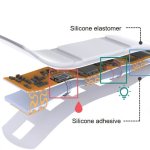
Researchers developed a smart patch capable of real-time biometric signal monitoring and drug delivery. Potential applications include glucose management, pain relief, and chronic disease treatment.

A sensor, similar to glucose monitoring devices, detects lung cancer biomarkers from a blood sample in just 40 minutes. The technology has potential to identify at-risk patients and tailor treatments.
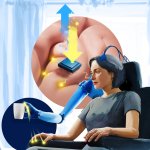
Promising technology for patients with spinal cord injuries: A new study paves the way for complex touch sensation through brain stimulation, using an extracorporeal bionic limb.

A research team has found wearable organic x-ray sensors could be the answer towards safer radiotherapy protocols for cancer patients, reducing the debilitating side-effects of the treatment.

A sensor that measures forces passing through the hip joint could help surgeons assess and balance the soft tissues before performing hip implant surgery, leading to more accurate implant positioning.
Early detection and management of asthma and COPD is critical. US researchers have developed a deep learning model paired with a wearable sensor patch to automatically detect wheezing sounds.
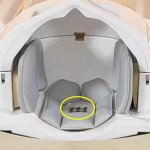
A new prototype self-powered sensor could improve the process of medical imaging for patients and technicians by detecting movement and shutting down an MRI scan in real time.
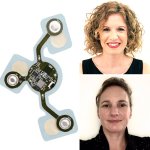
Two companies are combining their unique expertise to develop intelligent e-skin patches to “self-sense” cardiac events in patients. The flexible patch platform will deliver a comprehensive understanding of both electrical and mechanical heart activities and has the potential to enable cardiologists to better monitor their patients.

A new sensor prototype can detect errors in MRI scans in a way that is impossible for current electrical sensors – and hopefully pave the way for MRI scans that are better, cheaper and faster.
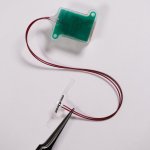
A new bioelectronic sensor enables continuous monitoring of bladder function. This could be a game-changer for people with paralysis, spina bifida, bladder cancer or end-stage bladder disease.
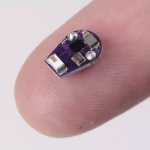
A team of Northwestern University scientists has developed the first wireless, implantable temperature sensor to detect inflammatory flareups in patients with Crohn’s disease.

