

Therapy

Photo

Article • Drug delivery

Biotherapeutics strike cancer cell growth

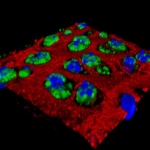
Many drug treatments do not work due to their poor ability to reach their intended targets inside patients’ cells. To address this, researchers at Cardiff University’s Schools of Pharmacy and Pharmaceutical Sciences, and Biosciences have designed a highly efficient method to improve the delivery of therapeutic molecules into diseased cells such as those in stomach cancer, breast cancer and…

Photo

Microfluidic device tests effects of electric fields on cancer cells

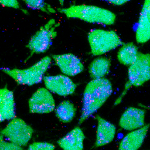
Researchers at Massachusetts Institute of Technology research center in Singapore have developed a new microfluidic device that tests the effects of electric fields on cancer cells. They observed that a range of low-intensity, middle-frequency electric fields effectively stopped breast and lung cancer cells from growing and spreading, while having no adverse effect on neighboring healthy cells.

Photo

News • Active substance

Promising treatment prospects for invasive breast cancer

Scientists from the University of Zurich have been able to understand for the first time why many cancer cells adapt relatively quickly to the treatment with therapeutic antibodies in invasive forms of breast cancer. Instead of dying off, they are merely rendered inactive. The researchers have now developed an active substance that kills the cancer cells very effectively without harming healthy…

Photo

News • Antimalarial drugs

Kill a Malaria parasite with Cholesterol

Drexel University scientists have discovered an unusual mechanism for how two new antimalarial drugs operate: They give the parasite’s skin a boost in cholesterol, making it unable to traverse the narrow labyrinths of the human bloodstream. The drugs also seem to trick the parasite into reproducing prematurely.

Photo

News • Targeted treatments

Gene therapy against brain cancer

A team from the International School for Advanced Studies (SISSA) in Trieste has obtained very promising results by applying gene therapy to glioblastoma. Tests in vitro and in vivo on mice provided very clear-cut results, and modelling demonstrates that the treatment targets at least six different points of tumour metabolism. Gene therapy, a technique that selectively attacks a tumour, might…

Photo

Article • Human Resources

Physicians will learn assertiveness

Most accidents result from ‘the human factor’ – long acknowledged in aviation. Thus all crew members receive regular safety training to help prevent errors on board and on the ground. Now experts at the German Society for Orthopaedics and Trauma (DGOU) with those from Lufthansa Flight Training have developed a similar training programme for physicians. This Interpersonal Competence Training…

Photo

News • Therapy

New way to predict COPD progression

New research has found that a process initiated in white blood cells known as neutrophils may lead to worse outcomes for some patients with chronic obstructive pulmonary disease (COPD). The discovery may help identify patients at higher risk for COPD progression, who might also show little benefit from standard treatments.

Photo

News • Endoscopy

Combining digital and optical imaging - the video processor from Pentax

Pentax Medical launches a world first for endoscopy, the OPTIVISTA EPK-i7010 Video Processor, featuring both digital and optical enhancements, in the European, Middle Eastern & African (EMEA) markets. This unique enhancement combination provides detailed information for more accurate endoscopic in vivo diagnosis through improved vessel and mucosal pattern characterization.

Photo

News • Genetic mutations

New neurodevelopmental syndrome identified

A multicenter research team led by Columbia University Medical Center (CUMC) has discovered a new neurodevelopmental syndrome and the genetic mutations that cause it. The discovery is an important step toward creating targeted therapies for individuals with this syndrome, which causes severe developmental delays, abnormal muscle tone, seizures, and eye complications.

Photo

Article • Evaluation

Calculated therapy is the objective

At a recent focus meeting held in Berlin by the Association of Accredited Laboratories in Medicine, Dr Andreas Weimann, managing director at the Laboratory Berlin – Charité Vivantes Services, spoke of the challenges that laboratories working with hospitals face due to the management of pathogens and the diagnosis of infections.

Photo

News • E. coli

Using harmless bacteria to fight cancer

Several bacterial species have pledged promise in fighting tumors. However, most of them are pathogens. In order to use them as a weapon against cancer and other diseases in humans, researchers must find a balance between their therapeutic aggressiveness and safety for the patient. To overcome this problem, researchers at the Helmholtz Centre for Infection Research (HZI) have shifted their focus…

Photo

News • Breakthrough

Gut bacteria drive growth of stem cells in colon cancer

Colon cancer is one of the most common forms of cancer in Germany. Prof. Dr. med. Sebastian Zeißig, group leader at the DFG Research Center for Regenerative Therapies Dresden (CRTD) - Cluster of Excellence at the TU Dresden and physician at the Department of Medicine I, University Hospital Carl Gustav Carus Dresden, has now shown a decisive role of gut bacteria in the regulation of intestinal…

Photo

News • Europe

Medics call for urgent improvements in the quality of endoscopy

Every year, tens of millions of individuals across Europe undergo endoscopic procedures to assist with the diagnosis and management of gastrointestinal diseases. However, significant variation in current endoscopy provision across Europe has been reported, with back-to-back colonoscopy studies demonstrating that a concerning 22 percent of all adenomas are missed and that a three-to-six fold…

Photo

News • Skin Cancer

The Netherlands' first user of Elekta's Esteya Electronic Brachytherapy

On March 3, Radiotherapy Group clinicians at Ziekenhuis Gelderse Vallei (Ede, the Netherlands) used their Esteya electronic brachytherapy system for the first time to treat a 73-year-old male patient with a nodular basal cell carcinoma on his nose. Esteya is a form of high dose rate (HDR) brachytherapy that applies high-precision radiotherapy directly to the cancer site, minimizing radiation to…

Photo

News • Prevention

Next step in preventing diabetes

A team of scientists at Helmholtz Zentrum München, in collaboration with Technische Universität München and the German Center for Diabetes Research (DZD), have shown in a preclinical model that specifically modified insulin mimetopes may lead to an immune tolerance. The results, published in ‘Nature Communications’, may be a step to improved prevention of type 1 diabetes.

Photo

News • Peripheral artery disease

Treating poor blood circulation with injectable gel

Bioengineers and physicians at the University of California, San Diego have developed a potential new therapy for critical limb ischemia, a condition that causes extremely poor circulation in the limbs and leads to an estimated 230,000 amputations every year in North America and Europe alone to prevent the spread of infection and tissue death. The new therapy could prevent or limit amputations…

Photo

News • Diabetes

No more Insulin injections?

In patients suffering from Type 1 diabetes, the immune system attacks the pancreas, eventually leaving patients without the ability to naturally control blood sugar. These patients must carefully monitor the amount of sugar in their blood, measuring it several times a day and then injecting themselves with insulin to keep their blood sugar levels within a healthy range. However, precise control…

438 show more articles
Subscribe to Newsletter