

News • Blood brain barrier
A new approach to conquer the 'fortress of the brain'
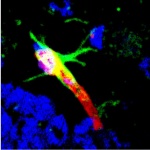
Scientists have helped provide a way to better understand how to enable drugs to enter the brain and how cancer cells make it past the blood brain barrier.

Scientists have helped provide a way to better understand how to enable drugs to enter the brain and how cancer cells make it past the blood brain barrier.

Cells can be programmed like a computer to fight cancer, influenza, and other serious conditions – thanks to a breakthrough in synthetic biology by the University of Warwick.

It had already been known that the enzyme known as phosphatidic acid phosphatase plays a crucial role in regulating the amount of fat in the human body. Controlling it is therefore of interest in the fight against obesity. But scientists at Rutgers University-New Brunswick have now found that getting rid of the enzyme entirely can increase the risk of cancer, inflammation and other ills.

Researchers at the Keck School of Medicine of the University of Southern California (USC) are tackling Alzheimer’s disease with a new study that intervenes decades before the disease develops.

Brain scientists from Edinburgh have identified a genetic programme that controls the way our brain changes throughout life. The programme controls how and when brain genes are expressed at different times in a person’s life to perform a range of functions, the study found.

A team under the direction of chemist Prof. Dr Peter Comba is investigating radioactive metal complexes for use in the diagnosis and treatment of tumors.

Scientists are honing in on a potential treatment for osteoporosis, after performing the largest ever genetic study of the common age-related bone-thinning disease.

Compounds in a fermented fish paste used as a condiment in Indonesia efficiently inhibit an enzyme involved in cholesterol synthesis, reports a study published in the Pertanika journal Tropical Agricultural Science.

Combining a new compound with old drugs could provide an effective remedy against malaria and drug-resistant parasites.

Researchers have developed an automated and affordable system to diagnose early-stage Parkinson’s disease through a simple drawing task.

The taller you are, the more likely you may be to develop blood clots in the veins, according to new research in the American Heart Association journal Circulation: Cardiovascular Genetics.

Researchers in Germany have demonstrated that hematopoietic stem cell (HSC) transplants can be improved by treatments that temporarily prevent the stem cells from dying.

As cancer grows, it evolves. Individual cells become more aggressive and break away to flow through the body and spread to distant areas. What if there were a way to find those early aggressors? How are they different from the rest of the cells? And more importantly: Is there a way to stop them before they spread?

Dr. Wolf M. Harmening from University Eye Hospital Bonn, together with American colleagues, studied color vision by probing individual sensory cells – photoreceptors – in the human eye. The results reveal that proximity effects play a key role in how we perceive colors.

The mouse is the most widely used model organism to understand human genetics, biology, and diseases in the research setting. But new research findings have revealed important divergences between the species which scientists will need to understand better through further investigation.

Recent outbreaks of Zika virus have revealed that the virus causes brain defects in unborn children. But researchers from Washington University School of Medicine in St. Louis and the University of California, San Diego report that the virus could eventually be used to target and kill cancer cells in the brain.

Among the earliest centres to embrace the concept of digital pathology, the Leeds Digital Pathology Project began in 2003 thanks to a Department of Health grant. Today the centre is Europe’s largest.

A team of biologists has found an unexpected source for the brain’s development, a finding that offers new insights into the building of the nervous system.

A new study suggests that middle-aged people who report that they are slow walkers could be at higher risk of heart disease compared to the general population.

University of Adelaide researchers have shown that it is possible for stroke patients to improve motor function using special training involving connecting brain signals with a computer.

Electrospun materials bring a spark of hope to a cardiovascular landscape darkened by setbacks for reabsorbable stents. It was famously said that implanting a device in a person to cure a disease is to implant a new disease. Simply put, the human body will continually fight against foreign materials, leading to chronic inflammations or repeated interventions.

Patients with unresectable, or inoperable, lung cancer are often given a dismal prognosis, with low rates of survival beyond a few years. Researchers exploring combination therapies have recently discovered improved survival rates by up to one year when patients treated with a newly formulated chemotherapy regimen are also given radiation therapy.

Columbia University Medical Center researchers have found that it may be possible to access memories “lost” to Alzheimer’s disease, if their discoveries about memory loss in mice also apply to people with the disease.

German researches have linked the increased production of a certain enzyme in the liver to fatty liver and insulin resistance.

Could a new weapon in the fight against arthritis be found somewhere beyond the sea? New research from Switzerland encourages this idea.