

How radiotherapy errors can be reduced
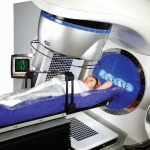
A combination of several well-known safety procedures could greatly reduce patient-harming errors in the use of radiation to treat cancer, according to a new study led by Johns Hopkins researchers.

A combination of several well-known safety procedures could greatly reduce patient-harming errors in the use of radiation to treat cancer, according to a new study led by Johns Hopkins researchers.

Yes, it’s in beautiful Dresden again and -- as in 2006 when the city last hosted the Congress of the German Society for Senology -- this year’s Congress President is Professor Rüdiger Schulz-Wendtland (Department of Radiology, University of Erlangen). However, the repetition ends there; the congress topics will be anything but repeated. Report: Meike Lerner

A major public hospital has become the first in Paris to be equipped with a Gamma Knife, the device that enables the surgeon to operate on the brain with no blade or blood involved.

IBA Group, a leader in advanced cancer diagnosis and therapy technologies and Royal Philips Electronics, announced they have entered into an agreement to create state of the art patient-centric proton therapy centers.

As one of the most advanced forms of precision radiotherapy, proton therapy enables the irradiation of tumours located deep within the body, in the proximity of critical organs, such as the optic nerve or some brain areas. The Institut Curie has renovated its proton therapy centre in Orsay near Paris. Since 1991, when the original centre opened, it has treated over 5,000 patients (4,000 for eye…

When planning radiotherapy the combination of positron emission tomography (PET) and Computed tomography (CT) can provide a better outcome than CT alone. Michael Krassnitzer asked Terri Bresenham MSc BSc, Vice President for Molecular Imaging at GE Healthcare, for her views on the value of PET/CT, the new EANM guidelines, novel tracers and the future of other hybrid imaging technologies.
Agenzia Provinciale Per la Protonterapia (ATreP) has signed a contract with Ion Beam Applications S.A. (IBA), based in Luvain-La-Neuve, Belgium, for the installation of a proton therapy centre in a new hospital planned for Trento. Over the next 15 years, IBA will provide the construction, installation and technical operation of this the first gantry-equipped proton therapy-dedicated centre in…

Oncologists have a dream: they want to use highly energetic ion beams in good quality and accurately defined dose for a pin-sharp and cost-effective radiation treatment of tumors. Modern techniques based on intense laser pulses may in the future replace expensive conventional particle accelerators. A team of physicists of the Cluster of Excellence "Munich-Centre for Advanced Photonics" (MAP) lead…
Scientists are closer to discovering why some people respond to breast cancer radiotherapy better than others, according to Breast Cancer Campaign. Dr Laura Smith, at the Leeds Institute of Molecular Medicine, University of Leeds, has been awarded a pilot grant by Breast Cancer Campaign, to study why some types of breast cancers are difficult to destroy with radiotherapy.

Cases of hepatocellular carcinoma (HCC), one of the most frequently occurring cancers throughout the world, are expected to increase dramatically in the next 10-15 years in Germany alone. The main reason is the increased occurrence of fatty hepatitis. Thus, in the future, interventional radiologists will also be increasingly involved in HCC patients treatment.
Am 2. November wurde das Heidelberger Ionenstrahl-Therapiezentrum (HIT) feierlich eröffnet. Die am GSI Helmholtzzentrum für Schwerionenforschung in Darmstadt entwickelte Krebstherapie steht nun erstmals im Routinebetrieb einer großen Patientenzahl zur Verfügung. Bislang wurden Patienten ausschließlich am Therapieplatz bei GSI behandelt. Die Therapie mit Ionenstrahlen…
Hologic is using the annual meeting of the American Society for Therapeutic Radiology and Oncology (ASTRO) at McCormick Place in Chicago, November 1 through 5, 2009, to feature the MammoSite ML radiation therapy system.
Founded and managed by Prof Peter Schlag, the Charité Comprehensive Cancer Centre (CCCC) co-ordinates cancer diagnostics and therapies across all medical disciplines. Interdisciplinary tumour boards decide on therapies/strategies; cooperation is close with general practitioners, regional hospitals and clinics.
Several health insurers now flag patients who have either exceeded a radiation dose threshold or have had over five CT examinations to the most vulnerable body areas.

Intra-operative radiotherapy (IORT) using the Intrabeam system from Carl Zeiss has been confirmed as a new alternative to the current approach to radiotherapy for breast cancer, by scientists and physicians at a symposium on IORT technological developments held in Germany.

IMRT is an evolving method of treatment for complex forms of cancer. Although patients benefit from treatment, a precise evaluation of that benefit and overall cost-effectiveness of the method is still an uncertain science. Mark Nicholls reports

Not long after the first earth was moved on a site in Wiener Neustadt (Vienna's Newtown), in the County of Lower Austria, and tests were carried out to ensure the long-term stability of a particle accelerator and weighty equipment in treatment and research facilities, we spoke with Professor Ramona Mayer, Medical Director at EBG MedAustron GmbH, about the firm's planning and future operation of…
Studies show promise for fast, 5-day therapy for early-stage breast cancer patients

Biomarkers are biochemical features or facets that can be used to measure the progress of disease or the effects of treatment.
To date, there is insufficient knowledge as to the cause of this disease, or how to prevent it. We asked some of our EH correspondents to report on measures taken in their countries to ensure that men are made more aware of this disease and whether screening services are provided for early prostate cancer detection.

The Institute of Cancer Research in London, UK, offers a new research tool for calculating emission spectra from X-ray systems on their website. The SpekCalc computer programm is made available free of charge to medical physicists who need to describe the spectrum generated by an X-ray set used in radiotherapy and diagnostic radiology.

Radiation can't be seen or felt; it has no smell and our senses can't feel it — still it can cause great harm. Therefore, many fears are associated with radiation.

It was a mistery: Why didn't drugs which boost the tumor-killing power of immune cells in lab do well in clincal trials? Now researchers from Rockefeller University describe a way to enhance the ability of these drugs by combining them with radiation therapy.

Proton therapy is very sophisticated way of destroying tumours. Now the Swedish Medical company RaySearch Laboratories has signed a consulting agreement with Uppsala University Hospital in Sweden to develop a treatment-planning system.

Limited public and political awareness of colorectal cancer (CRC), few formal screenings programms, delayed access to treatment - the first cross-country report on the management and funding of colorectal cancer (CRC) reveals an urgent need for action to improve the survival of patients in Europe and Australia.