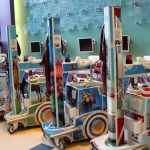
News • Radiology for children
Agfa migrates Children's National into digital age
Lowering radiation exposure for pediatric exams while increasing image quality with direct radiology systems proved mission critical for leading clinicians.



Lowering radiation exposure for pediatric exams while increasing image quality with direct radiology systems proved mission critical for leading clinicians.
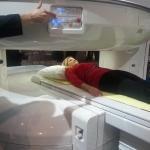
Hitachi has double-down its bet on the advantages of open-platform MRI by introducing a new generation of the Oasis 1.2T scanner this year at RSNA. The jump to new processing power and the new Origin 4.0 MR Operating Software effectively enhances capabilities with a range of new applications for neuro, orthopedic and vascular imaging as well as enhancing routine exams for women's health and…
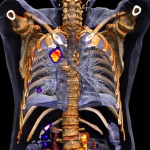
Dr Gerald Antoch, professor of radiology and chairman of the department of diagnostic and interventional radiology at Düsseldorf University Hospital and active member of several scientific societies, delivered the prestigious Wilhelm Conrad Röntgen Honorary Lecture at ECR 2015 on ‘Hybrid imaging: Let the two worlds of radiology and nuclear medicine come together’. Report: Marcel Rasch
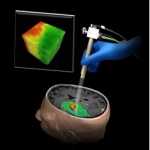
Brain surgery is famously difficult for good reason: When removing a tumor, for example, neurosurgeons walk a tightrope as they try to take out as much of the cancer as possible while keeping crucial brain tissue intact — and visually distinguishing the two is often impossible. Now Johns Hopkins researchers report they have developed an imaging technology that could provide surgeons with a…
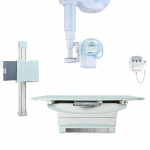
Shimadzu, worldwide leading manufacturer of diagnostic imaging equipment, has released the new digital radiography system RADspeed Pro EDGE in 2015 – the year of Shimadzu’s 140th anniversary. The system provides a wide range of functionalities: from tomosynthesis via dual-energy subtraction to modern auto-stitching to support diagnostics in clinical applications.
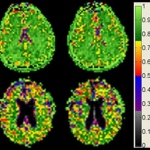
New, ultra-high-field magnetic resonance images (MRI) of the brain by researchers at the University of Illinois at Chicago provide the most detailed images to date to show that while the brain shrinks with age, brain cell density remains constant.
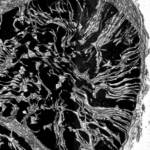
Newly released images revealing the ‘bicycle spoke’ structure of a heart cell may hold key clues to reducing damage from a heart attack.

Some athletes who take part in endurance exercise such as marathon running, endurance triathlons or alpine cycling can develop irregularities in their heartbeats that can, occasionally, lead to their sudden death. Evidence published in the European Heart Journal by Professor La Gerche and colleagues has shown that doctors who try to detect these arrhythmias by focusing on the left ventricle of…
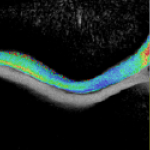
The tremendous progress of ultrahigh field magnetic resonance (UHF-MR) is a powerful motivator to transfer the lessons learned from basic research into the clinic. These efforts are fueled by the quest for advancing the capabilities of biomedical and diagnostic MRI, today. With this in mind momentum is gathering for broader clinical studies and applications. Realizing these opportunities, MAGMA -…

A screening method that combines a traditional PSA test with an MRI detects a significantly greater number of prostate cancer cases and improves diagnostic accuracy. The study was conducted as part of the largest international research project on prostate cancer. The method will now be tried with 40,000 subjects in Gothenburg.

Dr Sven Ballnus is Director of the Department of Intensive Care Medicine at the Hospital Centre Biel/Bienne, Switzerland, and an active member of the European Society of Intensive Care Medicine. Formerly a chief consultant in intensive care medicine at Westküstenkliniken in Heide, Schleswig-Holstein, Germany, he oversaw the development of an ultrasound course focusing on the specific needs of…

Manuela Messmer-Wullen awoke in her hotel room one morning, during a business trip, and realised she was hemiplegic. There were also cognitive impairments and she could not articulate. Diagnosis: Stroke. ‘In the very first period after the stroke, contact with radiologists was very strange and mysterious for me.’ Report: Michael Krassnitzer
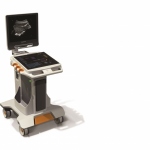
Carestream Health, the medical imaging and healthcare IT specialist, presented its latest innovation, the Touch Ultrasound System at this year’s ECR. This system offers a configurable all-touch control panel, a powerful processor, plus other innovative tools. European Hospital interviewed Andrew J Hartmann, the firm’s General Manager of the Global X-ray & Ultrasound Solutions division, to…
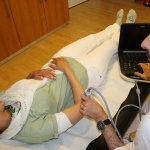
Dr Paul Klein, team doctor of the Bundesliga football club 1.FC Köln for over 11 years, has recently taken advantage of the loan of a Fujifilm SonoSite Edge point-of-care ultrasound system to monitor players during a training camp in the United States. The ten-day trip to Orlando, Florida, was in preparation for the second half of the football season, and Dr Klein was keen to have a diagnostic…
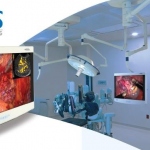
NDS Surgical Imaging (NDSsi) designed a revolutionary visualization platform for operating rooms and minimally invasive suites to help surgeons see more, know more, and ultimately do more for their patients. The company released its highly anticipated 27" Radiance® Ultra, a next-generation surgical visualization platform boasting the brightest LED backlight in its class*. The ultra-high…
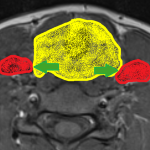
Imaging the head and neck is only rarely practised in radiology training and is highly complex and particulate, which is why, during our discussion with Professor Birgit Ertl-Wagner, Head of MRI at the Institute for Clinical Radiology at Grosshadern Hospital, Ludwig Maximilian University, Munich, she pointed out that many radiologists are not comfortable with orientation around this area. When…

The European Congress of Radiology (ECR), Europe’s largest medical imaging conference, took place on March 4–8 in Vienna, Austria, with an all-time high number of participants and various innovations. ECR 2015 also marked the 10th anniversary of its organiser, the European Society of Radiology (ESR).

The importance of cardiac imaging is increasing, but nuclear medicine procedures are by no means obsolete, observes Okan Ekinci, during our EH interview with the Siemens Vice President for Healthcare Consulting & Clinical Affairs about the latest innovations for cardiology.

Professor Hedvig Hricak MD PhD, Chair of the Department of Radiology at the Memorial Sloan-Kettering Cancer Centre, New York, and Professor of Radiology at Cornell University, Ithaca, New York, is a notable expert on crosssectional anatomic and molecular imaging, particularly of gynaecologic and prostate cancers. EH interviewed her about the potential and impact of more precise viewing of inter-…
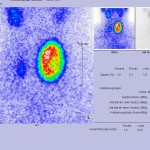
Before 2013, when Professor Dietmar Dinter became partner of Radiologie Schwetzingen, a multi-discipline group practice specialised in radiology and nuclear medicine, he was senior resident at the Institute of Clinical Radiology and Nuclear Medicine at University Hospital Mannheim (2003-2012) and head of its Nuclear Medicine Department (2009-2012). Was his work in nuclear medicine altered by the…
Ultrasound technology has evolved dramatically in recent years. A group of noted obstetricians and gynecologists maintain that ultrasound is more cost-effective and safer than other imaging modalities for imaging the female pelvis and should be the first imaging modality used for patients with pelvic symptoms.
Seeing a substantially increasing importance of the cardiac MRI procedure, cardiologists have developed a specialist cardiac MRI training programme for their colleagues.
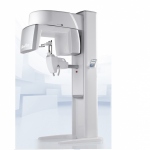
‘The engineering evolution of the NewTom range has delivered an ultra-modern, ultra-technological, ultra-competitive device – the most complete CBCT,’ the device manufacturer reports.
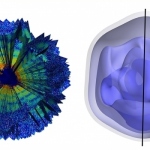
For the first time, researchers have produced a 3-D image revealing part of the inner structure of an intact, infectious virus, using a unique X-ray laser at the Department of Energy’s SLAC National Accelerator Laboratory. The virus, called Mimivirus, is in a curious class of “giant viruses” discovered just over a decade ago.

