Sponsored • R/F Digital
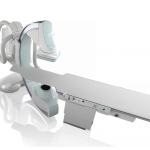
Shimadzu - Deep insights for extended applications
In the year of Shimadzu’s 140th anniversary, new systems continue the company’s tradition in diagnostic imaging providing innovative technologies and industry firsts.



In the year of Shimadzu’s 140th anniversary, new systems continue the company’s tradition in diagnostic imaging providing innovative technologies and industry firsts.
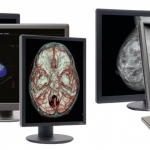
DICOM calibration is one of the defining characteristics of a diagnostic display. DICOM specifies when, where, and how to calibrate a display. DICOM recommends regular calibration, in the center of the display with a 10 % target and 20 % gray surround, using a calibrated photometer.
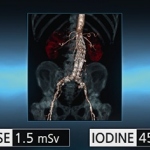
An independent survey conducted by the British Society of Cardiac Imaging (BSCI) yielded surprising results: Not only does Toshibas’ Aquilion ONE scanner deliver ultra-low radiation doses for cardiac CT, its next-generation PUREViSION detector also widens the scope of diagnostic cardiac CT. Radiologists agree that this innovative technology allows scanning of patients who previously would…
Venture capitalists are betting $100 million that an entrepreneur can develop an inexpensive and portable imaging device that can be used by office-based physicians.
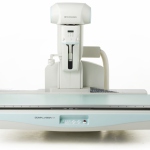
Premieres in Europe: The new RADspeed fit (DR ready) with its best-in-class features for general radiography as well as the new MobileDaRt Evolution EFX for mobile X-ray applications are the most recent developments provided by Shimadzu. Together with angiographic, R/F and C-arm systems, they make the main attractions on Shimadzu’s stand at ECR 2015 in Vienna, Austria – 4-8 March, Expo C,…
Carestream scientist Dr Samuel Richard will present a scientific paper documenting the impact of advanced imaging technologies on lung nodule conspicuity at the 2015 European Congress of Radiology (ECR).
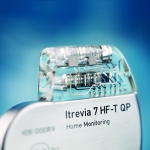
Cardiovascular technology specialist Biotronik has launched a new series of single and dual chamber implantable cardioverter defibrillators (ICDs) and cardiac resynchronisation therapy defibrillators (CRT-Ds). ‘The Iperia/Itrevia/Inventra series gained CE approval in July 2014 and marked its first implantations worldwide in mid-July,’ the multinational biomedical technology firm reports.
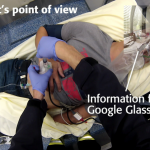
Wrist-watches, wrist and arm bands, tags, finger rings, clips, smart glasses, shoes, insoles, smart patches (as thermometers), sensors woven into fabrics for T-shirts and socks and, of course, implantable devices as well as ingested pills were displayed by 23 exhibitors in the Wearable Technologies Show at Medica this year. Report: Cornelia Wels-Maug
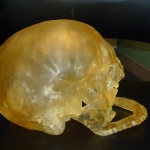
Researchers are using computed tomography (CT) and 3-D printing technology to recreate life-size models of patients' heads to assist in face transplantation surgery.

On the occasion of the 100th edition of Radiological Society of North America (RSNA), the largest international event in the field of radiology, Thales is proud to announce the launch of new innovative products.
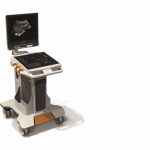
The most unexpected news at RSNA 2014 came from Carestream, a leader in x-ray imaging, when it announced it is entering the highly competitive and crowded field of ultrasound diagnostic imaging with the Touch Ultrasound System. Report: John Brosky

An independent survey by the British Society of Cardiac Imaging finds Toshiba Aquilion scanner delivering ultra-low radiation doses for cardiac CT. "This data is possibly the most powerful thing I can show about the Aquilion ONE with the PUREViSION detector," said Russell Bull, M.D., Consultant Radiologist at the Royal Bournemouth Hospital in Dorset, the United Kingdom.

On the occasion of the Euro ID and ID World International Congress 2014 in November in Frankfurt am Main, Germany, EH asked about the role of Radio Frequency Identification (RFID) in healthcare, during her interview with H Sprague Ackley, Technical Fellow at Honeywell Scanning & Mobility. Report: Cornelia Wels-Maug
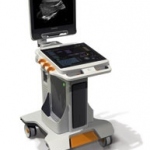
With unveiling scheduled for Sunday, Nov. 30, at the annual Radiological Society of North America (RSNA) conference, Carestream will debut its Carestream Touch Ultrasound System that offers a revolutionary combination of exceptional user experience and image quality to meet the needs of even the most demanding radiologists and sonographers.
In the year of its 40th anniversary, Schiller proudly presents an algorithm which immediately and accurately localises coronary occlusions and provides early detection of STEMI. This algorithm is now integrated in the sophisticated touch ECG devices, the Cardovit MS line.
For image management, they progressed from a video-based routing system to a system that uses the network.

Barmer GEK, Germany’s second largest statutory health insurer, is covering the expense of a web-based stimulation therapy developed by Caterna Vision GmbH, a spin-off from the University of Dresden. Report: Cornelia Wels-Maug
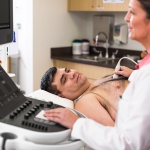
Launched at this year’s Medica, the new Affiniti ultrasound system was developed to help tackle increasing patient volumes and cost pressures, Philips reports.
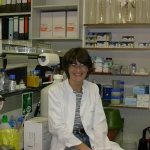
Among updates on breast cancer diagnostics and treatments aired at the 33rd German Society for Senology meeting last year was SpheroTest, an evidence-based tool that helps select the most effective drug for each individual cancer patient. Report: Anja Behringer
Hospital management seek more economic viability and efficiency in the operating theatre (OT) when deciding on the procurement of advanced Management Systems. The special software/hardware of systems achieve shorter operation and documentation times with uniform intervention outcomes.
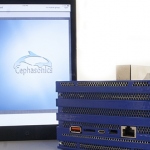
According to Gartner, the IT research and advisory company, the Internet of Things (IoT)*, excluding PCs, tablets and smartphones, will grow to 26 billion devices by 2020.
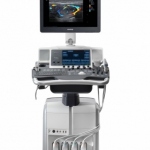
A new system, with wider bandwidth due to single-crystal technology combined with 3T technology, gives greater penetration and higher resolution

Although telemedicine could improve the quality of life of patients with chronic liver diseases, viable home care systems are still lacking. However, within the EU-project ‘d-LIVER’ (www.d-liver.eu) scientists at the Fraunhofer Institute for Biomedical Engineering IBMT, in St. Ingbert, Germany, are working with European partners to develop an IT- and cell-based system that will help chronic…
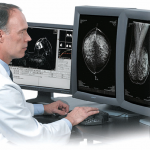
A new study has suggested that mammography screening of healthy women can help to significantly reduce deaths from breast cancer. Much will now depend on new treatments and more systematic management of patients. Report: Mark Nicholls

Donor transplant rejection and cancer relapse have two things in common: early recognition is vital and monitoring is hugely challenged.