

Transforming healthcare
Philips at MEDICA: New healthcare solutions developed with users and patients help improve the recovery process and treatment options for patients while supporting medical staff in their work

Philips at MEDICA: New healthcare solutions developed with users and patients help improve the recovery process and treatment options for patients while supporting medical staff in their work

It looks like a drug, it is injected in patients like a drug, but its acts like a medical device. Welcome to the new world of nanomedicine.

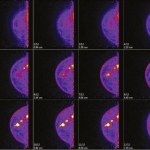
An innovative technology is enabling radiologists to provide more accurate diagnoses.

Okan Ekinci, Global Director of Cardiology at Siemens Healthcare, is convinced that, ultimately, ultrasound will remain the ‘entry level’ imaging procedure for patients. European Hospital met up with him at this year’s ESC congress to hear his thoughts on the potential of ultrasound – and particularly its fusion with other imaging modalities.

Performing manual chest compressions well for an extended period of time is almost impossible.

Beckman Coulter’s new Access AccuTnI+3 troponin I assay has received FDA clearance for its UniCel DxI series of immunoassay systems at the same time as having a new CE Mark approved on the UniCel DxI and Access 2 immunoassay instruments.

A Technology Strategy and Roadmap to plot the course of IT within the National Health Service (NHS) over the next few years was unveiled recently by NHS England.

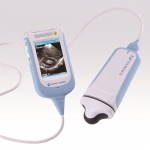
New technological opportunities make it continuously easier to use medical devices anywhere, for in- and out-patient care. The technology has become mobile – and so have the patients. In-patient monitoring can be carried out wirelessly, independent of a patient’s respective location.

The current setup for MRI-guided interventions is challenging. With a physician positioned in the MRI room and an MRI operator in an adjacent room, setting scanning parameters requires communication by hand signals or via a headset that comes with inconvenient cabling.

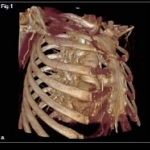
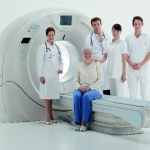
Somatom Force – the new computer tomograph (CT) from Siemens – recently had its first public presentation worldwide at the University Medical Centre Mannheim, Germany.

The CMEF autumn show turned out to attract crowds from China, East and Central Asia, Africa, Europe, the U.S., and further regions.

Scientists at Imperial College in London, United Kingdom, have developed an ‘intelligent knife’ that instantly informs surgeons whether the tissue they are operating on is cancerous.

Crowds of hospital delegates flocking in to Xiamen on the first day of CMEF had already suggested that the event will be welcoming more than the roughly 60,000 delegates expected to participate

Although traditionally exporting timber and machinery, today Finland has established itself as a producer of high-tech products. This includes innovative medical technology.

The development of this tradeshow embodies the transformation China has gone through during the past decades: from its inception in 1979, CMEF – the China International Medical Equipment Fair – has developed into the largest event for the medical technology and IVD sectors in China and indeed in the Far East.

Already popular in private healthcare, increasing global acceptance of refurbished equipment encourages uptake in the public sector.

Professor Axel Haverich and team at the Clinic for Cardiothoracic, Transplant and Vascular Surgery in Hanover Medical School (MHH) have been carrying out research into decellularised heart valves for over 15 years. They trialled a procedure – initially in the laboratory and in animal experiments – which does not cause tissue rejection, is hoped to last a lifetime and, in the case of children,…

The healthcare sector is still booming in China: improved access to care remains high on the agenda of the Chinese national government, attracting domestic and international offerings.

Double-digit growth in Asia-Pacific and emerging markets to offset stagnation in US and Europe.

Plenary session endorsed essential measures that strengthen patient safety and improved the approaches on the approval system. The vote still leaves significant questions regarding the safety level for re-processing of medical devices.

Infusion solutions on the basis of HES (hydroxyethyl starch) are blood volume substitutes. They replace missing blood volume in patients with high blood loss, they stabilize the blood circulation and restore oxygen and nutrient supply to organs.

Telemedicine Clinic, Europe’s leading teleradiology company, has launched the TMC Radiology Quality Award, a €10,000 prize to promote quality initiatives within European radiology.

Medical technologies have maintained a leading position in European patent registrations for 15 years.

Eucomed, the European medical technology industry association, expresses disappointment and strong concern at the outcome of a vote in the European Parliament’s Committee for Environment, Public Health and Food Safety (ENVI).

The results of a survey amongst medical device companies in Europe about the financial impact of the upcoming changes in the European medical device regulation show a significant increase in costs for bringing new devices to patients.