Article • Pros & cons
Goodbye to the microscope? Not yet!
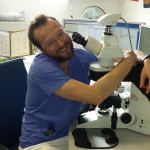
Carol - I. Geppert MD, from the Institute for Pathology at Erlangen University Hospital, Friedrich Alexander University Erlangen-Nuremberg, debates the impact of digitisation on pathology.



Carol - I. Geppert MD, from the Institute for Pathology at Erlangen University Hospital, Friedrich Alexander University Erlangen-Nuremberg, debates the impact of digitisation on pathology.

Strictly speaking, digital pathology has not yet resulted in any groundbreaking changes for clinical diagnostics. The conventional light microscope introduced to pathology around 100 years ago continues to be the most important tool for pathologists.
A UK-based neuropathologist has highlighted how the digitisation of pathology will play a pivotal role in taking patient care on to a new and more efficient level. Speaking in a recent Webinar under the heading The Adoption and Benefits of Digital Pathology for Primary Diagnosis, Dr Daniel du Plessis also noted how the digital era would raise the profile of pathology and ‘bring it out of the…

Willem Jonker, CEO EIT Digital, today announced the results of the organisation’s €1 billion investment in digital innovation and entrepreneurship at the Driving Europe’s Digital Transformation conference in Brussels. He also announced plans for an additional investment of €1 billion over the coming years. EIT Digital will accelerate market uptake of research-based digital technologies by…

Researchers at Umeå University in Sweden have developed a method that simplifies the diagnosis of ear infections (otitis media), something which annually affects half a billion children worldwide. The software-based method automatically analyses images from a digital otoscope and enables highly accurate diagnoses. The method is described in the journal EBioMedicine.

A final agreement concerning the sale of Toshiba Medical Systems Corporation (TMSC; headquarters: Otawara, Tochigi Prefecture, Japan; President: Toshio Takiguchi) to Canon Inc. has been reached, as announced today by th parent company, Toshiba Corporation. As of today, TMSC will become independent from the Toshiba Group.
The annual congress of the ESR is a great showcase for the latest advances in the imaging sciences and an important platform to see where the industry is heading.

NAO, a humanoid robot described by his creators as a “little character with a unique combination of hardware and software,” can read your moods, recognize your family members, and learn your preferences in music, movies, and food.

École polytechnique fédérale de Lausanne (EPFL) scientists have developed a new method that turns cells into stem cells by "squeezing" them. The method paves the way for large-scale production of stem cells for medical purposes.
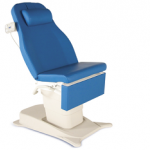
The all-electric eMotio couch, the most efficient examination couch ever designed, should become the new assistant for general practitioners and specialists. Promotal carried out the largest study ever conducted in medical furniture, with two hundred doctors from six European countries.
In addition to physical examinations, medical history laboratory test results are critical in almost all medical decisions made in the hospital. The demand for adequate, fast measurements has increased exponentially over at least the last 50 years and may have increased 100-fold, or more, since the 1950s. This could not have been achieved without the introduction of partial or full automation, of…
Royal Philips and Banyan Biomarkers, Inc. today announced that they have entered into a multi-year joint development agreement to develop and commercialize a new handheld blood test to detect and evaluate mild traumatic brain injury (TBI) - also known as concussion - at the point of care. The new handheld test will be based on Philips’ Minicare I-20 system. The financial details of the…
Doctors at the Duke University School of Medicine have tested a new injectable agent that causes cancer cells in a tumor to fluoresce, potentially increasing a surgeon’s ability to locate and remove all of a cancerous tumor on the first attempt. The imaging technology was developed through collaboration with scientists at Duke, the Massachusetts Institute of Technology (MIT) and Lumicell Inc.
Antibodies combat viruses and bacteria. They also attach themselves to cancer cells – in a typical, characteristic way. Fraunhofer scientists are using this property to detect cancer cells in tissue samples. Such rapid tests can already be applied by surgeons during operations – within a few minutes and without expensive equipment.

A new report gives the first ever picture of global investment in Ebola research and development (R&D), reporting that this investment might have come at the expense of efforts to develop drugs, vaccines and diagnostics for other neglected diseases, which collectively cause more than six million deaths every year in developing countries.

Whether they are wireless pacemakers or catheter-guided heart valve implants, new, really innovative products must reach patients – somehow. Thus manufacturers need to ensure that the hospitals that buy their products will be reimbursed. New diagnostic and treatment methods are not captured by a system based on the analysis of older methods. Holger Zorn spoke with Nicole Eisenmenger, Director…

In the world of technology, the term Industry 4.0 is already well known. Univ-Prof. Dr. rer. nat. Bernhard Wolf has reveals a comparable development in medicine. Smart systems and personalisation have enormous potential, the Professor for Medical Electronics at the Technical University of Munich is convinced.
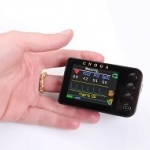
CNOGA Medical Ltd. is a leading developer and manufacturer of innovative e-health ecosystems for non-invasive, pain-free bio-marker monitoring and cloud-based ecosystem technology. At MEDICA CNOGA Medical presents its new Ecosystem Infrastructure of Non-Invasive Hemodynamics, Blood parameters & Blood gases Monitoring Devices, Cloud-Based Platform and Mobile Application.
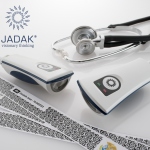
JADAK will launch the XE-80P, a portable, battery-powered thermal printer and chart recorder, at Medica, in Düsseldorf, Germany, Nov. 16-19, in Hall 13, Suite Room 8. The XE-80P’s unique Charge-on-Demand™ feature allows the user to choose when the printer will charge, which reserves all power for the host device’s functions during a critical event. The XE-80P is the first printer JADAK…

Northwestern University scientists have developed the first liquid nanoscale laser. And it’s tunable in real time, meaning you can quickly and simply produce different colors, a unique and useful feature. The laser technology could lead to practical applications, such as a new form of a “lab on a chip” for medical diagnostics.

Hearing loss is one of the most common birth defects, with more than 12,000 children in the United States affected each year. Three students in Wichita State University's biomedical engineering program recognized this issue and designed their senior project to create a therapeutic toy to provide early intervention therapy for children with auditory disabilities.
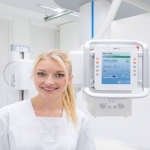
At Agfa HealthCare, we have long recognized the need for a balance between high image quality and the management of dose. With the cesium phosphor technology enhanced and empowered by the gold standard MUSICA image processing software, renowned for delivering diagnostic value images and making it easy to see details, radiologists are potentially able to provide a dose reduction of 50% to 60%*.…

Health technologies are not governed by the real needs and challenges of healthcare systems, reveals a new University of Montreal study. "Such concerns are absent from public innovation policies and indeed in the way venture capitalists think," said Professor Pascale Lehoux of the university's Department of Health Administration, who led the research. She was motivated by a desire to…

In an interview in advance of the European Health Forum in Gastein, Dr. Stanimir Hasurdjiev, a board member of the European Patients’ Forum, talked about the challenge of multimorbidity and how to make it work for the patient. Report: Michael Krassnitzer

With more than 50,000 newly diagnosed cases each year, lung cancer is one of the most common types of cancer in Germany. As yet, however, very few statistics are available on the care situation of lung cancer sufferers and the associated costs. Scientists at the Helmholtz Zentrum München have now analyzed comprehensive health insurance data in order to discover the cost of the disease and which…