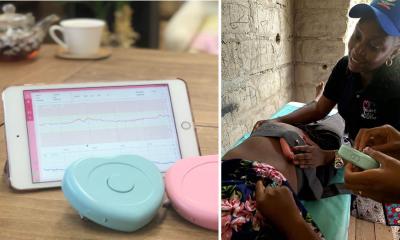


News • Expression analysis
Smartphone tool detects stroke from face scan
A new smartphone face-screening tool could help paramedics to identify stroke in seconds – much sooner and more accurately than is possible with current technologies.



A new smartphone face-screening tool could help paramedics to identify stroke in seconds – much sooner and more accurately than is possible with current technologies.
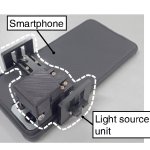
New research could revolutionize noninvasive monitoring of blood glucose levels (BGLs): a Japanese team developed a novel methodology to estimate BGLs from near-infrared light (NIR) measurements.

Holding a mobile phone close to the head for an extended amount of time has long been connected to brain cancer. Now, a new study found no hints for an increased risk.

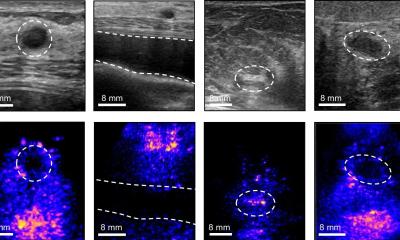
Ultrasound technology now plays a vital role in clinical diagnosis and management. Significant advances in point-of-care ultrasound (POCUS) have made it a versatile tool for assessment, diagnosis, and follow-up across various fields. New developments continue to expand its applications, improving patient care and outcomes.

A research team led by the Institute for Bioengineering of Catalonia (IBEC) and Hospital del Mar has conducted a study to analyze cough sounds recorded by smartphones in patients with Covid-19.
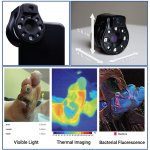
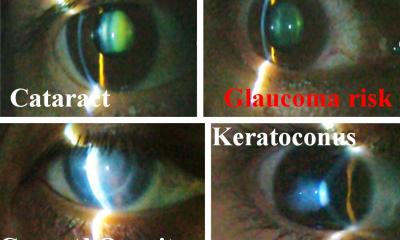
Scientists have developed a device that works with a smartphone or tablet to capture medical images which can identify infected wounds through thermal and fluorescence imaging.
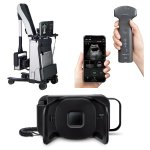
Medical imaging is critical across many fields of healthcare – but accessing it in remote or rural locations can be a struggle, resulting in missed appointments or delayed diagnoses. Fujifilm Healthcare Europe is a leading provider of medical imaging solutions across all modalities, and offers a range of portable imaging systems that allow imaging solutions to be taken closer to the patient.

Innovative gastrointestinal imaging, medical panel PCs with hygiene optimisation, smartphone-based diagnostic tools, and sustainable hardware setups: At Medica 2022, manufacturers from Taiwan again showed their capability to adapt and provide solutions for a world radically changed by the Covid-19 pandemic. Under the “Taiwan Excellence” banner, outstanding products from the island nation’s…

Driving the healthcare industry towards digital transformation was the main direction of Automa+ 2022. The Congress gathered leaders from hospitals and healthcare providers, pharmaceutical companies, governmental bodies and institutions as well as medical device manufacturers, service providers and start-ups in Zurich, Switzerland on September, 26-27, 2022.
Atrial fibrillation screening using conventional smartphones more than doubles the detection and treatment rate in older people compared to routine screening, new research finds.

Researchers are developing wearable devices to catch early signs and symptoms of diseases or monitor sick patients. We spoke to wearables and medical device expert Professor John Rogers about the benefits, challenges, trends and innovation within the sector.

Can mobile phones increase the risk of brain cancer? A new, large study was unable to verify such concerns. However, the researchers say it might still be a good idea to cut back on smartphone time.
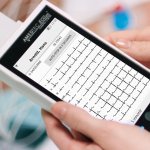
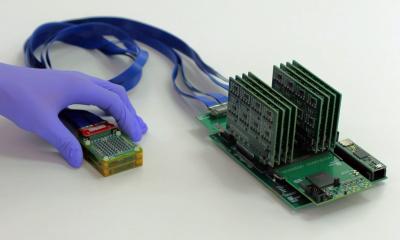
The CardioPart 12 WLAN is a 12-lead resting ECG which fits into your pocket. Its compact design is equipped with a brilliant touch screen display, bar code reader and available on a 24/7 basis. Learn more at www.amedtec.de.

An in-depth analysis of more than 20,000 health related mobile applications (mhealth apps) finds “serious problems with privacy and inconsistent privacy practices.”
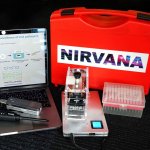
Clinicians using a new viral screening test can not only diagnose Covid-19 in a matter of minutes with a portable, pocket-sized machine, but can also simultaneously test for other viruses—like influenza—that might be mistaken for the coronavirus. At the same time, they can sequence the virus, providing valuable information on the spread of Covid-19 mutations and variants. The new test, dubbed…
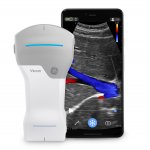
GE Healthcare has launched a new wireless, pocket-sized ultrasound system called Vscan Air. The device runs in the tradition of GE's Vscan Family systems, of which the company report over 30,000 to be in use worldwide. The system is designed to transform the clinical exam by making it easier to acquire high quality ultrasound images. “Many of us are pressed to see patients, to give patients…
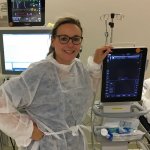
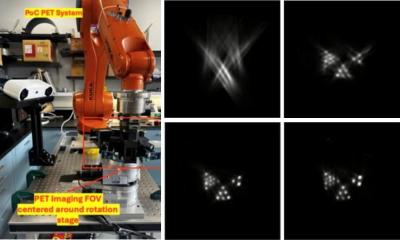
Due to the coronavirus, hospitals and medical staff developed new work practices involving, in acute settings, social distancing, rigid use of personal protective equipment (PPE), handwashing, and disinfection of equipment every day. Additionally, portable, highly-mobile and versatile equipment came to the fore in point-of-care (POC) – particularly when wards and operating theatres are spread…
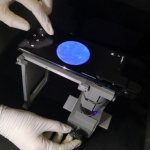
Researchers at the University of Arizona are developing a Covid-19 testing method that uses a smartphone microscope to analyze saliva samples and deliver results in about 10 minutes. The research team, led by biomedical engineering professor Jeong-Yeol Yoon, aims to combine the speed of existing nasal swab antigen tests with the high accuracy of nasal swab PCR, or polymerase chain reaction,…
Magnetic resonance imaging (MRI) is indispensable in medical diagnostics. However, MRI units are large and expensive to acquire and operate. With smaller and cost-efficient systems, MRI would be more flexible and more people could benefit from the technique. Such miniature MRI units generate a much weaker signal that is difficult to analyze, though. Researchers at the Göttingen Max Planck…