


3-in-one and multi-functional
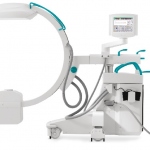
Shimadzu has launched a new fully digital R/F system, the Flexavision F3, which has a portable dynamic flat panel detector (FPD) – making this a system suitable for fluoroscopic as well as radiographic applications.

Shimadzu has launched a new fully digital R/F system, the Flexavision F3, which has a portable dynamic flat panel detector (FPD) – making this a system suitable for fluoroscopic as well as radiographic applications.

In Europe, 350,000 women are diagnosed with breast cancer annually. About 90% of them can be cured if the cancer is detected at a very early stage. To improve early detection almost all European countries have gradually initiated regional screening programmes, even though the benefits are discussed controversially from time to time.

The injury was as spectacular as it was ruesome. Struck by a train a male patient was brought to the emergency department in Munich, his right foot hanging on only by muscle and bloody tendons, the bone shattered.

Johns Hopkins neurologists report success with a new means of getting rid of potentially lethal blood clots in the brain safely without cutting through easily damaged brain tissue or removing large pieces of skull. The minimally invasive treatment, they report, increased the number of patients with intracerebral hemorrhage (ICH) who could function independently by 10 to 15 percent six months…

The innovation leader in CT and a pioneer in low dose: Siemens introduced a new class of CT which is built for business and designed for efficiency.

Putting patient safety first is a priority for both HERCA, the association of the Heads of European Radiological Protection Competent Authorities and COCIR, the European trade association representing the medical imaging, electromedical and healthcare IT industry, who are working together to address concerns related to radiation exposure in computed tomography (CT).

The next generation of integrated operating systems celebrated a world premiere in clinical use this November in Leipzig Germany. EH Correspondent Holger Zorn was there when Professor Gero Strauss entered the Surgical Deck of the International Reference and Development Centre for Surgical Technology (IRDC) as ´Commander`.

Much has changed for medical device manufacturers. Take scanner development; whereas the aim has long been to increase multi-slices, produce higher field strengths and sharper images, optimise the ergonomics and then launch the new product at a specific group of customers, in recent years this approach became insufficient.

Medical imaging is no longer limited to diagnosis and evaluation. New, high resolution imaging systems enable very precise positioning of lasers, endoscopes and micro-instruments for surgery near the nerves, spinal cord or blood vessels and for selective tumour destruction, with minimum levels of pain and low complication rates.

The multipurpose BRANSIST alexa, which aims to provide total support for advanced catheterisation procedures, features a 12 x 12-inch flat panel detector (FPD) – an ideal size, the manufacturer Shimadzu points out, for covering interventions from head-to-toe, from brain blood vessels, cardiac and abdomen to peripheral blood vessels in the upper and lower extremities.
Italy is a front runner in diabetic foot revascularisation. Among the country’s pioneers is Professor Roberto Gandini, at the Diagnostic Imaging and Interventional Radiology Department, University of Tor Vergata in Rome, who has developed and improved new technical options in peripheral vascular disease intervention, a technique that now saves about 92% of patients from major amputations due…

iSOFT Radiology reporting has been upgraded with complementary and double mammography reporting. This upgrade is available to iSOFT RIS users with immediate effect. The new workplace profile contains reports for correction and release, as well as the examinations to be appraised.

Moving from 6-slice scan to a 64 row CT, Vierzon Hospital steps up to advance functionalities and explores the potential for news types of examinations, John Brosky reports.

This week, university hospital Klinikum rechts der Isar in Munich, Germany, is the first hospital in the world to operating Brainlab’s Curve Image Guided Surgery system. Curve is Brainlab’s latest generation of image-guided surgery systems. The new technology provides surgeons with better guidance and control during surgery enabling faster, more precise and safer interventions.

Prof. Uwe Nixdorff from the European Prevention Centre, Düsseldorf advocates cardiologists combine IMT measurement with ALOKA’s pulse wave intensity function to check for unseen coronary heart disease: “This technique is currently seldom used, however in my experience it provides a more complete picture and enables me to treat patients earlier for life-threatening conditions that are often…

Researchers in Sheffield have been given an mportant grant to trial state-of-the-art computer modelling systems that could provide a breakthrough in the treatment of patients with heart failure.

Two years ago Dr Michael Michell and team at King’s College Hospital, London, set out to explore the benefits of tomosynthesis over conventional 2-D mammography. Their study has shown advantages in diagnostic accuracy and indicates that tomosynthesis could help to reduce the number of patient recalls for further examination and thus anxiety among women.

Whilst the benefits of teleradiology as a diagnostic tool continue to grow, concerns have been raised about the lack of uniformity in reporting protocols across Europe. Mark Nicholls reports

Royal Philips Electronics is announcing 510(k) clearance from the Food and Drug Administration (FDA) for the company’s first commercially available whole body positron emission tomography/magnetic resonance (PET/MR) imaging system, the Ingenuity TF PET/MR.

Carestream Health provides innovative digital radiography systems that satisfy these goals while simultaneously helping to reduce expenses for healthcare providers worldwide. It also markets powerful systems that efficiently manage radiology workflow—from the scheduling of patient x-ray exams to reading of those imaging studies by radiologists, and ultimately the delivery of radiology reports…
By combining conventional medical imaging with some of the same 3-D modeling techniques used in Hollywood blockbusters, researchers are offering new hope to victims of serious facial injuries. Results of a new study on human face transplantation, led by Darren M. Smith, M.D., plastic surgery resident at the University of Pittsburgh Medical Center (UPMC), were presented today at the annual meeting…
Amid increased scrutiny over medical imaging scans and the use of radiation, a new survey reveals that awareness and familiarity with medical imaging tests lead to clearer decisions for U.S. adults about their healthcare. The survey, released by the Siemens Radiation Reduction Alliance (SIERRA) – an expert panel established to advance the cause of dose reduction in medical imaging – evaluated…

Agfa HealthCare announces that it will launch its automated DX-D 600 direct radiography (DR) system, which has received 510k clearance by the U.S. FDA, into the U.S. market at RSNA 2011. Combining user-friendly design with excellent image quality in a high-productivity direct digital X-ray room, the fully automatic system also offers the latest in state-of-the-art auto-positioning technology.

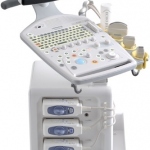
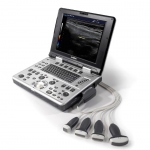
Siemens Healthcare launched the ACUSON S3000, its latest ultra-premium ultrasound platform, at the 97th Scientific Assembly and Annual Meeting of the Radiological Society of North America (RSNA) in Chicago, USA. The new system includes advanced automated ultrasound fusion imaging as well as multi-modality review capabilities to provide additional clinical and spatial information in the analysis…

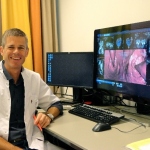
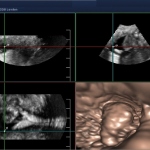
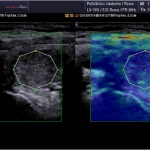
Dr Katja Gabriel of the Hirschhauser & Gabriel Obstetrics and Gynaecology Practice in Erkrath, Germany, describes clinical experience with this novel technique and the resulting improved diagnostic accuracy.