The ultimate in ultrasound
A joint meeting combining the Euroson and Three Countries congresses creates a veritable European summit on the state-of-the-art in ultrasound



A joint meeting combining the Euroson and Three Countries congresses creates a veritable European summit on the state-of-the-art in ultrasound
We must not forget that despite advances, cardiovascular disease remains the number one killer in Europe.
Like any other cancer – breast cancer is a highly individual disease, shaped by many factors such as age, health status or genetics. Due to the complex web of molecular pathological processes and resistance mechanisms it is very difficult to select the most effective therapy for each patient.
A record 1,700 participants from 84 countries confirmed the dimension and international importance of the European Association of Endoscopic Surgery Congress held recently in Vienna, where Hans-Christian Pruszsinsky caught up with Congress President Professor Selman Uranüs, Head of the Section for Surgical Research, Medical University of Graz, for our interview.
Germany's hospitals are currently experiencing a construction boom: Whether its renovation, expansion or even new construction - the number of construction projects at German health care facilities is currently higher than at any time for 35 years with more than 1050 projects currently being implemented.

Through recent decades, the Republic of Korea in East Asia has developed into a society with an advanced economy. To Europeans, the culture and cuisine are certainly very different – and highly attractive to tourists.
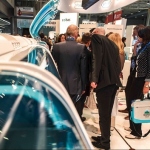
Milan, Italy – The 20th European Congress of Clinical Chemistry and Laboratory Medicine certainly lived up to its claim as the EU’s largest event of its kind – 2,407 visitors and 4,786 delegates from 101 countries plus 82 exhibitors fanned out or arranged themselves over the event’s 3,500 square metres, Hanna Politis reports
According to Molly Polen, at the AACC, great opportunities lie ahead for laboratory medicine and, to seize them, ‘meeting with colleagues and learning about new technologies is a critical first step. The 2013 AACC will provide these and other opportunities, such as informative sessions and live demonstrations of new technology.’
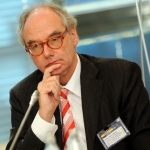
‘How can we make European healthcare systems resilient against crises and still remain innovative?’ asks Professor Helmut Brand, President of the European Health Forum Gastein (EHFG), highlighting the core issues of this year’s agenda of the renowned event (2-4 October).
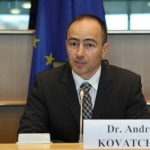
The second conference on “Health Inequalities in the ‘New’ EU Member States and Candidate Countries” held at the European Parliament on 26 June 2013 produced high impact results.

Access to healthcare is a fundamental citizen’s right. However health disparities still exist and are even more put at risk with the economic crisis and austerity measures.
Countries vary considerably in the number of cases in which artificial knee joints are employed, according to researchers from the Medical University of Graz (Austria) reporting at the EFORT Congress in Istanbul.
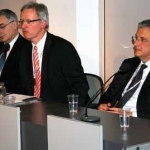
At this year’s ECR the first of two Management in Radiology (MIR) sessions addressed the issue of innovation management and future challenges.
In the meantime, the Compamed Spring forum has become as much a part of the furniture as the Compamed in Düsseldorf - the leading international specialist trade fair for suppliers to the medical technology industry which has been held every year in November since 1992.
Leaders from electronic health programs in 22 countries attended the first-ever IHE World Summit to take on the challenges of advancing patient care in the digital era.
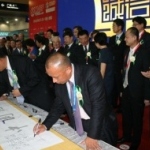
CMEF, the China International Medical Equipment Fair, is a semi-annual tradeshow which presents innovative products from and for China, and a cornucopia of educational congresses, workshops on financing, seminars on regulatory and policymaking issues as well as networking opportunities.
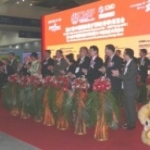
Improving access to care still is a key goal of the Chinese national government. Broadening insurance coverage and supplying diagnostic devices as well as IT-based communication tools, in particular to the needy rural care providers, are major elements of the campaign for modernization.
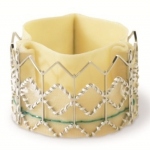
Edwards Lifesciences Corporation, the global leader in the science of heart valves and hemodynamic monitoring, announced the three-year results of a pivotal clinical study of severe aortic stenosis patients at high-risk for surgery.
‘All human body cells contain the same DNA, but every type of cell – for example a muscle cell compared to that of a nerve – has a different gene expression pattern’, said Dr Sonja Stadler, speaking at the 2012 congress of DGKL (German Society for Clinical Chemistry).
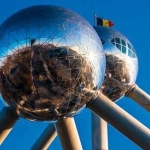
Belgium – Last year, the annual ISICEM event attracted almost 6,000 participants from 101 countries. Its chairman, Professor Jean-Louis Vincent, from the Intensive Care Medicine Department in Erasme University Hospital, Brussels, offered EH a few reasons for its continuing success.
The movement for interoperability among health information devices and systems has spread across Europe reaching Turkey, which will be host to the European IHE Connectathon in Istanbul this April
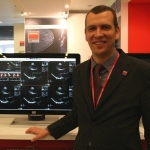
Here comes a new, aesthetic look and feel of display systems, advanced LED technology, and cranked up luminance enhancing image quality: imaging specialists from Barco are taking their displays to the 21st century.
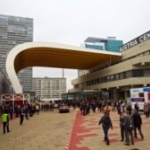
The 25the European Congress of Radiology ended yesterday in Vienna.
“We finally have tools to non-invasively study the human brain in normal subjects and diseased patients,” says Professor Stefan Sunaert, Head of Translational MRI at the Department of Imaging & Pathology at Leuven University Hospital (Belgium).
It is an every-day occurrence in any emergency department: patients presenting with severe flank pain. In roughly 50 percent of these cases, the pain is caused by a stone. 15 percent of all men and six percent of all women suffer from stones in kidney, ureter, bladder or urethra at least once in their lifetime

