News • Mammogram analysis
AI accurately classifies breast density
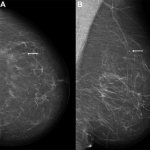
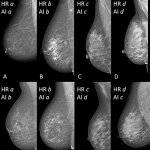
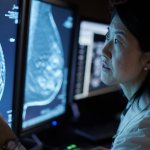
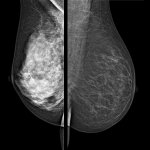
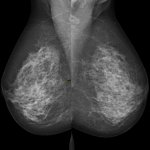
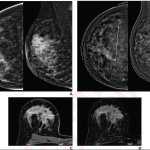
A software based on deep learning with convolutional neural networks can accurately and consistently classify breast density on mammograms according to BI-RADS criteria.

A software based on deep learning with convolutional neural networks can accurately and consistently classify breast density on mammograms according to BI-RADS criteria.

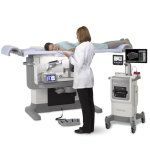
When it comes to your patient’s health, certainty matters. Breast biopsies play a vital role in the continuum of care for women, providing insights into mass and calcification identification so you can make the best-informed decisions.

Fujifilm aims to become an entity that can contribute to the advancement of human health by supporting the ongoing transformation in the healthcare industry – as a “One-Stop” solution partner.

Groundbreaking technologies have improved our ability to accurately diagnose breast cancer and reduce callbacks, focusing on compassionate care for patients as they move along their breast health journey.

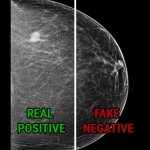
Artificial intelligence (AI) models that evaluate medical images have potential to speed up and improve accuracy of cancer diagnoses, but they may also be vulnerable to cyberattacks.

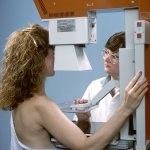
Mammograms are a safe, effective way to detect the presence of breast cancer in women. But doctors recommend most females should start getting mammograms after the age of 40 in part because the procedure involves small doses of ionizing radiation. While the risk of getting breast cancer is higher for older people, it can strike at any age. Studies show that 5% to 7% of females with breast cancer…

The breast imaging field plays a critical role in women’s health and wellbeing around the globe. Bringing together experts, leaders and innovators from across the breast imaging landscape, the 2021 European Society of Breast Imaging (EUSOBI) Congress comes at a crucial time and represents a pivotal opportunity for the industry as a whole. Taking place online from 4-28 October, 2021, the virtual…

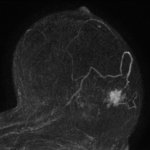
New research indicates that MRIs are cost effective for detecting breast cancer for women with very dense breasts detected by mammography. About 10% of women have extremely dense breasts, and current mammography screening guidelines do not recommend additional imaging tests unless there is a strong family history or genetic risk for breast cancer. Such women face two problems. They have increased…

In an effort to promote access to professional breast imaging knowledge, the European Society of Radiology (ESR) now links to educational materials from DenseBreast-info.org as a resource for its members about the screening and risk implications of dense breast tissue.

In the emerging era of personalized medicine, risk-based breast cancer screening protocols may be better than the one-size-fits all approach. It’s time to consider adopting them, Jack Cuzick, Ph.D., said in the President’s Address of the 2021 Society of Breast Imaging/American College of Radiology Breast Imaging Symposium.

One of the negative impacts of the coronavirus pandemic has been the suspension or postponement of many cancer screening services. Each year, these services help prevent and detect the presence of cancer at an early stage; timely diagnosis and care are crucial in preventing the spread of cancer. The National Screening Observatory has confirmed this, reporting alarming statistics: during the first…

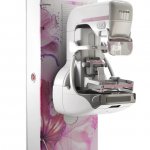
Fujifilm Europe GmbH is launching the new “Harmony” version of its Amulet Innovality mammography system. The “Harmony” version brings together improved diagnostic performance with new design themes to embellish and illuminate your mammography suite, creating an environment to put your patients at ease.

The pandemic has presented healthcare systems with new challenges, resulting in backlogs of routine screenings and delayed procedures which threaten the health and wellbeing of patients, as well as the ability of facilities to serve their communities. In order to address these widespread issues, we need to ensure that healthcare professionals are able to operate with precision, confidence and…

Medical technology company iCAD, Inc. announced that ProFound AI for 2D Mammography might notably reduce the risk of interval breast cancer, according to a new retrospective analysis. The aim of the study was to determine if adding AI to reading mammography as a supportive tool may help in decreasing the interval cancer rate in population-based organized mammography screening programs in Germany.

Digital breast tomosynthesis (DBT) increases detection of breast cancer in symptomatic women under the age of 60, especially in dense breasts. A large, multi-institutional study conducted in the United Kingdom comparing the sensitivity of full-field digital mammography (FFDM), DBT, and FFDM plus DBT supports findings of two similar published studies, both conducted in China in the same time frame.

A new deep learning system to help radiologists improve their workflow efficiency when reading high volumes of screening mammograms is being developed at Johns Hopkins University’s Radiology Artificial Intelligence Lab (RAIL) in Baltimore, MD. DeepCAT (Deep Computer-Aided Triage) is focused on workflow prioritization.

Siemens Healthineers has introduced a new software solution that speeds up the entire reading workflow for breast imaging: Mammovista B.smart. Also new is the Teamplay Mammo Dashboard, a tool for dashboard-based visualization of key performance indicators (KPIs) in the breast imaging process that serves to optimize workflows. With these two new solutions, the company is extending its digital…

MRI is the most sensitive method to detect breast cancer. However, the current breast cancer guidelines for Europe, Germany and Austria, still only recommend it for certain indications: For early detection in high risk patients, for differentiation between scarring and recurrences after breast-conserving treatment and to detect cancers of unknown primary site. This is the theory. However, in…

AI can help tackle inequities and bias in healthcare but it also brings partiality issues of its own, experts explained in a Hot Topic session entitled "Artificial Intelligence and Implications for Health Equity: Will AI Improve Equity or Increase Disparities?" at RSNA.

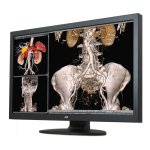
Displaying medical images from different modalities such as CT, CR/DR, MR, ultrasound or mammography and pathology on one monitor - that is what most radiologists want. Many of them still use several medical displays next to each other. JVCKenwood's new CL-S1200 30.9-inch colour monitor makes this a thing of the past. The 12 megapixel device (4,200 horizontal and 2,800 vertical) can display…

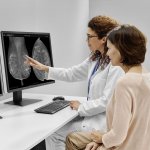
Although breast cancer (BC) mammography screening enables early detection of breast cancer, mammography presents issues such as variability between the radiology readings and shortage of radiologists. This area of medical imaging is where artificial intelligence (AI) could help make the biggest difference and improve patient outcome.

The U.S. Food and Drug Administration (FDA) announced important new steps to modernize breast cancer screening and help empower patients with more information when they are considering important decisions regarding their breast health care. For the first time in more than 20 years of regulating mammography facilities, the agency is proposing amendments to key regulations that would help improve…

Fujifilm is a pioneer in digital radiography technology since the early 1980s: since then we have continuously been developing innovative technologies, creating products that deliver greater benefits and improved care to both customers and patients. In the breast screening segment, Fujifilm's strong commitment to continuous technology evolution and a clear commitment in providing innovative…

Pete Valenti, Hologic’s division president of breast and skeletal health solutions, talks about how AI is driving innovation in breast health technology. Underpinning that evolution more recently has been the acquisition of two organisations – digital specimen radiography specialists Faxitron Bioptics and BioZorb marker manufacturer Focal Therapeutics.

MRI offers unequalled sensitivity and specificity in breast cancer detection. Yet, it is poorly accepted preoperatively. Recently, eminent radiologist Francesco Sardanelli, professor for radiology at Milan University and Chief of Radiology at the IRCCS Policlinico San Donato in Italy, unveiled preliminary results that could further MRI acceptance among multidisciplinary teams.