

Photo

The DUS 60 does so much

Manufactured by Edan Instruments Inc. of Shenzhen, China, the DUS 60 is a compact, portable diagnostic ultrasound system designed to meet a wide range of clinical requirements including abdomen, OB/GYN, urology, small parts and biopsy.

Photo

Article • Sonography

The future of radiology in the modern ultrasound lab

Sonography is a jack-of-all-medical-trades. Unlike magnetic resonance imaging or computed tomography it does not require radiation and it is not performed by a radiologist but by the experts in the individual clinical disciplines. Technical progress has turned sonography into much more than the “stethoscope of the 21st century” – a sophisticated imaging modality that requires special…

Photo

Aloka’s new ProSound F75

Launching its new ProSound F75 at the 20th ISUOG World Congress in Prague this October, Aloka Holding AG explained that it was designed to meet the firm’s new ‘FIT’ ethos (Facilitated workflow; Investment return; True diagnostics). Each machine can be tailored to any physician’s needs (over 45 user presets), simplifying the process, vastly reducing patient dependency and time to conduct…

Photo

RSNA 2010

A double-edged sword would be a good analogy for diagnostic imaging in 2010. New ways to utilise imaging technologies are being developed, imaging equipment is doing more, faster than ever, and image processing software is increasingly innovative. Today's radiology exams are ‘slicing’ through the body to reveal anatomy with increasing clarity for better diagnoses and therapeutic treatment…

Photo

MPR 3-D echocardiography

A cardiologist at a UK hospital has become the first in the world to develop a technique to ‘slice’ 3-D images of the heart into intricate sections using computer software. The method, devised by consultant congenital cardiologist Dr Joseph Vettukattil at Southampton General Hospital, is known as multiplane review (MPR) 3-D echocardiography. This allows cardiologists to identify heart defects…

Photo

Radiology services: In or out?

How does a hospital decide what to do about in-house radiology if, for example, its consultant retires? Select a ‘new broom’ to brush out earlier practices, or make this an opportunity to redefine its radiology department’s services and objectives? In the latter case, outsourcing to receive diagnoses from an external radiologist might be potentially interesting. However, Dr Winfried…

Photo

The Virtual Autopsy Table

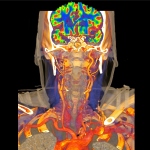
This is imaging with a ‘wow’-effect: The Swedish Centre for Medical Image Science & Visualisation (CMIV) in cooperation with the Norrkoping Visualisation Centre has developed a ‘Virtual Autopsy Table’ that allows a unique look inside the human body and takes interaction with volumetric medical data to a new level.

Photo

CT and PET - Improving radiation therapy planning

When planning radiotherapy the combination of positron emission tomography (PET) and Computed tomography (CT) can provide a better outcome than CT alone. Michael Krassnitzer asked Terri Bresenham MSc BSc, Vice President for Molecular Imaging at GE Healthcare, for her views on the value of PET/CT, the new EANM guidelines, novel tracers and the future of other hybrid imaging technologies.

Photo

Real-time tissue elastography as a complementary procedure

Tissue hardness provides radiologists and gynaecologists with significant information to help distinguish between benign and malignant tumours. Tumour tissue is harder and less malleable than normal glandular and fatty tissues. Therefore, the classification of tissue hardness determines whether a biopsy is necessary. For breast diagnoses, real-time tissue elastography, along with conventional…

Photo

Modern radiological diagnostics for the evaluation of muscle diseases

Muscular diseases belong to a heterogeneous group with various causes like neurogenic, metabolic, dystrophic, or inflammatory mechanisms as well as channelopathies leading to disorders of the muscle cell membrane potential. In most progressive disease cases the result is a focal or general muscle weakness that, unfortunately, is a very unspecific symptom. Standard neuromuscular literature…

Photo

Diffusion weighted whole body MRI

Malignant diseases rank second in mortality rates in Germany. These patients thus receive a major proportion of ambulant and hospital care, with apparent socioeconomic consequences. To optimise treatment planning, for all solid tumour entities it is mandatory to delineate or stage the primary extent of tumour invasion and spread prior to therapy as precisely as possible.

Photo

RSNA 2010 Refresher course: A focus on major contrast agent issues

The 90-minute refresher course ‘Contrast Agent Issues 2010: What the Experts Really Do for Allergies, Contrast-induced Nephropathy, Nephrogenic Systemic Fibrosis, and Extravasation’, to be held during this year’s Radiological Society of North America meeting, will focus on the use of iodinated and gadolinium-based contrast media and the issues, advantages and considerations for patient…

Photo

The economic value of PET-CT - a scenario-based analysis

PET/CT is an established clinical tool especially for cancer-related diagnosis. This involves both initial diagnosis and follow-up examinations. There are other procedures, like CT/MRT, bone scan, or mediastinoscopy, all of which are also costly. Given the fact that PET/CT is widely used anyway, the question arises whether it is medically responsible and financially favourable to focus solely on…

Photo

Understanding breast cancer functions

High resolution radionuclide imaging is a technique increasingly used to detect breast cancers and has already been shown to offer improved diagnosis in many clinical situations. The technique, which will be discussed at RSNA 2010 (28 November to 3 December, Chicago) , is also allowing clinicians to detect previously unknown areas of breast cancer in women with newly-diagnosed disease.

Photo

The Oslo Tomosynthesis Screening Trial

Digital breast tomosynthesis (DBT) is a promising new technology that acquires 3-D breast images. The individual images are presented as thin, high-resolution slices, which can be displayed individually or in a dynamic cine mode. Preliminary studies in a clinical setting have demonstrated that this new technology has the potential to improve not only the breast cancer detection but also to reduce…

Photo

Stroke - New options for prevention and therapy

It’s hardly surprising that stroke was a focus at the 20th meeting of the European Neurological Society (ENS) -- every year at least a million people suffer one in the EU. In an interview with Bettina Döbereiner, Professor Karl Max Einhäupl, Director of the Department of Neurology at the Charité - University of Medicine Berlin, of which he is Chairman of the Board and co-chair of the ENS…

Photo

MRIs may lead to unnecessary breast surgery

Women could be undergoing unnecessary breast surgery as a result of having magnetic resonance imaging, says an expert on bmj.com. In the last decade, says Malcolm Kell, Consultant Surgeon and Senior Lecturer at the Eccles Breast Screening Unit at University College Dublin, MRI or magnetic resonance mammography has become the most favoured type of investigation for high risk patients when combined…

Agfa at RSNA 2010

Agfa HealthCare is focused on providing excellent imaging solutions to support clinical confidence and improve delivery of health outcomes. At RSNA 2010, the company will demonstrate its engineered solutions that optimize the radiology workflow all along the imaging chain. By bringing the power of IT to radiology, we deliver tools that promote strong collaboration between healthcare providers and…

1091 show more articles
Subscribe to Newsletter