Finding that perfect match
Advice from an ‘old hand’ for juniors wanting to work in a department where they fit in and which also suits their personal hopes and ambitions



Advice from an ‘old hand’ for juniors wanting to work in a department where they fit in and which also suits their personal hopes and ambitions
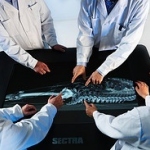
In its bid to offer the most modern medicine program in Sweden, Örebro University has invested in three visualization tables from Sectra.
It lasted forty years – but now it’s over – that Golden Age of radiology and medical imaging is surrendering under technology stagnation and imaging issues such as the growing rejection of unnecessary public use. The field is now subject to radical change, declared Professor Stephen R Baker MD M.Phil, from the UMDNJ New Jersey Medical School in Newark, New Jersey USA, speaking at this…
BRAF is a protein that plays an important part in the transmission of growth signals. In a mutated state it can lead to uncontrolled cell growth. Around every second malignant melanoma – the deadliest and most aggressive form of skin cancer – has a certain mutation of the BRAF gene.
French and German experts hear of a possible new computer-based system to identify new biomarkers for colon cancer.

With a mission to help people avoid unnecessary radiation, and the continuing launch of related products, the Swedish company is now the world’s only provider of comprehensive solutions to measure, monitor and manage X-ray radiation dose, reports Brenda Marsh

The use of in-line filters for infusion therapy significantly lowers the rate of severe complications in children aged between 0-18 years being treated in intensive care units, according to a new study from the Paediatrics Clinic at Hannover Medical School (MHH). The study also confirmed that the number of cases of systemic inflammatory response syndrome, SIRS, dropped substantially through the…

Individually customised drug therapies have been used for the last two years, particularly for cancer patients
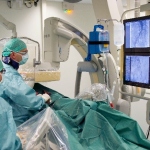
Preliminary data from the clinical study showed that the dose reduction achieved in the X-ray guided endovascular procedures performed on 50 patients using Philips’ ClarityIQ technology is in line with the expected X-ray dose reduction of 75%.
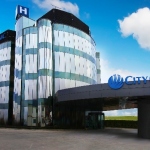
Royal Philips Electronics today announced the signing of an agreement with City Hospitals & Clinics, a Bulgarian healthcare group, to equip their new hospital in Sofia, Bulgaria.
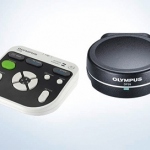
Olympus has released a new standalone controller for the 5 megapixel DP26 camera. Using the controller, it is possible to view samples and capture images directly on a monitor screen with no need for a dedicated computer.

Rapid and accurate diagnosis using ultrasound has won increasing use by physicians and radiologists. The new MyLab Alpha delivers high-end performance in an easy-to-use, highly mobile system.

Syngo®.plaza is the agile PACS solution for the clinical routine. syngo.plaza helps speed up reading and knows when to call up 2D, 3D, or 4D applications.
The Alliance for MRI welcomed action by a European Parliament committee on Thursday that guarantees continued patient access to Magnetic Resonance Imaging (MRI), a critical tool for detecting and treating disease.
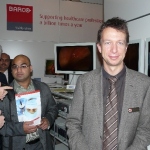
Last November, Barco, the medical visualization experts, showcased numerous highlights at their booth at Medica 2012.
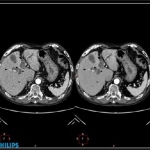
A pioneer in lowering patient exposure to radiation, Philips Healthcare opened a new path to further the clinical potentials for CT imaging introducing Iterative Model Reconstruction (IMR) at RSNA 2012.
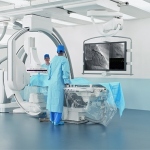
In the highly competitive US market for interventional radiology, Siemens introduced a ground-breaking new imaging chain for the Artis line that sets a new standard for image quality.
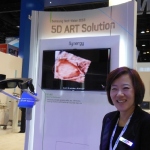
The newest player in radiology, Samsung revealed at RSNA 2012 its vision for leveraging formidable strengths in IT to enhance radiology platforms with a new level of intelligent functionalities.
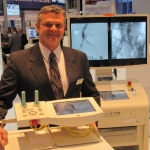
The rapid growth of less-invasive interventional radiology procedures is fueling growth for the German company dedicated to mobile C-arms.
The new Aquilion ONE ViSION is the widest, fastest, thinnest-slice CT ever built, capable to pushing both anatomical and functional studies to new levels.

Times may be tough, but GE Healthcare takes a longer term view, believing innovative technologies can transform healthcare delivery and help improve patient care.

The number of radiology examinations is not only increasing, they are becoming more complex driving up the exposure of patients to radiation. At RSNA 2012 Sectra introduced a well-tested solution for drive down dose.
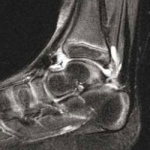
Children are not small adults. General radiologists are increasingly aware of the very special needs of young patients since frequently they rather than specialized paediatric radiologists perform initial diagnostic imaging and thus play a crucial role in the therapy decision. No mean feat as children may present with very different types of diseases and symptoms than adults, knows Dr. Christoph…
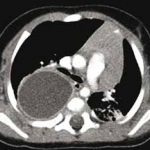
Paediatric radiologists are facing very special challenges. For their small patients they have to be able to precisely assess the advantages and risks of the different imaging modalities and procedures.
No more CD or DVDs! MyVue Patient Portal empowers patients to securely access, manage and share their medical images and radiology reports with specialists and healthcare providers.