

Article • Understanding dementia
PET imaging: Visualising amyloid deposition
Neurologists are gaining new insights into dementia imaging by harnessing the latest opportunities offered by Positron Emission Tomography (PET).

Neurologists are gaining new insights into dementia imaging by harnessing the latest opportunities offered by Positron Emission Tomography (PET).

The trend in radiology is towards an increasing split into subspecialties such as interventional radiology, paediatric radiology or neuroradiology, which, with the growing complexity of this field, are becoming more independent of each other.

Living in a small Mediterranean island has its own advantages; nevertheless there are certain limitations. In healthcare, for example, resources may be somewhat more limited in such a small country and some of the latest technologies may not always be available to patients.

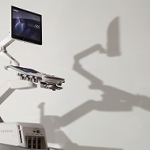
Seattle-based medical ultrasound systems manufacturer SonoSite has aimed to take ultrasound to the point of care (POC) since it was owned by ATL. The parent company had gained a contract from the Defence Advanced Research Projects Agency (DARPA) to develop a lightweight ultrasound device for military use.

‘Already used in adults for several years, elastography is a promising tool in paediatric imaging,’ according to radiologist Dr Mehrak Anooshiravani-Dumont, from Geneva University Hospital. ‘It allows detection of changes in the mechanical properties of tissues, such as fibrosis, based on viscoelastic characteristics.‘

Paediatric imaging is a subspecialty that uses a diverse range of imaging systems, from classical X-ray to ultrasound, CT and MR.

If you are taking note of any breakthrough in ultrasound, here are two names you will want to put at the top of your ECR 2016 notebook: Resona7 and ZONE Sonography Technology.

Radiology is going beyond assessing body fat, bringing a notable contribution in weight loss therapy. Clifford Weiss from Johns Hopkins University is one of the pioneers of a new procedure, bariatric arterial embolisation, details of which he will unveil at the ECR 2016.

The current political framework changes healthcare structures and competitive dynamics for medical services providers. These issues were raised at the 11th Management and Strategy Congress MARA (Management in Radiology) in Bonn, in autumn 2015. Dr. Martin Maurer, one of the congress organisers, explained: ‘The objective of the MARA Congress is not to hold pretty lectures but primarily to…

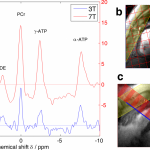
‘In imaging there is a trend towards quantification,’ said Professor Siegfried Trattnig, Medical Director of the High-Field MR Centre (HFMRC) at the Medical University Vienna, Austria. Whilst before, radiologists’ findings were subjective, qualitative results, based on signal intensity and grey scale, he pointed out. ‘Today imaging can draw on quantifiable and comparable parameters with…

With precision imaging playing a greater role in daily radiology practice as patients receive ever more personalised care, the detail and extent of that shift is outlined in the ECR session ‘Personalised radiology: myth or reality?’, which includes a presentation from renowned radiologist Professor Gabriel Krestin, chairman of the radiology and nuclear medicine department at Erasmus MC,…

Interstitial lung diseases (ILD) are rare – yet they are far more difficult to diagnose and highly variable. Professor Julien Dinkel, consultant at the Institute of Clinical Radiology, Ludwig Maximilian University Hospital in Munich, deals with these rarities.

Technological advances in CT imaging have sparked a veritable explosion of imaging data. Pushing against the rush of novel imaging findings there is, what Dr Geoffrey Rubin calls, the slow wave of adoption in medicine, the acceptance and agreement of the clinical community for new diagnostic assessments.

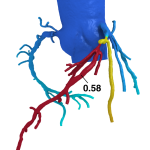
CT angiography (CTA) is evolving from a morphological – anatomical – to a functional imaging modality. In the past two years, cardiac CT perfusion measurement techniques were launched that predict which lesion will cause a reduction in blood flow.

Using an iodinated contrast agent, I-View software on the Hologic tomosynthesis system enables the user to image the functional 2-D contrast uptake and the morphological mammography images in rapid sequence and combine these three image sets into a single co-registered study.

Tomosynthesis is an advanced application that allows a multi-slice acquisition and provides a reconstruction of a volume. Several acquisitions at low dose are acquired with a single sweep of the X-Ray tube around the region of interest.

Results from recent trials are promising: an almost 40% increased breast cancer detection rate from digital breast tomosynthesis (DBT) screening compared to conventional mammography.

A pioneer in cone beam computed tomography (CBCT) imaging, NewTom recently introduced the only CBCT system with an open gantry and supine positioning, which the firm reports is ‘…ideal for a host of diagnostic needs. Exceeding the limits posed by CT systems, the NewTom 5G XL combines high diagnostic resolution with minimum patient exposure.’

Last year, the DMS Group acquired 100% of the capital of AXS Medical, a French start-up specialized in developing diagnostic tools used for spinal pathologies.

Congress president Professor Katrine Åhlström Riklund, Deputy Head of the Department of Radiation Sciences and Director of the Medical School at Umeå University, Sweden, as a representative of two professions – radiologist and nuclear physician – has shaped the face of the congress.

The radiology department at the German hospital Asklepios-Klinik Lindau recently received the high-performance R/F table Sonialvision G4, a new generation of X-ray and fluoroscopy systems, which complements examination and therapy options, particularly in internal medicine, as well as general surgery and for spinal disorders, the manufacturer Shimadzu reports.

HUS Medical Imaging Center, based in Helsinki, Finland, is undertaking the first European clinical test study of the new CARESTREAM OnSight 3D Extremity System in pre- and post-operative cases. The study of the new cone beam CT (CBCT) scanner and image reconstruction technology, applied within orthopaedic imaging, will last six months and will yield valuable data for both HUS and Carestream…

Stopping the growth of blood vessels in tumours is a key target for glioblastoma therapies, and imaging methods are essential for initial diagnosis and monitoring the effects of treatments. While mapping vessels in tumours has proven a challenge, researchers have now developed a combined magnetic resonance imaging (MRI) and ultramicroscopy 'toolkit' to study vessel growth in glioma models in more…

Eckert & Ziegler AG, a specialist for isotope-based applications in medicine, science and industry, is expanding its cooperation program with promising drug developers in the field of nuclear medicine and will support Curasight, a spin-off based on research by the group of Professor Andreas Kjaer at the National University Hospital (Rigshospitalet) and University of Copenhagen, in obtaining…

A new way of using MRI scanners to look for evidence of multiple sclerosis in the brain has been successfully tested by researchers at The University of Nottingham and Nottingham University Hospitals NHS Trust.