

News • Role of the microbiome
Alzheimer's: X-rays unveil gut-brain connection
Researchers explore the connection between the gut and the brain and its impact on the onset of psychiatric and neurological disorders, including Alzheimer’s.

Researchers explore the connection between the gut and the brain and its impact on the onset of psychiatric and neurological disorders, including Alzheimer’s.

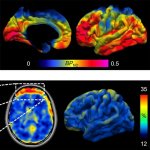
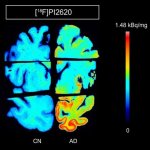
Two new radiotracers outperform the current FDA-approved tracer for detecting Alzheimer's disease, showing higher binding to affected tissue and greater selectivity for identifying tau tangles.

More than just a sports injury: A new study shows that head trauma may activate latent viruses, leading to neurodegenerative conditions such as Alzheimer’s disease and Parkinson’s disease.

Researchers uncovered a surprising link between Alzheimer’s disease and herpes simplex virus-1 (HSV-1), suggesting that viral infections may play a role in the disease.

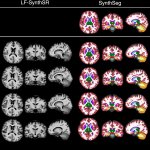
A new study shows that a simplified, low-field MRI machine, augmented with machine learning tools, matches conventional MRI in measuring brain characteristics relevant to Alzheimer's disease.

Misfolded proteins lead to Alzheimer's disease – but where do they come from? Using a particularly powerful imaging technique, Swiss researchers now uncovered a key mechanism.

Alzheimer’s disease may damage the brain in two distinct phases, based on new research funded by the National Institutes of Health (NIH) using sophisticated brain mapping tools.

Researchers have identified biomarkers that, in conjunction with PET imaging, enable doctors to reliably distinguish between primary 4-repeat tauopathies and Alzheimer's disease.

With enough medical training data, AI can predict health conditions with astounding accuracy. Now, researchers want to use brain scans of the entire Scottish population to have an algorithm early detect dementia.

A novel test aims to predict whether Alzheimer’s patients are genetically predisposed to side effects from anti-amyloid drugs, a promising new class of Alzheimer’s therapeutics.

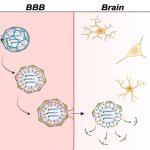
Researchers were able to package fluorescent sensors for passage across the blood-brain barrier (BBB) in mice. This holds promise to advance Alzheimer’s disease diagnosis and treatment.

Toxoplasma gondii is a parasite with the ability to infect the brain, causing life-threatening diseases. Researchers now want to harness its properties to advance treatment of cognitive disorders.

Cancer, dementia, heart attack: these are the medical conditions people are most worried about, according to a new UK survey. It also reveals hopes for AI in the future of cancer research and care.

Researchers have developed a model to predict cognitive decline in patients with mild cognitive impairment or mild dementia due to Alzheimer's disease. The next step is an app that uses this model.

Was dementia already an issue for Hippocrates and his contemporaries? A new analysis of classical Greek and Roman medical texts suggests that Alzheimer's is connected to modern environments.

According to the European Dementia Monitor, there is still a clear East/West divide, with significant differences between countries in terms of availability, affordability, legal and human rights.

Having coronary heart disease at a younger age was associated with an increased risk of dementia, Alzheimer’s disease and vascular dementia, a new study finds.

Using small blood vessels grown in the lab, researchers discover how vascular leaks leading to dementia and stroke emerge – and how this damage might be fixed.

A team of researchers has developed a handheld, non-invasive device that can detect biomarkers for Alzheimer’s and Parkinson’s Diseases. The biosensor can also transmit the results wirelessly.

A new AI method for CT brain imaging may bring the modality to the level of detail usually reserved for MRI scans. This could enhance diagnostic support for conditions such as Alzheimer's disease.

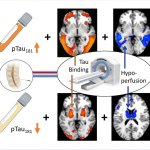
A team from Geneva demonstrates the value of imaging to detect the presence of tau protein in the brain to predict cognitive decline due to Alzheimer’s disease.

The International Alzheimer's Congress (AAIC) in Amsterdam saw the presentation of new guidelines for diagnosing Alzheimer's disease - with blood biomarkers taking a central role.

A research team from Barcelona studied the liver of Alzheimer's disease mice models, and demonstrated the importance of the liver-brain axis regarding the psychological symptoms of the disease.

Neurodegeneration, or the gradual loss of neuron function, is one of the key features of Alzheimer's disease. However, it doesn't affect all parts of the brain equally.

A new study led by the University of Edinburgh has identfied areas of the brain susceptible to damage from high blood pressure, affecting memory loss, thinking skills and dementia.