

Image source: Tohoku University; ©Kaushik et al.
News • Ophthalmology
Portable AI-powered scanner to facilitate access to eye care
Low-cost, portable platform with on-device AI aims to bring anterior-segment screening closer to everyday life
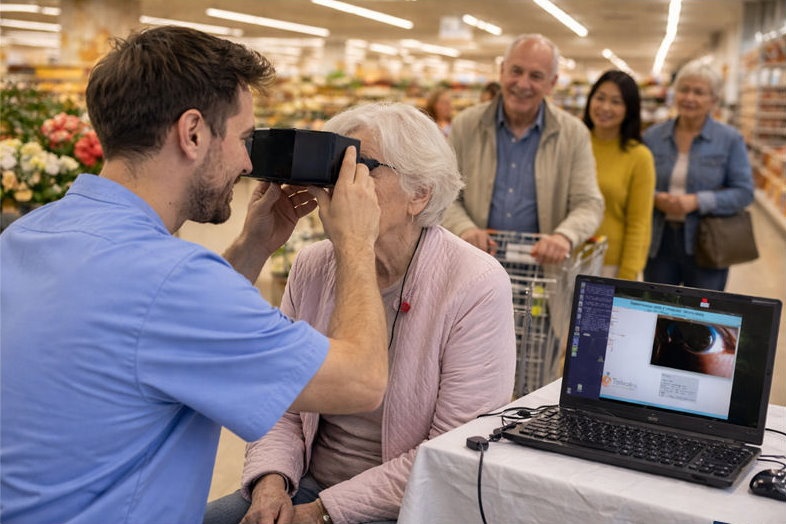
Assessing how healthy the front of our eyes are not only in hospitals, but also in remote locations, elderly-care facilities, pharmacies, or even train stations. That is the future a research team led by Professor Toru Nakazawa at the Graduate School of Medicine, Tohoku University is working towards with a newly developed portable AI-powered scanning slit-light device. This convenient device hopes to make ophthalmic care more accessible, so patients can be assessed any place, and any time.
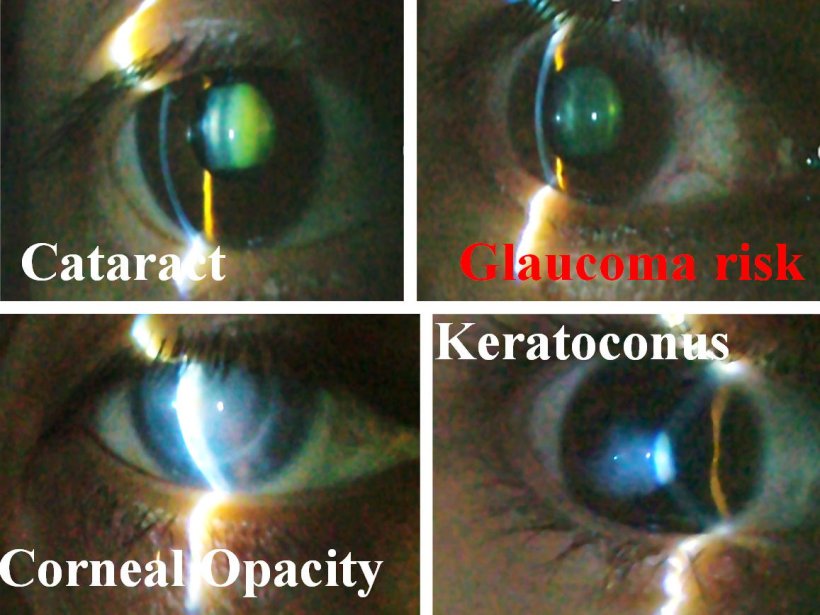
Image source: Tohoku University; ©Kaushik et al.
Diseases such as cataracts that affect the front of the eye (also called the anterior segment) are among the leading causes of visual impairment worldwide. Losing your vision reduces independence, mobility, and overall quality of life. Unfortunately, many people are not screened until vision loss symptoms becomes more severe - and in some cases, irreversible. "It is in a patient's best interests to undergo regular check-ups, but this isn't always easy," explains Nakazawa. "The instruments needed to conduct these exams are expensive, bulky, and largely confined to clinical settings. Patients in rural areas or with low mobility may not be able to access these vital screening tools - leaving them in the dark."
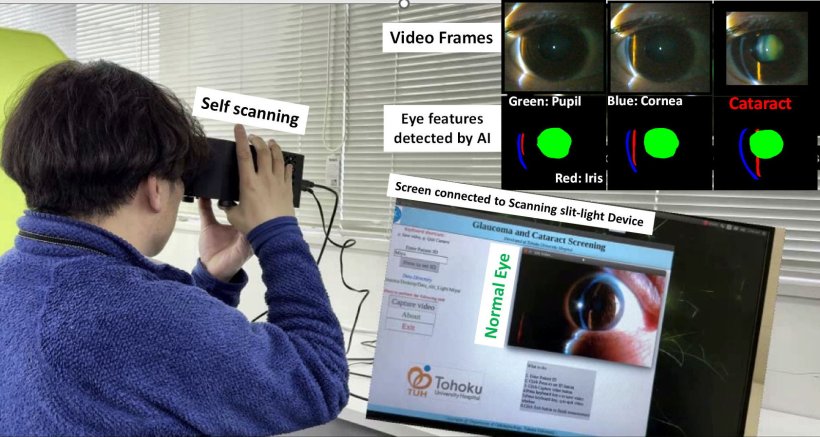
Anterior-segment optical coherence tomography (AS-OCT) machines can reach the tens-of-millions-of-yen price range. The research team designed an ultra-low-cost system to work as an alternative, with reliable results that show strong agreement with AS-OCT scans. They determined the device was sufficient for screening-oriented assessment, while also being able to directly visualize clinically important features such as the cornea, iris, lens, ocular surface, pigment variations, and capsular changes--features that are often difficult to appreciate with grayscale OCT alone.
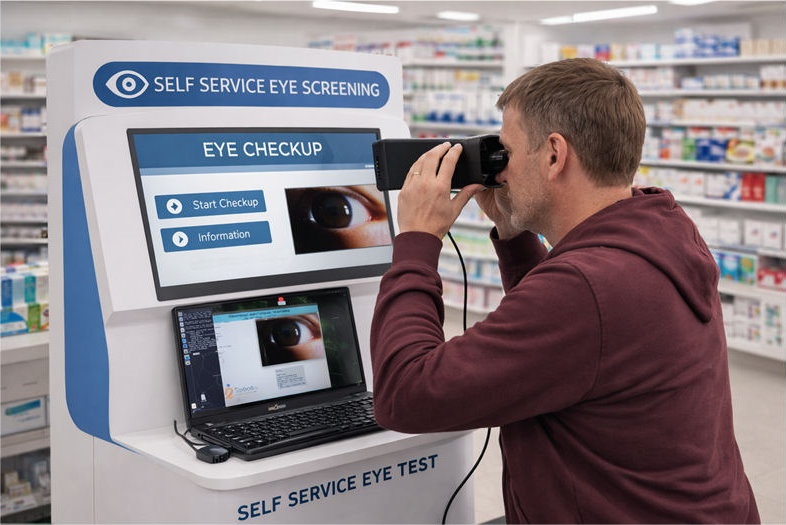

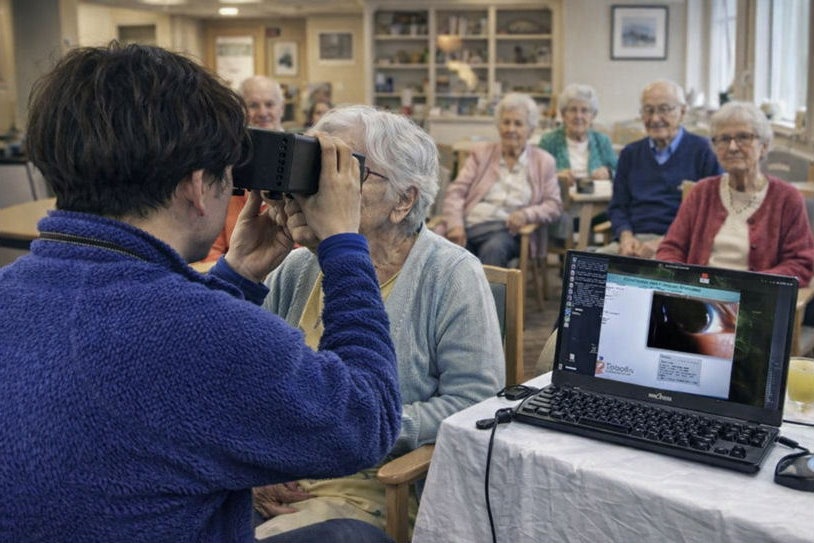
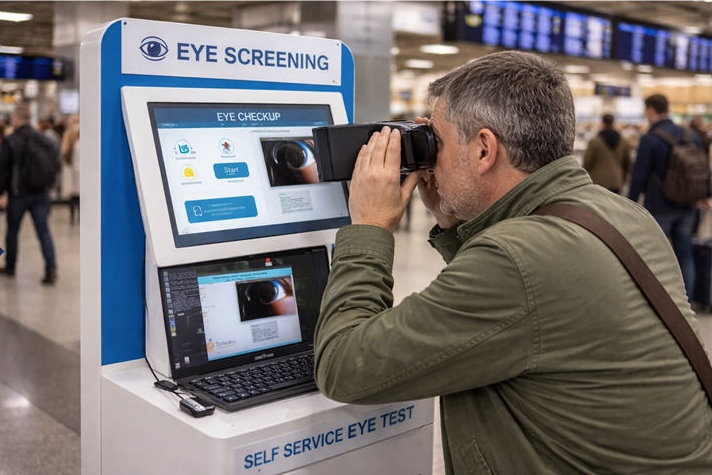
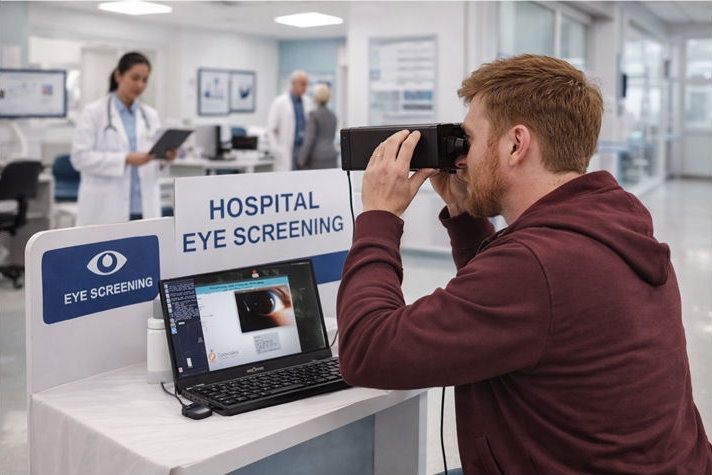
The device can also assess angle-closure glaucoma risk, which is a major concern in Asia. It is particularly important to catch early, as it can lead to sudden, profound vision loss if a full angle-closure event occurs.
By capturing a single scanning-slit video, the system can provide both quantitative measurements and qualitative or AI-assisted evaluation of anterior-segment abnormalities. A key feature of the platform is its lightweight AI model (LWBNA-unet), which segments important anatomical structures of the eye and supports further screening-oriented disease classification. Because the model is lightweight, accurate analysis can be performed directly on the device itself, without relying on cloud computing. This helps reduce operator dependence while improving portability, privacy, and real-world usability.
The low cost, portability, quantitative capability, true-color visible-light imaging, and on-device AI make the platform a practical candidate for bringing anterior-segment screening closer to everyday life.
Source: Tohoku University
07.04.2026