


News • Fluorescence assay
A 'FAIRY' to rapidly determine virus infectivity
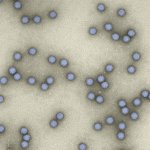
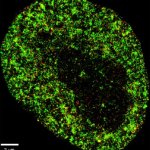
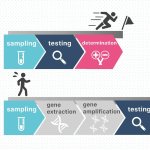
Researchers have developed a fluorescence assay for viral integrity (or FAIRY, for short), to quickly determine the effectiveness of countermeasures against a given virus.

Researchers have developed a fluorescence assay for viral integrity (or FAIRY, for short), to quickly determine the effectiveness of countermeasures against a given virus.

New research reveals a promising approach to developing a universal influenza vaccine that confers lifetime immunity against an evolving virus considered most likely to trigger the next pandemic.

A new test shows promise in making cervical cancer screening more accessible and less invasive by detecting oncoproteins of the human papillomavirus (HPV) in urine samples.

Due to climate change, diseases such as West Nile fever reach European countries. With the help of AI and math, institutions can prepare for new infections in the changing climate, new research shows.

Delegates from Hannover Medical School and the University of Glasgow have now signed a letter of intent to intensify their collaboration in the field of infection research.

A new approach to vaccine development could produce vaccines before the disease-causing pathogen – such as a new variant of the coronavirus Sars-CoV-2 – even emerges.

The world has hardly processed Covid-19, so the thought of another pandemic is far from pleasant. Yet, infectious disease experts have picked the most likely candidate in a new survey.

Patients who are suffering from aftereffects of a coronavirus infection often receive the diagnosis 'long Covid'. However, new research presented at ECCMID 2024 calls that term into question.

Instead of killing viruses and bacteria with chemical disinfection, a new approach uses minuscule spikes to skewer them. This could be used to prevent surface contamination in hospitals or labs.

Researchers from the University of Southampton investigated how ultraviolet laser light destroys the coronavirus Sars-CoV-2 by impacting components critical for infection.

Würzburg resarchers have created a new pseudovirus design that allows tracking of penetration of viruses into cells.

Researchers from Osaka University present a novel technique to detect different coronavirus variants quickly, including fast-spreading strains present in human saliva.

What does the future of the coronavirus look like? An international research team from Cologne and New York has developed a model to predict the likely evolution of Sars-CoV-2.

A new molecular test for bacteria and viruses, including Sars-CoV-2, has been developed at the University of Surrey, as they warn that the world needs to be prepared for the next pandemic.

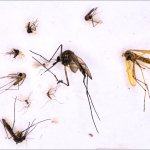
Environmental changes may reduce the diversity of mosquitos, but bring about a greater abundance of viruses, scientists from Charité in Berlin in cooperation with Leibniz-IZW find.

A new onco-therapeutic vaccine candidate against human papillomavirus (HPV)-induced cancers, such as cervical and oropharyngeal cancers, has shown promising results in the preclinical phase.

New research finds the use of an electric field a promising means to prevent aerosol spread of viruses in healthcare environments, for example during surgery.

Combining aerosol sampling and ultrasensitive biosensing, researchers have created a real-time monitor that can detect any of the Sars-CoV-2 virus variants in a room in about 5 minutes.

Gentle cleansers are just as effective in killing viruses – including coronavirus – as harsh soaps, according to a new study from scientists at the University of Sheffield.

US researchers identified a potential breakthrough in glioblastoma treatment. Using a modified virus, they created a treatment that specifically attacks tumor cells, while leaving normal cells intact.

Researchers at Karolinska Institutet have found further evidence for how the Epstein-Barr virus (EBV) can trigger multiple sclerosis (MS) or drive disease progression.

Scientists at the University of Applied Sciences Krems (IMC Krems) show that CRISPR-Cas9 can also be used to inhibit viruses such as adenoviruses in cell cultures.

US scientists report using a single-atom-thick nanomaterial to simultaneously detect Covid-19 and flu viruses — at much lower levels and much more quickly than conventional tests for either.

Researchers at the Universitat Autònoma de Barcelona (UAB) have developed a new type of nanoparticles inspired by the structure of amyloids, capable of neutralising the SARS-CoV-2 virus.

Researchers have developed an inhalable powder that could protect lungs and airways from invasion from the coronavirus or flu viruses by reinforcing the body’s own mucosal layer.