
News • Beyond visible light
Hyperspectral LED endoscope to better detect GI cancers
Beyond the visible spectrum: A new LED-based hyperspectral imaging system shows promise for gastrointestinal cancer detection during endoscopy.



Beyond the visible spectrum: A new LED-based hyperspectral imaging system shows promise for gastrointestinal cancer detection during endoscopy.
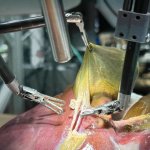
A potentially transformative advancement in surgical robotics: A robot trained on videos of surgeries successfully performed a lengthy phase of a gallbladder removal without human help.
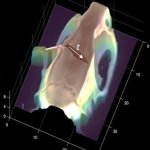
Using 48 cameras simultaneously to provide better insights during live surgery: A new kind of surgical microscope is designed to meet the need for better 3D imaging.

Building resilience for digitally driven healthcare: At the HETT (Healthcare Excellence Through Technology) North conference in Manchester, leading IT specialists highlighted the need for high levels of education, awareness and vigilance among healthcare staff in the fight to protect systems against cyberattack.

Analyzing heart imaging and a full spectrum of medical records, a new AI tool can reveal previously hidden information about a patient’s heart health, including predictions of sudden cardiac arrest.
An ultra-thin implant could repair injuries to the spinal cord with carefully controlled electrical current. This could help restore movement and revert loss of sensation, the researchers hope.

The Pharmaceutical Automation and Digitalisation Congress (AUTOMA+) 2025 welcomes delegates to be a part of its 5th anniversary in Vösendorf, Austria on 24-25 November. This edition focuses on AI-powered pharma, robotics and smart digital solutions.


A virtual medical receptionist named “Cassie,” developed through research at Texas A&M University, is designed to transform the way patients interact with health care providers.

If data used to train AI models for medical applications differs from the real-world data, it could lead to patient harm. A new study found proactive strategies to mitigate such data shifts.

Personalised, responsive assistance for patients with dyspraxia: Assistive robots could help patients with motor coordination conditions by detecting and predicting intent, effort and fatigue.

Survival rates for pancreatic cancer rise drastically the earlier it is detected, but early-stage tumors are notoriously difficult to spot. A new AI-powered diagnostic system is set to improve this.

From personalized medical guides and implants to advanced surgical planning solutions: 3D printing and visualization has seen considerable growth over the past years and is already making a significant impact in healthcare. AI, cloud, and virtual/augmented reality technologies show promise to further advance the number of applications.
Movement disorders often show overlapping symptoms, making it difficult for doctors to make the correct diagnosis. A new AI tool could help distinguish between different disorders, such as tremor and myoclonus.

As Emergency Departments (EDs) get ever busier, focus has fallen on the role artificial Intelligence (AI) can play in supporting patients and clinicians in delivering urgent care. The topic took centre stage in a session looking at the ethics of AI in the ED at the annual congress of the European Society of Emergency Medicine (EUSEM) in Copenhagen.

AI has the power to transform healthcare, but trust gaps among clinicians and patients threaten to slow adoption and impact, the 10th annual Future Health Index (FHI) report reveals.

Reading an LLM-generated recap to get the gist of a scientific publication? Not a good idea, a new study finds: Most leading chatbots exaggerate the findings – prompting for more accuracy even makes things worse.
A new AI tool called PERISCOPE should help healthcare providers determine which patients need extra monitoring to protect them from wound or lung infections, UTIs or sepsis.
Using AI to analyse ultrasound scans can detect up to 35% more risk pregnancies than scans performed by healthcare professionals without AI decision support, according to new results.

Researchers incorporated a specialized breath sensor within the fabric of a face mask to detect metabolites associated with chronic kidney disease. Initial tests showed promising results.

Multiple sclerosis often transitions from a relapsing-remitting to secondary progressive form, which requires different treatment. Now, an AI model can determine this change with 90% certainty.

To lower the incidence of spine issues, bus stops across Croatia have been transformed to let people check their posture. The goal is to raise awareness and combat reluctance to see a physiotherapist.

GPs may soon be able to identify patients with an increased risk of lung cancer up to 4 months earlier with an algorithm created by researchers based on the data of more than half a million patients.
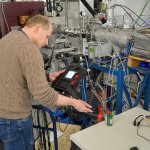
Radiation safety experts developed a multi-purpose detector with a wide range of tools for different uses into a small package. For example, the detector detects all four kinds of ionizing radiation.

While generative AI shows immense potential for healthcare, a critical reliability issue lurks beneath the surface: LLMs don't think like doctors do, a data science expert explained at the Emerging Technologies in Medicine (ETIM) congress in Essen. This potentially fatal flaw, however, may be fixable, he suggested.

Using vibrations to help people living with Parkinson's disease regain motor control: Engineering students have created a special glove that aims to reduce the symptoms of the condition.

