
Procuring large equipment
Around €18 billion annually is spent on medical technology in Germany. After the US and Japan, the German medical technology market is the third largest in the world.



Around €18 billion annually is spent on medical technology in Germany. After the US and Japan, the German medical technology market is the third largest in the world.
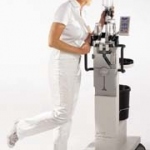
In 1982, ulrich medical - a 3rd generation family concern based in Ulm - presented the first contrast agent injector for CT examinations.
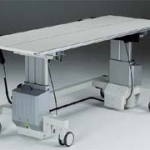
The bucky table is an inexpensive tool for X-Ray departments. However, due to the increasing use of movable stands, especially combined with digital imaging receptors, further requirements for a patient positioning table arise.
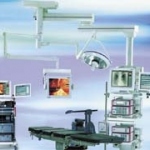
Core is a modular system that interacts with individual operating theatre (OT) devices to bring them under the ontrol of one centralised monitor.
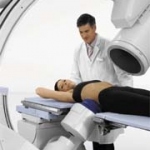
Lithoskop, a new multifunctional lithotripsy system, is to be publicly launched by Siemens Medical Solutions at the European Association of Urology Congress, to be held in Istanbul, Turkey this March.
Although parents are allowed in neonate ICU units, family members and friends are barred. To meet this need, Innsbruck Medical University recently launched the project 'Babywatch' in its neonatology ICU.
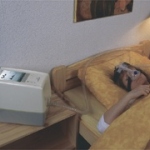
Camena, an innovative ventilator that provides clinical-quality ventilation for patients at home, will be launched, at the European Respiratory Society (ERS) annual meeting (4-8 September 2004, Glasgow, UK), by Dräger Medical AG & Co KGaA, of Lübeck, Germany.
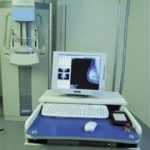
The Swedish firm Sectra reports that its digital MicroDose Mammography system reduces radiation by 80%, compared with traditional film-based systems, and that its completely new detection technology allows this without compromising image quality.
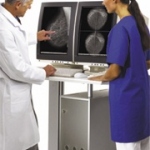
Mammography plays a critical part in diagnosing breast cancer. Although this does not prevent the disease, diagnosing breast cancer as early as possible can save lives.
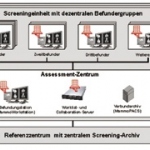
Modern methods and technology make it possible to combine out- and inpatient treatment through comprehensive, overlapping systems and to standardise and optimise early diagnosis, therapy and aftercare for malignant diseases of the female breast regionally.
The UK - In the 1990s, the nationally co-ordinated NHS Breast Screening Programme was already saving lives - a 21% fall in breast cancer mortality over the last decade and, with the cervical screening programme, this was viewed as among the best cancer screening programmes in the world. However, in that period, the country's cancer services, as a whole did not match up to those of other European…

Karlsruhe, Germany - A new type of ultrasound computed tomography (CT) system promising to improve diagnosis significantly is currently being developed at the Research Centre Karlsruhe.
Forli, Italy - With construction almost completed, the 550-bed Ospedale Nuovo G B Morgagni can now provide state of the art services for the community it serves.
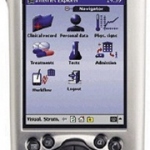
Italy - The WardInHand project, which set out to provide a tool for medical teams to access a hospital information system (HIS) from wards, does not replace or compete with existing hospital systems but adds mobility and 'ubiquitous computing' to the HIS, by exchanging information with existing tools and updating clinical data in real time.
Ventricular assist devices (VAD) have been used since the 1980s, primarily to provide support after cardiac surgery for several days during recovery, or more often to keep patients alive until later heart transplantation (HTx).
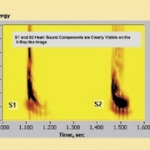
A processing system said to pick up cardiac sounds and correlate these with any related abnormalities, e.g. valve defects, stenosis, fibrillation, septal defect, etc, has been developed by the US firm Biosignetics Corporation.
Medication regimes based on cocktails of antiretroviral drugs can reduce the AIDS virus to almost undetectable levels.
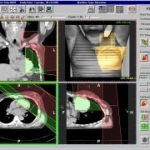
Exomio, a new simulation technique, improves the accuracy of radiation therapy and reduces treatment planning time to a matter of minutes, according to scientists at the Fraunhofer Institute for Computer Graphics Research IGD, who developed the system with industrial partners MedCom GmbH and Medintec GmbH. They also report that the product has obtained worldwide clinical approval and that 60…
Fifty years ago Henry Gibbon introduced a vital tool for cardiac surgery - the heart-lung machine. While pioneering efforts were made in the first half of the 20th century, this equipment enabled reproducible operations for either congenital or acquired heart disease in many patients.
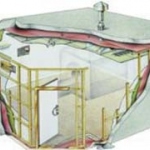
Germany - Diagnostic imaging equipment handler Neuromed Solutions GmbH (est. 1993) has split from the firm's former managing company UMS Neuromed AG.

UK - Launching the “world's most advanced mobile operating theatre”, at the annual scientific meeting of the British Association of Day Surgery, Gary King, Managing Director of Vanguard Healthcare predicted that, as from January 2004, over 40,000 NHS operations will be carried out in mobile theatres.
Monitoring and rapidly introducing new developments into everyday practice is an increasingly difficult task for many doctors. Additionally, patients are more informed due to media medical reports, which raise their expectations that doctors can offer a quick, reliable interpretation of the latest medical data.
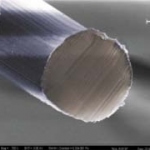
Implants presently in use consist of a smooth or textured silicone shell filled with a silicone gel or saline solution. The latter has one decisive drawback - the breast may cool considerably in winter. Smooth silicone implants may also shift or turn.
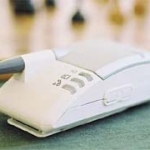
The Biotronik Home Monitoring Service, which gained CE approval in May, has now monitored over 1,500 patients worldwide. Studies indicate that 88% of patients claim an increased sense of security due to the service.