

News • Spanish study
Does vitamin D deficiency lead to severe COVID-19 cases?
Over 80 percent of 200 COVID-19 patients in a hospital in Spain have vitamin D deficiency, according to a new study.

Over 80 percent of 200 COVID-19 patients in a hospital in Spain have vitamin D deficiency, according to a new study.

Merck announced a collaboration with Mammoth Biosciences Inc. for the development, scale-up and commercial production of Mammoth’s CRISPR-based SARS CoV-2 diagnostic test.

Asymptomatic coronavirus sufferers appear to lose detectable antibodies sooner than people who have exhibited COVID-19 symptoms, according to one of the biggest studies of its kind in Britain published on Tuesday.

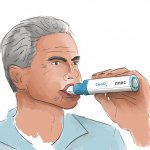
Research and innovation hub Imec announced that it has started developing a groundbreaking SARS-CoV-2 test. Unlike current approaches (using blood, saliva, or a nasopharyngeal swab), the new test will identify SARS-CoV-2 virus particles in a person’s exhaled breath. The solution promises the accurate identification of a contagious case in less than five minutes.

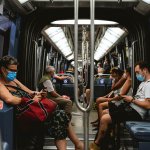
Researchers at Newcastle University are involved in a study to understand the risks of COVID-19 transmission on public transport and to identify the best measures to control it. Known as Project TRACK (Transport Risk Assessment for Covid Knowledge), the study will conduct fieldwork on buses and trains in London, Leeds and Newcastle, including the Metro system in Tyne and Wear.

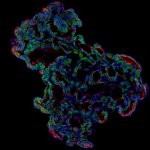
‘Mini-lungs’ grown from tissue donated to Cambridge hospitals has provided a team of scientists from South Korea and the UK with important insights into how COVID-19 damages the lungs. Writing in the journal Cell Stem Cell, the researchers detail the mechanisms underlying SARS-CoV-2 infection and the early innate immune response in the lungs.

Convalescent plasma shows limited effectiveness as a potential treatment for patients with COVID-19 to help them fight off the infection, finds a clinical trial from India published by The BMJ. The findings show that convalescent plasma fails to reduce mortality or stop progression to severe COVID-19.

Vaccines are being hailed as the solution to the COVID-19 pandemic, but the vaccine trials currently underway are not designed to tell us if they will save lives, reports Peter Doshi, Associate Editor at The BMJ. Several COVID-19 vaccine trials are now in their most advanced (phase 3) stage, but what will it mean exactly when a vaccine is declared “effective”? Many may assume that successful…

The coronavirus SARS-CoV-2 is known to infect cells via the receptor ACE2. An international research team under German-Finnish coordination has now identified neuropilin-1 as a factor that can facilitate SARS-CoV-2 entry into the cells’ interior. Neuropilin-1 is localized in the respiratory and olfactory epithelia, which could be a strategically important localization to contribute to…

A new risk tool, developed by UK researchers to predict a person’s risk of being admitted to hospital and dying from COVID-19 has been published by The BMJ. With cases increasing in the UK and elsewhere, and winter approaching, there is an urgent need for reliable models that predict the likely course of COVID-19, to support decisions about shielding, hospital admission, treatment, and…

The present Coronavirus pandemic with all its effects on society – both health and economic – highlights the urgency of developing new therapies for COVID-19 treatment. At the same time, it demonstrates the necessity to become well prepared for new virus infections we may be facing in the future. To help control the current pandemic and brace for novel pathogens that may cause future…

As President Trump claims that he is immune to COVID-19 and isolated reports emerge of reinfection, what is the truth about immunity to COVID-19? To date, there have been six published cases of COVID-19 reinfection, with various other unverified accounts from around the world. Although this is a comparably small fraction of the millions of people known to have been infected, should we be…

Innate immunity is the fastest-acting component of the immune system, but so far little is known about its role during infection with SARS-CoV-2. A few hours after an infection, the body emits an alarm signal, interferon, enabling cells that have not yet been infected to produce antiviral proteins. This phenomenon occurs well before the production of neutralizing antibodies. Scientists from the…

Researchers around the world can tap into a new inter-disciplinary online database of COVID-19 research, allowing them to search for new partners, resources and funding to boost the global battle against the virus.

Although uncommon, sudden permanent hearing loss seems to be linked to COVID-19 infection in some people, warn doctors, reporting the first UK case in the journal BMJ Case Reports. Awareness of this possible side effect is important, because a prompt course of steroid treatment can reverse this disabling condition, they emphasise. Sudden hearing loss is frequently seen by ear, nose and throat…

Researchers at CSIRO, Australia's national science agency, have found that SARS-CoV-2, the virus responsible for COVID-19, can survive for up to 28 days on common surfaces including banknotes, glass – such as that found on mobile phone screens - and stainless steel.

It is only 120 millionths of a millimetre in size but can bring entire countries to a standstill: the Corona virus. Even if it were to disappear one day, viral infections will still be among the most frequent and difficult-to-treat diseases in humans. Even decades of research have only produced a few standardized vaccines and strategies for treatment to combat just a small number of viruses. Nor…

The COVID-19 pandemic has impacted virtually every aspect of cancer care and research– from introducing new risks for cancer patients to disrupting the delivery of cancer treatment and the continuity of cancer research.

Scientists at EPFL are using technology to better understand how coronavirus causes blood clots in some patients. They have developed a simplified model of a lung that lets them observe, for the first time, how the virus attacks the cells lining blood vessels.

Setting up ‘COVID-19 free’ hospital areas for surgical patients could save lives during the second wave of the pandemic – reducing the risk of death from lung infections associated with coronavirus, a new global study reveals. Researchers working together in Brazil and beyond found that that patients who had their operation and hospital care in ‘COVID-19 free’ areas had better outcomes.…

Our immune system can efficiently fend off viral diseases. Two types of immune cells play an important role in this process: The T-cells, which firstly can directly destroy virus-infected cells and secondly enable the formation of efficient, virus-neutralizing antibodies by B-cells. These two cell types also play a crucial role in the immune defense against SARS-CoV-2 infection. Whereas antibody…

With COVID-19 testing an important part of controlling the spread of the virus, finding an effective software system to manage the testing process and collate the results, on a national level and individually within businesses, hospitals, care-homes and schools etc., is essential. Thomson Screening developed SchoolScreener Imms in order to manage health testing within schools, but with the…

The COVID-19 pandemic has created a flood of potentially substandard research amid the rush to publish, with a string of papers retracted or under a cloud and a surge in submissions to pre-print servers where fewer quality checks are made, a leading ethicist has warned in the Journal of Medical Ethics. This has implications for patients, clinicians, and potentially government policy, says…

A new mobile app has made it possible to analyse the genome of the SARS-CoV-2 virus on a smartphone in less than half an hour.

Ventilation systems in many modern office buildings, which are designed to keep temperatures comfortable and increase energy efficiency, may increase the risk of exposure to the coronavirus, particularly during the coming winter, according to new research.