

Sponsored • ESC 2016
Maximum performance with SCHILLER’s latest innovations!
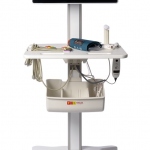
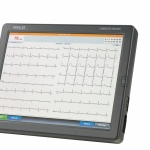
SCHILLER is looking forward to ESC Congress 2016. Come and visit us at booth E4-O200 and explore our latest innovations!

SCHILLER is looking forward to ESC Congress 2016. Come and visit us at booth E4-O200 and explore our latest innovations!

When Michael Ziller, Head of IT at the Bethanien Hospital in Moers, Germany, was looking for a provider of cardiac IT applications that not only offered standard applications for ECGs as well as long-term ECGs and long-term blood pressure measurements, he realised there was not much on the market. ‘We had an additional challenge for this project in that we wanted all data to run via just one…

Osnabrueck cognitive scientists and their students are developing new and intelligent expert systems, which help to effectively utilize the flood of daily information in everyday life. To enable working with large amounts of data, the Institute of Cognitive Science at Osnabrück University has engaged in a cooperation with the global corporation IBM, and will be able to access the IBM computer…

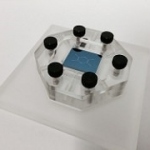
IBM scientists have developed a new lab-on-a-chip technology that can, for the first time, separate biological particles at the nanoscale and could enable physicians to detect diseases such as cancer before symptoms appear.

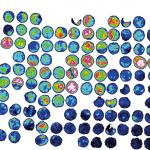
The MALDI Tissuetyper is a system that records spatially resolved mass spectra directly from tissue. This allows the direct measurement of proteins, lipids and other molecular classes without the need for antibodies or molecular probes. This results in highly multiplexed datasets in which hundreds or thousands of compounds are measured simultaneously.

In order to be able to properly locate digital pathology in the current discourse on the digitalisation of healthcare, pathology has to be understood as a fundamental diagnostic discipline, above all in oncology. Report: Stefan Kropf

The era of information systems operating in silos has passed, and this is particularly true in healthcare IT. At SCC Soft Computer, integration is one of our core values.

Cost constraints, higher workloads, and a shortage of qualified staff are three distinct market trends driving demand for greater efficiency in the laboratory. The goals of automation are to make workflow more efficient, improve the turnaround time and predictability, and reduce errors - all while accommodating future growth. Automation also frees up staff for other activities. Report: Franz Walt

In everyday life in a laboratory there is a plethora of digital and handwritten records. Records are manifold: The ISO 15189 calls for example temperature lists for refrigerators, forms for new hires, audit reports, meeting protocols and more. Some are already digitally recorded and processed, other, for example Temperature lists for refrigerators, are recognized handwritten even today and…

Laboratories are an essential part of effective modern healthcare. They provide clinicians with vital information that helps them make life-saving decisions, diagnose conditions and monitor patient treatment.

Pathologists have been largely diagnosing disease the same way for the past 100 years, by manually reviewing images under a microscope. But new work suggests that computers can help doctors improve accuracy and significantly change the way cancer and other diseases are diagnosed. A research team from Beth Israel Deaconess Medical Center (BIDMC) and Harvard Medical School (HMS) recently developed…

Bioserveur/Mesanalyses.fr connects 1,400 laboratories, 130 healthcare facilities and 15,000 doctors for sharing information.

‘Humber River Hospital, Toronto, Canada, could come straight out of a science fiction series that provides Star Trek-like healthcare services with hall-cruising robots delivering food, medications and supplies to staff, electrochromic windows, video conference capabilities at patients’ bedsides and real-time location systems, to name but a few futuristic features. Yet, this is now and for…

Today most healthcare systems rely on text-based matching: A patient’s ID card or driver’s license is considered sufficient proof of identity. This “identification system” however puts patients at risk of death, improper treatment, insurance abuse and lawsuits the provider and hospital cannot defend. Dr Raymond D. Aller, Director of Informatics at the Director of Informatics for the…

Professor Klaus Kayser, former Head of the Institute of Pathology at Heidelberg University Hospital’s Thorax Clinic, may be retired but he continues to be a leading figure in his discipline, a visionary, famous for this critical and ‘out of the box’ thinking. During the run-up to the European Congress on Digital Pathology (ECDP), we asked the expert about telemedicine and standards and,…

Harnessing the potential of digital pathology is taking research into new and more efficient biomarkers to a new level. By combining strategic planning with the latest digital pathology technology, high quality tissue microarrays for biomarker research are being produced.

In a study of 436 breast cancer cases with 28 years of survival data histo-pathologists from Karolinska Institute, Stockholm, Sweden shows that protein tissue-based biomarker data are at least as good as gene expression assays.

Whilst digital pathology has the potential to deliver more precise diagnostics, there remain a number of barriers to its widespread implementation.

Histopathologists play key roles in diagnosing disease entities and determining biomarkers related to the prognosis and response to specific therapy of malignant tumours. Report: Bela Molnar

Strictly speaking, digital pathology has not yet resulted in any groundbreaking changes for clinical diagnostics. The conventional light microscope introduced to pathology around 100 years ago continues to be the most important tool for pathologists.

Pathologists in Utrecht step away from the microscope as the first fully digital workflow goes live for primary diagnostics. ‘The whole world wants to stop by and see the show,’ said Paul van Diest MD, who leads the Department of Pathology at the Utrecht University Medical Centre.

Healthcare is going digital. No doubt about it, Prof. Hufnagl predicts. Information and communication technologies have gone beyond moving data from one place to the other; they are triggering stellar improvements in healthcare: diagnoses are becoming ever more precise, therapies ever more personalised. The extent to which the individual clinical disciplines have progressed in their technological…

Though it is the underlying science that drives diagnosis and treatment decisions, pathology is an often overlooked field. As part of the health continuum, as the turning point for treatment, as a new source for research and discovery – in all these ways, the power of pathology has gone unnoticed. However, the industry is slowly coming to realize its potential in transforming care, knows Hans…

Carol - I. Geppert MD, from the Institute for Pathology at Erlangen University Hospital, Friedrich Alexander University Erlangen-Nuremberg, debates the impact of digitisation on pathology.

A UK-based neuropathologist has highlighted how the digitisation of pathology will play a pivotal role in taking patient care on to a new and more efficient level. Speaking in a recent Webinar under the heading The Adoption and Benefits of Digital Pathology for Primary Diagnosis, Dr Daniel du Plessis also noted how the digital era would raise the profile of pathology and ‘bring it out of the…