

Article • Understanding dementia
PET imaging: Visualising amyloid deposition
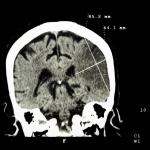
Neurologists are gaining new insights into dementia imaging by harnessing the latest opportunities offered by Positron Emission Tomography (PET).

Neurologists are gaining new insights into dementia imaging by harnessing the latest opportunities offered by Positron Emission Tomography (PET).

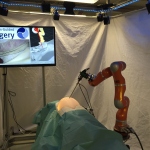
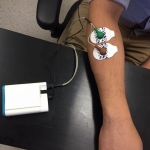
Physicians and biomedical engineers from Johns Hopkins report what they believe is the first successful effort to wiggle fingers individually and independently of each other using a mind-controlled artificial “arm” to control the movement.

An international public-private research consortium has identified and validated a cellular role of a primary Parkinson’s disease drug target, the LRRK2 kinase. This important finding illuminates a novel route for therapeutic development and intervention testing for Parkinson’s, the second most common neurodegenerative disease after Alzheimer’s.

Bioengineers and cognitive scientists have developed the first portable, 64-channel wearable brain activity monitoring system that’s comparable to state-of-the-art equipment found in research laboratories.

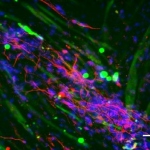
Stopping the growth of blood vessels in tumours is a key target for glioblastoma therapies, and imaging methods are essential for initial diagnosis and monitoring the effects of treatments. While mapping vessels in tumours has proven a challenge, researchers have now developed a combined magnetic resonance imaging (MRI) and ultramicroscopy 'toolkit' to study vessel growth in glioma models in more…

A new way of using MRI scanners to look for evidence of multiple sclerosis in the brain has been successfully tested by researchers at The University of Nottingham and Nottingham University Hospitals NHS Trust.

Patients who have had a stroke in the back of the brain are at greater risk of having another within two years if blood flow to the region is diminished, according to results of a multicenter study led by researchers at the University of Illinois at Chicago. These stroke patients are the most likely to benefit from risky intervention to unblock arteries, and they can be identified using a new…

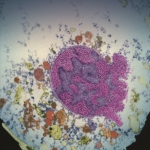
Proteins are like a body’s in-house Lego set. These large, complex molecules are made up of building blocks called amino acids. Most of the time, proteins fold correctly, but sometimes they can misfold. This misfolding causes the proteins to get sticky, and that can promote clumping, or aggregation, which is the hallmark of several neurodegenerative diseases such as ALS, Alzheimer’s and…

At the IEEE International Electron Devices Meeting 2015, world-leading nanoelectronics research center imec, KU Leuven, and Neuro-Electronics Research Flanders (NERF, set up by VIB/KU Leuven and imec) presented a set of silicon neural probes that combine 12 monolithically integrated optrodes using a CMOS compatible process.

Su-Chun Zhang, a pioneer in developing neurons from stem cells at the University of Wisconsin-Madison, has created a specialized nerve cell that makes serotonin, a signaling chemical with a broad role in the brain.

Multiple sclerosis (MS) may be triggered by the death of brain cells that make the insulation around nerve fibers, a surprising new view of the disease reported in a study from Northwestern Medicine and The University of Chicago.

An international team of researchers, led by scientists at the National University of Singapore (NUS), has identified a protein that regulates the growth of neurons by transporting key metabolic enzymes to the tips of neural cells. Their findings open up new avenues for design of drugs for ataxia, a motor coordination disorder.

Juries in criminal cases typically decide if someone is guilty, then a judge determines a suitable level of punishment. New research confirms that these two separate assessments of guilt and punishment – though related - are calculated in different parts of the brain. In fact, researchers found that they can disrupt and change one decision without affecting the other.

By implanting electrodes in the brain tissue one can stimulate or capture signals from different areas of the brain. These types of brain implants, or neuro-prostheses as they are sometimes called, are used to treat Parkinson's disease and other neurological diseases.

Twin girls born joined at the pelvic and hip region are recovering after separation surgery at Nationwide Children’s Hospital. The girls are named Acen and Apio, but on Thursday they were carefully labeled “blue” and “red” to help surgeons know which monitoring equipment belonged to each sister as they carefully separated their spines, muscle and tissue.

Scientists at the University of California, San Diego School of Medicine have elucidated a genetic interaction that may prove key to the development and progression of glaucoma, a blinding neurodegenerative disease that affects tens of millions of people worldwide and is a leading cause of irreversible blindness.

More than five million Americans are living with Alzheimer's disease (AD). Of them, 400,000 also have Down syndrome. Both groups have similar looking brains with higher levels of the protein beta amyloid.

Scientists at Karolinska Institutet and Karolinska University Hospital in Sweden have discovered a new explanation for severe early infant epilepsy. Mutations in the gene encoding the protein KCC2 can cause the disease, hereby confirming an earlier theory. The findings are being published in the journal Nature Communications.

Stony Brook researchers publish experimental findings in the Journal of Neuroscience that show the lateral position more efficiently rids the brain of solutes that may contribute to disease.

Researchers at McGill University have clearly identified, for the first time, the specific parts of the brain involved in decisions that call for delayed gratification. In a paper published in the European Journal of Neuroscience, they demonstrated that the hippocampus (associated with memory) and the nucleus accumbens (associated with pleasure) work together in making critical decisions of this…

Brain lesions in children can be especially challenging to diagnose, according to a report in the journal Frontiers in Neurology by a multidisciplinary team of Loyola University Chicago Stritch School of Medicine physicians. Lesions include tumors, abnormal blood vessel formations, and abscesses and inflammation due to infections.

Fructose not only results in a lower level of satiety, it also stimulates the reward system in the brain to a lesser degree than glucose. This may cause excessive consumption accompanied by effects that are a risk to health, report researchers from the University of Basel in a study published in the scientific journal PLOS ONE. Various diseases have been attributed to industrial fructose in…

A group of passengers who thought they were going to die when their plane ran out of fuel over the Atlantic Ocean in August, 2001 have had their brains scanned while recalling the terrifying moments to help science better understand trauma memories and how they are processed in the brain.

Hyperactivity and social abnormalities are defining characteristics of ADHD and autism, two developmental disorders that parents and scientists around the world are struggling to understand. At the RIKEN Brain Science Institute in Japan, researchers have identified the protein IRBIT as a key player in preventing these behaviors from developing.

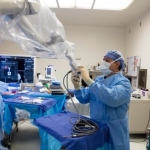
Brain surgery is famously difficult for good reason: When removing a tumor, for example, neurosurgeons walk a tightrope as they try to take out as much of the cancer as possible while keeping crucial brain tissue intact — and visually distinguishing the two is often impossible. Now Johns Hopkins researchers report they have developed an imaging technology that could provide surgeons with a…