

Childhood TB: Decreasing and rising in the EU and EEA
Although the overall rates of childhood tuberculosis (TB) are decreasing in the European Union (EU) and the European Economic Area (EEA), childhood TB is actually rising in certain countries.

Although the overall rates of childhood tuberculosis (TB) are decreasing in the European Union (EU) and the European Economic Area (EEA), childhood TB is actually rising in certain countries.

Although powerful, new, targeted treatments are regularly introduced to cancer clinics, choices for the first-line treatment of invasive breast cancer normally lie between preventive surgery and chemotherapy. A recent American study used genomic prediction combining multiple signatures to determine outcomes to standard chemotherapy.

Bypass surgery figures declined again in 2010. Reason: Most coronary heart disease (CHD) patients are being treated by removal of the obstruction followed by stent implantation -- a situation criticised by Professor Jochen Cremer, first Vice President of the DGTHG (German Society for Thoracic and Cardiovascular Surgery).
Biomarkers – mainly defined as surrogates serving as indicators for specific biological states – play an ever-increasing role in neuroscience and especially in the management of multiple sclerosis, scientists reported today at the 21st Meeting of the European Neurological Society (ENS) in Lisbon. In analyzing gene expression patterns, immunological changes and imaging abnormalities,…

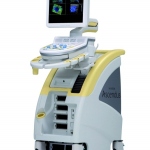
Hitachi Medical Corporation is delighted to announce that its HI VISION Avius ultrasound platform has been selected as a recipient of the iF product design award 2011 and is proud to now carry the iF design quality label.

Shimadzu, world-wide manufacturer of diagnostic imaging equipment, has introduced the first wireless flat-panel detector (FPD) for its mobile, fully digital X-ray system MobileDaRt Evolution. This new CXDI-70C detector generation is the next evolutionary step for mobile X-ray applications.

CardioFocus, Inc., developer of the Endoscopic Ablation System for the transcatheter treatment of Atrial Fibrillation (AF), convened international leaders in electrophysiology to discuss the advantages of direct optical visualization to guide catheter ablation for the treatment of paroxysmal AF.

ENCITE experts are very pleased to meet the imaging community at the European Molecular Imaging Meeting (EMIM) 2011 in Leiden/NL. The congress brings together top European scientists from various disciplines working in diverse fields of molecular imaging to discuss latest research discoveries and possible translations into medical practice.

Scientists of the Charité – Universitätsmedizin Berlin and the Max-Delbrück-Center for Molecular Medicine (MDC) Berlin-Buch have developed a highly efficient approach for imaging the beating human heart. The images produced in one of the world's most powerful MRI systems whose power is equivalent to 150.000 times the earth’s magnetic field are of a much higher detail than cardiac images…

This March, Heinz-Dieter Hilgers arrived for his once-monthly check-up at Ruhrlandklinik in Essen. Last June, his situation was far less relaxed. Suffering chronic obstructive pulmonary disease (COPD) for almost two years, he had been listed for a lung transplant since April 2009. During his wait for an organ, his illness increased.

Neurocardiology – especially atrial fibrillation (AF) – was the key topic during a press conference held during the 55th Annual Congress of the Germany Society for Clinical Neurophysiology and Functional Imaging (DGKN) this March. For good reason: Worldwide, there are around six million AF sufferers -- and it is one of the most common causes of stroke because this cardiac irregularity can…
Philips and Corindus Inc. today announced an alliance agreement to add Corindus’ robotic-assisted system for the minimally invasive treatment of obstructed coronary arteries (also known as percutaneous coronary interventions) to Philips’ interventional cardiology solutions.

State-of-the-art operating theatres are shifting from X-rays to the display of images on monitors. The variety of different picture sources is also increasing, ranging from boom and endoscopy cameras to C-arms or PACS (Picture Archiving and Communication) systems. Thus the trend is to use an image management system to display the various surgical images on just one monitor.

Stroke, breast cancer detection, sports medicine – the clinical programme is an impressive illustration of this year’s congress theme: Radiology is diversity. Florian Schneider asked the joint congress Presidents, Professor Bernd Hamm (Berlin) and Professor Walter Hruby (Vienna) to highlight the major topics at this, the largest medical imaging event (attendance around 7,000) in the…

Delegates at the UKRC 2011 will examine who should deliver 21st century imaging services in the UK, when the relationship between radiologists and radiographers will be the focus of a keynote debate. The session ‘This house believes that radiologists have given up enough of their professional role to radiographers’ will also see delegates vote on this issue.

Innovative mobile C-arm solutions by Nuremberg-based Ziehm Imaging are quickly conquering interventional radiology. At this year‘s European Congress of Radiology in Vienna, Martin Herzmann, Director of Global Marketing at Ziehm Imaging, met with EH correspondent Karoline Laarmann to discuss developments.
CT-PET is the child of a forced marriage between nuclear medicine and radiology. A shared session at ECR 2011 in Vienna did little to assure there is a growing consensus between the two partners.

At first glance you think it’s a futuristic washing machine, or maybe an oversized designer amplifier. Actually, you are looking at GE’s Optima* MR430s. This is not only a real eye-catcher because of its exceptionally compact design (ever, for an MR scanner) but also due to the system’s truly smart function and performance.
A Pisa-based team has established the Adonhers (Aged Donor Heart Rescue by Stress Echo) protocol and is using second-opinion stress tele-echocardiography to assess the condition of the heart from older donors. A key aspect of this was to raise the donor cut-off age limit from 55 to 65 years, where the stress echo screening on the candidate donor showed as normal.

This April the 77th Annual Meeting of the German Cardiac Society (DGK) presented over 300 events with 1,800 speakers, covering the entire spectrum of cardiovascular diseases, from fundamental research to clinical routine. Professor Gerd Hasenfuss, Director of the Department of Cardiology and Pulmonology and Chair of the Heart Research Centre in Gottingen, particularly requested a focus on …

Transcatheter valve implants (TAVI) have encouraged a new group of patients. Previously inoperable, they may now receive adequate treatment. Some centres report a success rate close to the conventional open surgical procedure. Naturally, the long-term outcome is still unclear. Holger Zorn reports.

To meet the high demands of today’s radiological environment, a PACS must provide far more than archiving, controlling and distribution of electronic data. Post processing and upgradable network structuring capabilities are just as important to guarantee efficient workflow. The Visage Thin Client looks like a smart solution indeed.

Michael Maher, Professor of Radiology at the University Collage, Cork, Ireland, produced an answer to during a GE Healthcare Lunch Symposium at the European Congress of Radiology this March. It is 1.2 millisievert – at least for abdominal CT scans of Crohn’s disease patients.
Medical imaging has recently advanced so rapidly that it should halt. Applying more power to computed tomography (CT) and magnetic resonance imaging (MRI) scanners is becoming too dangerous for patients and healthcare workers. Magnets for the next-generation MRIs are so powerful that they must be moved to a separate building on hospital campuses, while CT radiation levels have risen to alarming…

Contrast induced nephropathy (CIN) is widely recognised as a potentially serious complication of contrast media use -- a risk that increases with a patient’s age and decreased renal function. Mark Nicholls reports