Personalised Medicine Drives Uptake
Future of DNA sequencing will shift from a laboratory-based setup to point of care testing in the next 5 years

Future of DNA sequencing will shift from a laboratory-based setup to point of care testing in the next 5 years

Over the next few years, the University Medical Center (UMC) Utrecht and Quirem Medical will be working closely together to maximize the benefits of using holmium microspheres to treat liver cancer patients worldwide.

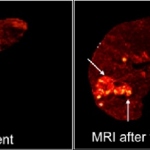
In a series of studies involving 140 American men and women with liver tumors, researchers at Johns Hopkins have used specialized 3-D MRI scans to precisely measure living and dying tumor tissue to quickly show whether highly toxic chemotherapy – delivered directly through a tumor’s blood supply – is working.

Two things that radiologists resist – structured reporting and (computer-assisted) quantification – are the very things that Gabriel Krestin believes are essential to advance diagnosis in the brave new world of omic-medicine that is emerging.

Healthcare is undergoing a major change set to offer a real prospect of far more genetically targeted treatments, according a leading human geneticist Sir John Burn, Professor of Clinical Genetics at Newcastle University, England.

In the country’s first scientific study to correlate the demographic changes and frequency of tumorous diseases, demographic changes have led scientists to forecast a significant increase in the number of cancerous diseases in coming years.

Radiologists, EU policy makers and medical industry in drive to strengthen collaboration on personalised medicine

In 1839 Richard Thoma was the first to observe that arteries respond to flow: he identified a fundamental relationship between blood flow and arterial calibre.

With the effectiveness of ‘tumour board review’ in the USA questioned in a 2012 study published in the Journal of the National Cancer Institute, Mark Nicholls sought the opinion of UK-based consultant urological surgeon Ben Challacombe

About 20 years ago the first tumour boards were set up in Germany. Initiated and led by surgeons, they not only invited oncologists, radiotherapists and radiologists to conferences but also, increasingly often, pathologists.

Like any other cancer – breast cancer is a highly individual disease, shaped by many factors such as age, health status or genetics. Due to the complex web of molecular pathological processes and resistance mechanisms it is very difficult to select the most effective therapy for each patient.

ESR President Gabriel Krestin introduced a major theme for the society's congress with personalized radiology. "There is nothing more personal in healthcare than a medical image," he told fellow radiologists.

In laboratory studies, scientists at the Johns Hopkins Kimmel Cancer Center have developed a way to personalize chemotherapy drug selection for cancer patients by using cell lines created from their own tumors.

‘We aim to develop an understanding of which novel research activities could bring benefits for patients,’ explained Professor Christof von Kalle, Director of the Department of Translational Oncology, NCT (German National Centre for Tumour Diseases) and the German Cancer Research Centre (DKFZ), speaking on translational activities during the New Cancer Targets gathering in Heidelberg this…

A dynamic new consortium was launched in October during the recent Innovation in Oncology event organised by the German Cancer Research Centre (DKFZ) with Heidelberg University Hospital.

BRAF is a protein that plays an important part in the transmission of growth signals. In a mutated state it can lead to uncontrolled cell growth. Around every second malignant melanoma – the deadliest and most aggressive form of skin cancer – has a certain mutation of the BRAF gene.

Individually customised drug therapies have been used for the last two years, particularly for cancer patients

Patients at the Queen Elizabeth Hospital Birmingham are already seeing the benefits of hourly nurse rounds, which are expected to be rolled out nationwide, under plans announced by the Government on January, 4. to improve standards of care.

Over the last few decades healthcare costs have been skyrocketing, something often discussed on this blog as it has become a considerable problem for many different countries.

NHSScotland has selected the international IT services company Atos, in partnership with IMAGE Information Systems, to support the roll-out of a new national screening program’s IT system for Abdominal Aortic Aneurysms (AAA). Currently, there is no existing vascular screening system worldwide.

A new genre of medical tests - which determine whether a medicine is right for a patient's genes - are paving the way for increased use of personalized medicine, according to the cover story in the current edition of Chemical & Engineering News. C&EN is the weekly newsmagazine of the American Chemical Society, the world's largest scientific society.

Only individualised pharmacotherapy can maintain the quality of life for patients suffering from severe pain – and the benefit for the healthcare system is a resulting reduction in costs. A report by Anja Behringer.

Enormous technical developments over recent decades, along with greater understanding of tumour biology, have made imaging, pathology and laboratory medicine indispensable tools in personalised cancer treatments.

Molecular diagnostics is one of the most important technological advances in clinical diagnostics, seeing the €3.6 billion market grow 10% in constant currency (CC) in 2010 and predicted continual growth well above the diagnostic industry rates. The recipe for success in this field lies in three critical components: core technology, automation and menu. During our interview with Marc Meyer, the…

For some, ‘life’s a bitch’ with unfairness and suffering an integral part of it. Many more people actually do not expect any better than the barrenness and misery in which they live, EH Malta Correspondent Moira Mizzi reflects.