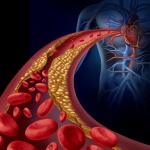
Article • Evolution of a field
Will software steal the heart of cardiology?
Celebrating 40 years of PCI, cardiologists fret over their future with big data, machine learning and robots.



Celebrating 40 years of PCI, cardiologists fret over their future with big data, machine learning and robots.
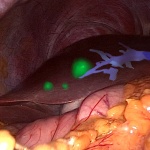
Computer scientist Stefanie Speidel, who became a Professor for Translational Surgical Oncology at the National Centre for Tumour Diseases, in Dresden in Germany this April, researches intelligent assistance systems for the operating theatre.

A French start-up eases international peer-to-peer teaching in TAVI, PRP or S-ICD and other leading medical procedures by taking physicians directly in the operating suites.
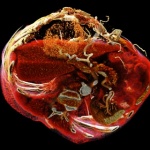
What if surgeons could explore the body like a movie set – every vessel, tissue layer, and tumour rendered in photorealistic 3D before the first incision? Siemens Healthineers' Cinematic Rendering does exactly that. The technology transforms CT and MRI scans into strikingly lifelike 3D visualisations – offering surgeons a clearer spatial understanding of individual anatomy.

Beckman Coulter Diagnostics introduces a new integrated system of technologies and capabilities called DxONE, designed to ease data access and usability. DxONE was created in response to the increasing challenges faced by laboratory technicians to expedite result times, reduce costs, maneuver personnel shortages and navigate network consolidations.
Royal Philips, a global leader in health technology, announced it has signed an agreement to acquire TomTec Imaging Systems GmbH (TOMTEC), a leading provider of intelligent image analysis software, especially for diagnostic ultrasound.

Neuroscientists from the University of Chicago have developed a computer model that can simulate the response of nerves in the hand to any pattern of touch stimulation on the skin. The tool reconstructs the response of more than 12,500 nerve fibers with millisecond precision, taking into account the mechanics of the skin as it presses up against and moves across objects.

IBA (Ion Beam Applications S.A.), the world’s leading provider of proton therapy solutions and radiation therapy integrated quality assurance (QA) for the treatment of cancer, announces the release of myQA version 2017-001. This new version further enhances the integration of quality assurance across all QA applications, departments and people.
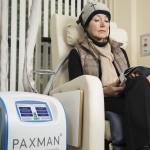
Led by six globally-recognised experts in cancer care, the organisation known as CHILL, Cancer-related Hair Loss, International Leadership and Linkage, announced today an initiative to collect and track evidence-based patient information and clinical guidance. Data will be used to establish clinical best practices to ensure maximum effectiveness of scalp cooling to minimise chemotherapy-induced…

Ares Genetics GmbH, a wholly-owned subsidiary of Curetis GmbH and a developer of pioneering solutions for the detection of genetic resistances in pathogens, announced that the project "GEAR - Predicting Antibiotic Resistances with Genetic Data" has been awarded in the competition "Landmarks in the Land of Ideas".
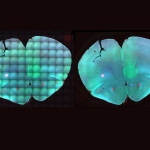
Today, tracking the development of individual cells and spotting the associated factors under the microscope is nothing unusual. However, impairments like shadows or changes in the background complicate the interpretation of data. Now, researchers at the Technical University of Munich (TUM) and the Helmholtz Zentrum München have developed a software that corrects images to make hitherto hidden…
San Carlos Hospital in Madrid has undertaken a number of projects to promote artificial intelligence (AI) use in clinical practice. Dr Julio Mayol, Medical Director and Head of the Innovation Unit, explained these initiatives and the direction he wants to take in an exclusive interview.

Laboratories are an essential part of effective modern healthcare. They provide clinicians with vital information that helps them make life-saving decisions, diagnose conditions and monitor patient treatment.

A computer's ability to predict a patient's lifespan simply by looking at images of their organs is a step closer to becoming a reality, thanks to new research led by the University of Adelaide. The research has implications for the early diagnosis of serious illness, and medical intervention.


The online learning platform PEPconnect from Siemens Healthineers enables caregivers to conveniently access continuous education.
Clinicians and researchers in Southampton are leading a pioneering study into the use of computer-generated hand models to help improve the success of joint surgery for patients with arthritis.
Besides being useful for keeping in contact with friends, relatives and business associates, social networks may even influence your health (and that of your friends) in surprising ways, as the research of Nicholas A. Christakis suggests.

The global WannaCry ransomware cyberattack had a particularly acute impact on health services across the UK. Mark Nicholls looks at how the NHS was left vulnerable to the WannaCry cyberattack. While affecting computers across the world – from Russia to the US – NHS hospitals were forced to cancel routine surgery and GP appointments as systems were affected by the cyberattack or were…

‘You can’t get 100 percent security, you can’t avoid all risks – but you can improve security tremendously just by considering some rules,’ explains Torbjörn Kronander, Board member, CEO and President of Sectra AB.

Dr Krishna Chinthapalli, a neurology registrar at the National Hospital for Neurology and Neurosurgery in London, describes how a virus - or “ransomware” - infected and locked computers at the Hollywood Presbyterian Medical Center in Los Angeles hospital in February 2016.
Tens of thousands of "ransomware" attacks have targeted organizations around the world on March 12. The hackers locked down particular files on a computer and asked the computer's administrator for a payment in order to regain control of them. Groups hit included hospitals in the UK that had to cancel outpatient appointments.
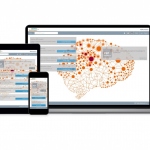
CEOs are getting increasingly concerned about the availability of key skills. While other key concerns such as over-regulation are mainly external factors that can’t be influenced, the availability of key skills can be proactively addressed. With the online learning experience PEPconnect from Siemens Healthineers, clinical institutions can offer each staff member continuous training. What’s…
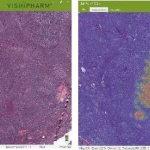
Visiopharm A/S announces the first result of their multifaceted strategy to apply Deep Learning technologies to its leading image analysis solution for cancer research and diagnostics. Visiopharm considers Deep Learning an important technological breakthrough for tissue pathology that offers the potential to make a real difference in the assessment of tissue structures, which is probably one of…

‘From an IT perspective, medicine is now networked to a very large degree, no matter which departments you look at,’ says Stefan Bücken, IT Security Officer at Erlangen University Hospital, Germany.

In her keynote speech at this year’s Healthcare Information and Management Systems Society (HIMSS) gathering Ginni Rometty, Chairman, President, and CEO IBM, endorsed cognitive computing and its potential: ‘Cognitive is an era that could usher into a golden age if we shape it wisely.’