Sponsored • Testing Tissue
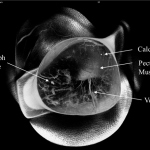
Cone Beam CT for the breast
The Koning Breast CT (KBCT) system, which has been granted FDA approval, provides 3D breast of the entire breast from any orientation for diagnoses.



The Koning Breast CT (KBCT) system, which has been granted FDA approval, provides 3D breast of the entire breast from any orientation for diagnoses.
Facing challenges common to any manager, Russian radiologists must also confront a funding crisis, system dysfunctions, self-referring patients, and head-hunters chasing staff.
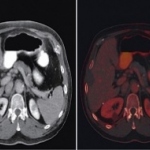
With the new version of the Somatom Definition Edge, Siemens Healthcare has created the basis for establishing the dual energy procedure in clinical routine. The innovative X-ray tube concept in the new CT scanner, enables simultaneous imaging at two different energy levels for the first time in single source computed tomography.
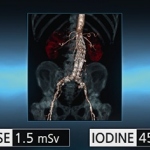
An independent survey conducted by the British Society of Cardiac Imaging (BSCI) yielded surprising results: Not only does Toshibas’ Aquilion ONE scanner deliver ultra-low radiation doses for cardiac CT, its next-generation PUREViSION detector also widens the scope of diagnostic cardiac CT. Radiologists agree that this innovative technology allows scanning of patients who previously would…
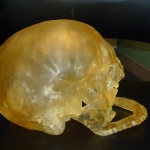
Researchers are using computed tomography (CT) and 3-D printing technology to recreate life-size models of patients' heads to assist in face transplantation surgery.

The number of radiological accident and emergency examinations had doubled within five years because many accident and emergency (A&E) patients are given CT scans even before having a comprehensive clinical examination. Report: Michael Krassnitzer

An independent survey by the British Society of Cardiac Imaging finds Toshiba Aquilion scanner delivering ultra-low radiation doses for cardiac CT. "This data is possibly the most powerful thing I can show about the Aquilion ONE with the PUREViSION detector," said Russell Bull, M.D., Consultant Radiologist at the Royal Bournemouth Hospital in Dorset, the United Kingdom.

Hybrid imaging is of little clinical value. PET-MRI, according to many experts, is the best clinical procedure to confirm coronary heart disease (CHD). Report: Axel Viola
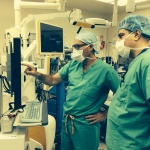
The adage ‘practice makes perfect’ is applicable to every profession – but even more so for pilots and surgeons. Flight simulation technology has been used for decades to hone aviators’ skills, and this technology is now being used by neurosurgeons to plan as well as practise surgical procedures and for real-time virtual assistance in operating theatre. Report: Cynthia E Keen
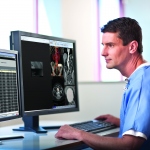
Andalusia Health Service has selected Accenture and Carestream Health to deploy a picture archiving and communications system (PACS) that will allow clinicians to manage, store and share diagnostic imaging data across more than 1,600 healthcare facilities in Spain. This initiative by the Andalusia Health Service is expected to go live in late 2015, creating one of the largest medical imaging…
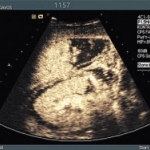
In the USA, some patients have bled to death while in the CT scanner because this type of examination takes too long for blunt abdominal trauma diagnosis. Report: Chrissanthi Nikolakudi
Precursor in the field of CBCT imaging, NewTom creates the finest solutions for clinical diagnostics,’ the manufacturer reports. ‘Our first CBCT system was originally installed in 1996. This was the forefather of the NewTom product line and of all X-ray units based on CBCT.’

At least 60% of liver lesions can be characterised purely by ultrasound. Screening and examinations of supposedly healthy patients often result in an accidental discovery of liver lesions. According to Dr Antonius Schuster MD MBA, Head of the Department of Radiology at the LKH Bregenz, (Vorarlberg). ‘The prevalence of such changes is around 20% of patients examined’. Depending on a…
Approach could improve treatment of drug-resistant infections. Combining a PET scanner with a new chemical tracer that selectively tags specific types of bacteria, Johns Hopkins researchers - working with mice report - have devised a way to detect and monitor in real time infections with a class of dangerous Gram-negative bacteria.
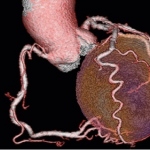
The significant benefits of cardiac catherisation remain undisputed. However, cross-sectional imaging modalities are serious competitors when it comes to arriving at the right diagnosis.

Imaging has progressed at vertiginous paces since X-rays were invented, not only as a diagnostic tool but also as an invaluable partner in the realm of non-invasive medical intervention.
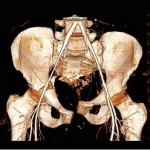
At this year’s meeting of the German Radiological Society (DRK), Dr Mathias Langer, Head of the Radiology Clinic at Freiburg University Hospital and the society’s 2013 President, assured EH that CT is still the be all and end all in trauma surgery.
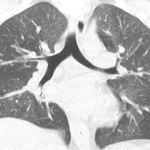
Imaging procedures are rarely used to diagnose and treat asthma – but this may well change in the future.
Ultrasound is playing an increasing role in the management of the upper and lower airways, particularly in interventional procedures and emergency situations. It is also used to enhance patient safety.

You never know what you’re going to see in the Emergency Department (ED); but, more and more the first evaluation of a trauma patient’s condition will be with ultrasound.

About four years ago, Samsung Electronics Co. – specialist in electronic components and mobile phone sets, was recognised by its revenues as the world’s largest IT company, displacing Apple Inc.

Even a giant must learn to walk by taking small steps first. Founded in 1998, and as a wholly-owned subsidiary of Neusoft Corporation, Neusoft Medical has moved deliberately to build its strengths, becoming the premier developer and manufacturer of advanced medical equipment in China – and the first in that country capable of building a computed tomography (CT) scanner.

Royal Philips today announced that it has signed a partnership agreement with the Stockholm County Council (SCC) to jointly innovate in health care.

The European Congress of Radiology (ECR), the biggest radiology meeting in Europe, was held March 6–10 in Vienna, Austria. Over 20,000 delegates from more than 110 countries attended the annual meeting of the European Society of Radiology (ESR), which took place for the 20th time at the Austria Center Vienna.
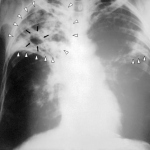
Approximately 1.7 billion people worldwide carry Mycobacterium tuberculosis (MTB), i.e. about one-third of the population. The rate of new infections is highest in Africa, followed by certain Asian regions, including areas in Russia.