


What’ s new in information technology?
This remains critical in radiology and demand rows for even more rapid report turnaround and quicker access to imaging, especially for cancer.

This remains critical in radiology and demand rows for even more rapid report turnaround and quicker access to imaging, especially for cancer.
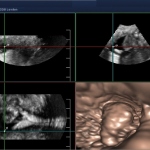
Critical ultrasound, as a tool for immediate therapeutic decisions, and emergency POC ultrasound – an extension of the clinical examination at the bedside or on the accident scene – have shown clear benefits along with lung ultrasound.

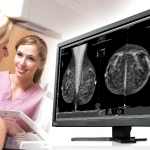
This technique is increasingly used to detect breast cancer and has been shown to improve diagnosis in many clinical situations. It is also allowing clinicians to detect previously unknown areas of breast cancer in women with newly diagnosed disease.

MRI: Although an area of constant debate, this is becoming a widely accepted clinical modality in Europe. However, researchers in The Netherlands have shown that performing pre-operative breast MRI in all women with invasive lobular carcinoma (ILC) can reduce the need for re-excision.

When scanning seizures, Dr Walter Kucharczyk, director of MRI at Toronto General Hospital, believes that MRI still remains the best imaging test to discover if there is an anatomic or structural abnormality that might account for a seizure.

Radiology constantly evolves. There are technical advances in terms of the capabilities of various modalities, greater clarity from contrast agents that are also safer for patients, and innovation in techniques that gains even greater performance from existing equipment, or enables further development.

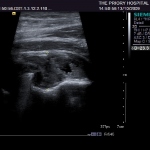
Sonography is the most important non-invasive supplementary procedure to mammography, the current gold standard in breast cancer diagnostics. High-resolution ultrasound can reliably distinguish cysts and solid lesions.

Neuroradiologist and researcher Gregory Sorensen MD, changed roles in June 2011 when, as the new President & CEO of Siemens Medical Solutions USA, Inc., he became responsible for the entire Siemens Healthcare portfolio, including therapy, laboratory diagnostics medical imaging and – healthcare information technology.

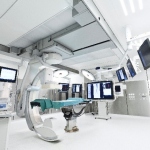
Image guidance and information management are turning into essential components of operating theatre workflow. Integrating the operating theatre (OT) with the help of IT systems positively affects many aspects of surgery – including its safety.

Security checks – the necessary evil for air and land travellers. While luggage scans and body pat-downs are ubiquitous, drug smugglers have increasingly used their own bodies as a vessel to conceal and transport their goods.

During the RSNA 2011, Professor Uwe J Schoepf MD, was asked what will be the chosen procedure of the future in cardiac imaging, he answered without hesitation: ‘Definitely CT,’ and, the Director of Cardiovascular Imaging at the Medical University Charleston, South Carolina.

Many smokers continue to use tobacco despite high taxes and drastic health warnings. Indeed, in industrialised countries, tobacco-related mortality rates or illnesses are increasing. These include chronic obstructive pulmonary disease (COPD), the fourth leading cause of death in adults – and rising.

In Berlin, from 24-26 April visitors to this international congress and trade fair will hear of medical imaging, process optimisation and facility management, and the latest construction, operation and equipment trends The event will run alongside Euro ID, a trade fair for automatic identification, and conhIT, an IT healthcare industry tradeshow.

Education and science are not the only exciting aspects of the European Congress of Radiology; the Vienna venue is also a stage on which companies can introduce novel concepts in medical imaging. Following one product’s world premiere during the RSNA 2011 in Chicago, the Echelon Oval 1.5-T MR system is now debuting before a European audience at the ECR 2012.

Cardiovascular surgeon Dr Miodrag Todorovic explains how an island hospital – which is a medical centre of excellence and regional reference centre – is further improving medical care for patients there and in six neighbouring states with the help of a new picture archiving system from Visus

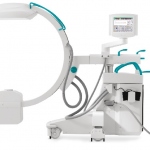
Shimadzu has launched a new fully digital R/F system, the Flexavision F3, which has a portable dynamic flat panel detector (FPD) – making this a system suitable for fluoroscopic as well as radiographic applications.

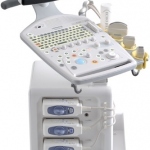
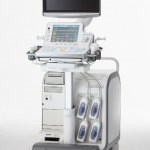
Samsung Medison and Samsung Electronics are in the Austria Centre introducing visitors to new products, including an advanced ultrasound system and a digital X-ray series

This may sound like science fiction, but computed tomography with reduced radiation exposure and the highest soft tissue contrast is likely to be a reality -- very soon. Named phase-contrast imaging, the method is an invention of Professor Franz Pfeiffer, Chair of Biomedical Physics at Munich Technical University, Germany. We asked him to explain the implications this development has for…

Having previously presented the CT D’OR (CT with Double Optimal Reading) and ‘Oped’ (Orthogonal Polynomial Expansion on the Disc), a detector mask and a reconstruction algorithm that improve image quality whilst simultaneously lowering the radiation dose, Professor Christoph Hoeschen, at the Department of Medical Radiation Physics and Diagnostics (AMSD) at the Helmholtz Centre Munich, is…

About two years ago iterative image reconstruction was officially introduced for CT imaging. Since then, no other technological innovation has raised more hope that the dose of X-ray based, cross sectional imaging can be significantly lowered. The possibilities of this procedure have not yet been exhausted.

The injury was as spectacular as it was ruesome. Struck by a train a male patient was brought to the emergency department in Munich, his right foot hanging on only by muscle and bloody tendons, the bone shattered.

Putting patient safety first is a priority for both HERCA, the association of the Heads of European Radiological Protection Competent Authorities and COCIR, the European trade association representing the medical imaging, electromedical and healthcare IT industry, who are working together to address concerns related to radiation exposure in computed tomography (CT).

The next generation of integrated operating systems celebrated a world premiere in clinical use this November in Leipzig Germany. EH Correspondent Holger Zorn was there when Professor Gero Strauss entered the Surgical Deck of the International Reference and Development Centre for Surgical Technology (IRDC) as ´Commander`.

Much has changed for medical device manufacturers. Take scanner development; whereas the aim has long been to increase multi-slices, produce higher field strengths and sharper images, optimise the ergonomics and then launch the new product at a specific group of customers, in recent years this approach became insufficient.

The multipurpose BRANSIST alexa, which aims to provide total support for advanced catheterisation procedures, features a 12 x 12-inch flat panel detector (FPD) – an ideal size, the manufacturer Shimadzu points out, for covering interventions from head-to-toe, from brain blood vessels, cardiac and abdomen to peripheral blood vessels in the upper and lower extremities.