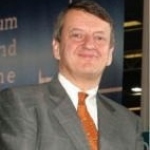
The 31st ISICEM
Jean-Louis Vincent, Chairman of the Dept of Intensive Care, Erasme Hospital, Université Libre de Bruxelles, welcomes visitors to this year’s International Symposium on Intensive Care and Emergency Medicine.



Jean-Louis Vincent, Chairman of the Dept of Intensive Care, Erasme Hospital, Université Libre de Bruxelles, welcomes visitors to this year’s International Symposium on Intensive Care and Emergency Medicine.
Turfing is a subversive activity based on a variety of economic and prestigious interests. It is opposed to the trend in modern medicine towards harmonisation, ordinate formation and QA processes. Usually, ‘highjacked’ services are characterised by uncontrolled training processes, the absence of an official syllabus, no board exams, a lack of formal (registered) practice supervision and…
The first question we should ask is whether we only lack radiologists or whether we lack medical doctors in general. If the answer is that we do not have enough specialists covering diagnostic imaging and image interpretation specialties then the question needs to be further analysed on why we cannot attract more people to take that exciting and rewarding route after completing their primary…
‘The demand for radiology procedures, even on a 24/7/365 basis, seems to increase faster than the number of new radiologists. The shortage of radiologists creates a service provider gap. Further, quality, safety, education, and research become threatened,’ says Professor Jarl A Jakobsen MD PhD MHA, University of Oslo and Oslo University Hospital.
A leading radiologist is forecasting a ‘paradigm shift’ in breast imaging. Dr Peter Brader, from Department of Radiology, Division for Molecular and Gender Imaging, Medical University Vienna, envisages that diagnosis and treatment will move from a ‘one size fits all’ approach to one of personalised molecular medicine by 2025. He also foresees greater use of theranostics with combinations…
Molecular Imaging (MI) emerged in the early 21st Century as a discipline at the junction of molecular biology and in vivo imaging to enable the visualisation of the cellular function and the follow-up of the molecular processes in living organisms. Modalities available for MI encompass MRI, CT and ultrasound, PET, as well as Optical Imaging, and are by nature frequently experimental.
Innovation in imaging in the last decades was mainly driven by new imaging modalities, better image quality and improved workflow tools to enhance diagnostic quality and confidence. As a global vendor we face future turf battles with new market entries, especially from Asia. To win those competitive battles we are broadening our innovation focus to serve the changing needs of radiologists.
Whole-body hybrid PET-MR scanners are emerging on the market and are expected to have a significant impact in diagnostic imaging particularly in oncology applications and also in other clinical domains, such as cardiology, inflammatory and infectious disease, as well as in neurological applications.
Molecular imaging (MI) appears as an unavoidable challenge for the future of imaging, because MI is able to characterise cellular and molecular processes and will serve as a guide for new targeted or personalised therapies. However, MI appears as hype for many radiologists because it is too far from clinical practice. In reality, MI is already part of clinical practice using PET and targeted…
Radiologists play a main part in the majority of diagnostic and therapeutic procedures. For this reason a staff shortage in radiology departments severely compromises the quality of clinical processes. However, the shortage is not evident in absolute terms, because the number of radiologists is increasing in most European countries.
Rapid advances in medicine and technology have led to a change in the job description for radiologists. With image acquisition and evaluation increasingly carried out by machines, there is a need to find new fields of activity. However, the required rethink is happening far slower than the pace of development in science and technology, believes radiologist and healthcare management expert…
There are several reasons why turf battles for imaging occur: 1) Medical imaging has become essential for the diagnosis, treatment planning and patient follow-up. 2) Interventional radiology provides efficient procedures that are a credible alternative to surgery, challenging the surgeons who want to survive. 3) Radiologists are currently facing an explosion of the demands and, paradoxically at…
'What can we do about the lack of young radiologists in Europe?’ ECR 2010 congress president Professor Małgorzata Szczerbo-Trojanowska will discuss the background to this shortage and suggest ways to avert this occupational crisis, although pointing out that the problem does not exist in Poland.
With its spotlight theme of ‘Controversial Issues in Cardiology’, the 2011 edition of the European Society of Cardiology (ESC) Congress promises lively discussions and ground-breaking debate. The ESC Congress is well established as the world’s premier cardiovascular conference and regularly attracts around 30,000 international cardiologists and members of related professions through its…
Focused exclusively on the rapidly growing field of laboratory automation, Lab Automation 2011will discuss and demonstrate the latest scientific and technological advances in this field. Presented by the Laboratory Automation Section (LAS) of the Society for Laboratory Automation and Screening (SLAS), the event is expected to attract more than 4,000 scientists, academics and business leaders.
Different tests bring different results, and results of the same types of test vary from laboratory to laboratory. "In the case of test procedures for autoimmune diseases there are incredible discrepancies," confirmed Professor Manfred Herold, head of the Laboratory for Rheumatism at the University Clinic for Internal Medicine One, Innsbruck. The reason: "There are no standards for…
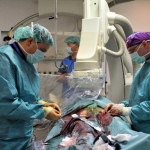
Even though the use of implantable devices for the treatment of heart failure and heart rhythm disturbances has increased enormously in Europe in recent years, there still remain large differences between countries. Indeed, a report last year in the European Journal of Heart Failure found that there is an underuse of devices in many of the European countries surveyed.(1) This is especially so in…
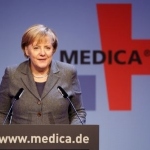
It was the premier in 41 years of Medica. Germany’s Federal Chancellor Dr. Angela Merkel came to Düsseldorf for the launch of MEDICA 2010,. In her speech she spoke about the importance of German medical engineering, the position of its high export share, the health industry and other major areas in medicine.

A double-edged sword would be a good analogy for diagnostic imaging in 2010. New ways to utilise imaging technologies are being developed, imaging equipment is doing more, faster than ever, and image processing software is increasingly innovative. Today's radiology exams are ‘slicing’ through the body to reveal anatomy with increasing clarity for better diagnoses and therapeutic treatment…
Held every three years, a very important healthcare IT event is to be held in Europe after a gap of 14 years. From November 15-19, healthcare managers and suppliers from 37 countries will arrive in Milan to discuss the future of world’s electronic health services at the 16th Congress of IFHRO (International Federation of Health Records Organisations), held in collaboration with the WHO.
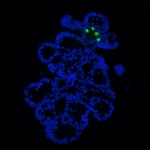
Cancer stem cells (CSCs) are the engine that drives tumour growth. They can not only reproduce themselves but also differentiate to form all the specialised cells found within a tumour. While chemotherapy and radiotherapy non-specifically target all rapidly dividing cells, there is increasing evidence that CSCs are more resistant to these treatments. Report: Karoline Laarmann
The project consortium Alarm has developed new software to enable a computer-assisted triage-system for mass accidents and catastrophes. Torsten Schröder, emergency physician at the Charité Clinic for Anaesthesiology, with the focus on operative Intensive Care Medicine in Berlin, gave a mid-term review of the project and explained the advantages of the IT-supported triage-system for…
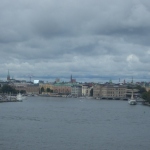
7,000 people from 120 countries met in Stockholm this September to hear international experts discuss the progress, solutions and challenges of one of our greatest healthcare burdens. Prevention, self-monitoring, surgery, guidelines, economic problems, drug-safety, and co-morbidities – these are just a few of the problems associated with the care of about 55 million diabetics in Europe.
Given that European countries have very diverse healthcare systems with special types of hospitals and even special information systems, comparison of healthcare systems and hospital performances is difficult. Thus, the first HIMSS Europe Leadership IT Summit, which took place in Rome, has provided a platform from which to discuss quality patient care based on IT and particularly the…
Professor Claes-Göran Östenson, chair of the Local Organising Committee of the 46th European Association for the Study of Diabetes annual meeting, will welcome visitors in this the bicentenary year of the renowned Nobel-prize giving Karolinska Institute. Since its foundation in 1965, the EASD annual meeting has become the world’s largest international annual conference on diabetes research,…

