

Czechs lost another drug case
The European Court of Justice (ECJ) concluded that Czech legislation still doesn't comprise harmonized legislation related to technical aspects of handling the blood and its derivatives.
Discussing innovative solutions and new technologies, pooling strengths to tackle new challenges - the key purposes of AFHdialogTAGE, the Asklepios Future Hospital Program (AFH) Conference. The two-day specialist conference will be held in Berlin on January 28 and 29, 2008.

Displaying innovative components, complex micro and nano technology, once again COMPAMED confirmed its reputation as the leading international trade fair for upstream suppliers to the medical products manufacturing sector.

The collaboration between two companies may pave the way for the development of new therapy options for neuroendocrine tumors: Covidien LTd, a global provider of healthcare products and BioSynthema Inc., a company specialized in the discovery and development of molecular targeted biophamaceuticals recently signed an agreement that will gain BioSynthema access to specific Covidien proprietary…

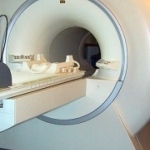
A Swiss-German research team under the supervision of Dr. Dr. Frank Rühli of the Institute of Anatomy, University of Zurich, Switzerland, reports a milestone in medico-diagnostic research of ancient mummies. For the first time ever worldwide, high-quality images of intact historic mummies were achieved through magnetic resonance imaging (MRI) without prior destructive rehydration of the…

Merck Serono, a business division of Merck KgaA, will donate CHF 12.5 million for the endowment of three new chairs for neurodegenerative diseases, oncology and drug delivery at the Ecole Polytechnique Fédérale de Lausanne (EPFL). In addition a fund for scientific research will be established at EPFL.

Presented during a symposium at Langenbeck-Virchow-Haus, in Berlin, the European CLINICIP research project aims to develop a method to improve glycaemic control during intensive care and provide a low-risk monitoring and control system that can control the metabolism of the critically ill

Enzymes are biocatalysts that control the different metabolic processes of living organisms. These range from digestion to the copying of genetic information.
Visual analysis of PET scans for non-Hodgkin lymphoma may be improved by using standardised uptake value in monitoring response to treatment, according to research published in the Journal of Nuclear Medicine.
Poster data presented at Scientific Sessions 2007 have demonstrated that the application of clinical practice modifications, combined with advanced electronic technologies, can improve the care of patients at risk for sudden cardiac arrest (SCA).
Every developing tissue is supplied by blood vessels with oxygen and nutrients. Tumours grow far more quickly than normal tissues, so have a greater need of nutrients, which is why tumour cells begin to produce growth factors that stimulate the formation of blood vessels.
IVAM is an international association of companies and institutes that specialise in microtechnology, nanotechnology and advanced materials.

Switzerland - An Artificial Organ Centre for Biomedical Engineering Research has been set up at the University of Bern, drawing together its established areas of expertise in medical technology.

Children with recessive dystrophic epidermolysis bulosa (RDEB) lack a protein that binds the skin to the body, resulting in fragile skin that sloughs off with little movement or friction.

Radiologist Dr Myriam Hunink is a Professor in the Epidemiology and Biostatistics and the Radiology Departments at the Erasmus MC in the university medical centre, Rotterdam, the Netherlands, where she is also project leader for several research projects focused on radiology and epidemiology.

As in past years, this year's MEDICA is one of the most important stages for the medical technology industry. International manufacturers will do a song and dance to dazzle the international clientele. As Managing Director of the German Electrical and Electronic Manufacturers' Association (Deutscher Zentralverband Elektrotechnik- und Elektronikindustrie e.V. - ZVEI), Hans-Peter Bursig, is well…

For 2 1/2 years we have had the opportunity to use a 64-MSCT in our emergency department at the Brüder-Krankenhaus Trier, the biggest institution of the Brothers of Charity and academic teaching hospital at the University of the State Capital of Mainz.

The Technology initiative “Molecular Imaging” aims to strengthen the synergies of science and industry in research and development of new technologies in order to significantly improve diagnostic and treatment options, for example for cardiovascular diseases, cancer or Alzheimer's.

Results of a gender-specific study to assess the efficacy of the Taxus paclitaxel-eluting coronary stent in women undergoing coronary revascularisation were released at the European Society of Cardiology Congress by interventional device developer Boston Scientific.
TB bacterium have a unique chemical coating and it is hoped that a tiny gas chromatograph mass spectrometer (GC-MS) - a detection device* developed for the Beagle 2, on its mission to Mars - will be able to pick this out from space, in a project run by Britain's Open University and the London School of Hygiene and Tropical Medicine.

Telematics appears to offer solutions for certain complex therapies - and for issues that will become central as populations further swell with age.
The ERSPC is the world's biggest study of screening of prostate cancer. It involves up to 260,000 men, 220,000 of them in the age group 55-75 years old. Professor Chris Bangma, Director of the ERSPC and Chairman of the urology department at the Erasmus Medical Centre, Rotterdam (headquarters of the ERSPC) explains the study's background and aims

The first European Multidisciplinary Meeting on Urological Cancers will take place in Barcelona, Spain, November 2nd to 4th, 2007. The meeting is co-organized by the European Association of Urology (EAU), the European Society for Medical Oncology (ESMO) and the European Society for Therapeutic Radiology and Oncology (ESTRO).

At the Annual Congress of the European Respiratory Society (ERS), which took place in Stockholm, September 15-19, 2007, researchers from the Imperial College London, UK, presented their study about the successful implantation of lung cells grown from embryonic stem cells into the lungs of mice. In future, this method could be used for the treatment of human lung diseases.

By Stefan P. Janssens, MD, PhD Russian summary and complete article in English.