

SyMRI to be studied as a technology to characterize brain tumors
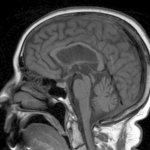
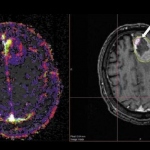
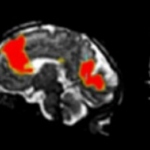
SyntheticMR and The University of Texas MD Anderson Cancer Center have signed a research agreement to study SyMRI to characterize brain tumors.

SyntheticMR and The University of Texas MD Anderson Cancer Center have signed a research agreement to study SyMRI to characterize brain tumors.

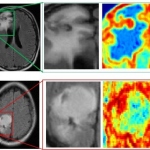
Brain tumor tissue can be hard to distinguish from normal brain during surgery. Neurosurgeons use their best judgment in the operating room but often must guess exactly where the edges of the tumor are while removing it.

The brain cells of patients with bipolar disorder, characterized by severe swings between depression and elation, are more sensitive to stimuli than other people's brain cells, researchers of the Salk Institute have discovered.

An international team of researchers, led by scientists at the National University of Singapore (NUS), has identified a protein that regulates the growth of neurons by transporting key metabolic enzymes to the tips of neural cells. Their findings open up new avenues for design of drugs for ataxia, a motor coordination disorder.

Juries in criminal cases typically decide if someone is guilty, then a judge determines a suitable level of punishment. New research confirms that these two separate assessments of guilt and punishment – though related - are calculated in different parts of the brain. In fact, researchers found that they can disrupt and change one decision without affecting the other.

A study three years ago sparked a medical mystery when it revealed a part of the brain not found in any present-day anatomy textbooks. Recently, Indiana University computational neuroscientist Franco Pestilli and an international research team published an article in the journal Cerebral Cortex that suggests this missing part of the brain may play an important role in how we understand the world…

People with Parkinson’s disease (PD) tend to slow down and decrease the intensity of their movements even though many retain the ability to move more quickly and forcefully. Now, in proof-of-concept experiments with “joysticks” that measure force, a team of Johns Hopkins scientists report evidence that the slowdown likely arises from the brain’s “cost/benefit analysis,” which gets…

A panel of world experts in aging convened at Saint Louis University recommended that everyone 70 and older should have their memory and reasoning ability evaluated annually by a doctor or health care provider.

More than five million Americans are living with Alzheimer's disease (AD). Of them, 400,000 also have Down syndrome. Both groups have similar looking brains with higher levels of the protein beta amyloid.

Fetuses with enlarged ventricles--the fluid-filled cavities inside the brain--may be less likely than their counterparts to benefit from surgery in the womb to treat spina bifida, according to a study supported by the National Institutes of Health.

They did it for heart attacks. Can cardiologists now lead an effort to speed up the emergency medical response for stroke? Over the past five years, the Stent for Life initiative organised by interventional cardiologists has pushed majors medical centres to assure 24/7 coverage and reduce the time to treatment for patients showing up with severe chest pain.

Linköping University Hospital in Sweden installs SyMRI NEURO from SyntheticMR in order to improve the follow-up of patients with Multiple Sclerosis (MS). SyMRI enables objective follow-up of brain atrophy through automatic calculation of Brain Parenchymal Fraction (BPF). After an initial pilot project, the aim is to take SyMRI into clinical use in Region Östergötland during 2016.

Stony Brook researchers publish experimental findings in the Journal of Neuroscience that show the lateral position more efficiently rids the brain of solutes that may contribute to disease.

Researchers at McGill University have clearly identified, for the first time, the specific parts of the brain involved in decisions that call for delayed gratification. In a paper published in the European Journal of Neuroscience, they demonstrated that the hippocampus (associated with memory) and the nucleus accumbens (associated with pleasure) work together in making critical decisions of this…

NIH-funded study highlights the possible role of glial brain cells in neurological disorders.

Retrograde amnesia is the inability to recall established memories. In humans, amnesia is associated with traumatic brain injury, Alzheimer’s disease, and other neurological conditions. Whether memories lost to amnesia are completely erased or merely unable to be recalled remains an open question. Now, in a finding that casts new light on the nature of memory, researchers from the RIKEN-MIT…

A 'brain training' iPad game developed and tested by researchers at the University of Cambridge may improve the memory of patients with schizophrenia, helping them in their daily lives at work and living independently, according to research published today.

Researchers at Columbia University have reported a new approach to visualize glucose uptake activity in single living cells by light microscopy with minimum disturbance.

Brain lesions in children can be especially challenging to diagnose, according to a report in the journal Frontiers in Neurology by a multidisciplinary team of Loyola University Chicago Stritch School of Medicine physicians. Lesions include tumors, abnormal blood vessel formations, and abscesses and inflammation due to infections.

Fructose not only results in a lower level of satiety, it also stimulates the reward system in the brain to a lesser degree than glucose. This may cause excessive consumption accompanied by effects that are a risk to health, report researchers from the University of Basel in a study published in the scientific journal PLOS ONE. Various diseases have been attributed to industrial fructose in…

A group of passengers who thought they were going to die when their plane ran out of fuel over the Atlantic Ocean in August, 2001 have had their brains scanned while recalling the terrifying moments to help science better understand trauma memories and how they are processed in the brain.

Hyperactivity and social abnormalities are defining characteristics of ADHD and autism, two developmental disorders that parents and scientists around the world are struggling to understand. At the RIKEN Brain Science Institute in Japan, researchers have identified the protein IRBIT as a key player in preventing these behaviors from developing.

Brain surgery is famously difficult for good reason: When removing a tumor, for example, neurosurgeons walk a tightrope as they try to take out as much of the cancer as possible while keeping crucial brain tissue intact — and visually distinguishing the two is often impossible. Now Johns Hopkins researchers report they have developed an imaging technology that could provide surgeons with a…

New, ultra-high-field magnetic resonance images (MRI) of the brain by researchers at the University of Illinois at Chicago provide the most detailed images to date to show that while the brain shrinks with age, brain cell density remains constant.

A new imaging technique can identify the specific changes in neural communication that can disrupt functional connectivity across the brain as a result of mild traumatic brain injury (mTBI).