


European Union approval for Plex-ID
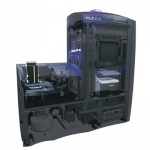
Abbott Laboratories has obtained European Union approval to market its rapid, Plex-ID instrument, along with three assays for use on the system.

Abbott Laboratories has obtained European Union approval to market its rapid, Plex-ID instrument, along with three assays for use on the system.

To gain a deeper understanding of Asian and especially South Korean innovations in the healthcare market EUROPEAN HOSPITAL visited the 28th Korea International Medical and Hospital Equipment Show (KIMES) on 16 to 19 February. Executive Director Daniela Zimmermann had the opportunity to speak with Jae-Moon Jo, team leader in medical equipment development and Senior Vice President of Samsung…

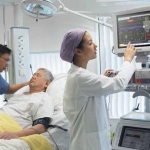
Professor Timothy Evans, a leading intensive care specialist believes regionalising critical care into major centres across England and Wales is an ‘inevitable step’ as the UK’s National Health Service (NHS) seeks to make the best use of resources, Mark Nicholls reports.

Integrated information management reduces risks and cuts cost, Finn Snyder reports. Intensive care units (ICUs) are vital in healthcare. ICUs in US hospitals, for example, treat six million of the sickest and oldest patients annually, according to a document recently published for the Massachusetts Technology Park Corporation, which states that choices about how to manage them carry high stakes:

Currently there is a truly enormous hole in the ground in the city of Wiener Neustadt, Austria, but by summer 2012 MedAustron, one of the most modern centres for ion therapy and research in Europe, is to be built here.

‘Before each ward round my students and I wash our hands’ – so said Ignaz Philip Semmelweis in the mid-19th century, in his drive to reduce the hospital mortality rate. Today, the World Health Organisation states that ‘Clean care is safer care’ – and yet, particularly in recent times, the lack of hygiene in numerous hospitals has resulted in mortalities. Who is to blame? What can be…

The German Association of the Diagnostics Industry (VDGH) announces encouraging results from a new member survey, Susanne Werner reports.

In Berlin, from 24-26 April visitors to this international congress and trade fair will hear of medical imaging, process optimisation and facility management, and the latest construction, operation and equipment trends The event will run alongside Euro ID, a trade fair for automatic identification, and conhIT, an IT healthcare industry tradeshow.
‘Nowadays, there are not that many opportunities for EU countries to expand technological progress,’ said Ambassador Dr Jan Koukal when he called for the trans-border utilisation of ‘neighbourly’ potential during his opening speech at the joint Czech-Austrian seminar.

Worldwide, antibiotic resistance is one of the three major challenges for public health according to the European Society of Clinical Microbiology and Infectious Diseases (ESCMID). What needs to be done? Anja Behringer reports.

Stretchers, beds, furniture, defibrillators, scanners, pumps, sterilizing units, indeed equipment for all medical disciplines and departments, you name it, a browse around the website and a bit of bidding could provide your hospital with just what it needs – and save money.

Quality management has been an integral part of the German healthcare sector for years. Doing without it is unimaginable, particularly in terms of increasing economical and competitive pressures on hospitals. Nonetheless, she asks: Does investments in quality management pay off?

Eucomed, the European industry association for medical technology, appreciates the European Commission’s swift reaction and clear proposal for a joint plan of immediate measures to strengthen the European medical devices legislation.

Millions of people suffer from mental health problems. Yet very few people can afford treatment. The cost of mental health care is prohibitive to men and women in today's economy, so while many people acknowledge that they can use mental health care treatments, few actually take advantage of it and even fewer have the means to do so.

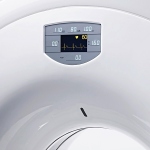
The innovation leader in CT and a pioneer in low dose: Siemens introduced a new class of CT which is built for business and designed for efficiency.

Fylde Coast Medical Service (FCMS) is one of the first out-of-hours primary care providers in England to pilot the Department of Health’s new initiative, NHS 111, using Advanced Health & Care’s (Advanced’s) Adastra system.

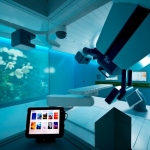
The patient is soothed and ready for proton therapy

There are many ways in which hospitals could improve efficiency and reduce the need for cutbacks in services for patients, according to a major review of hospital efficiency published today (Thursday) by the UK based health think tank Nuffield Trust.

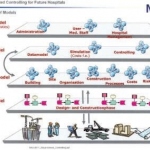
Architect Herbert Michael Küpper Dr-Ing from M+ management, demonstrates that full understanding of the working needs of a hospital is necessary to arrive at a successful new construction.

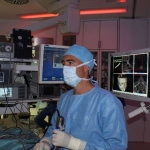
The next generation of integrated operating systems celebrated a world premiere in clinical use this November in Leipzig Germany. EH Correspondent Holger Zorn was there when Professor Gero Strauss entered the Surgical Deck of the International Reference and Development Centre for Surgical Technology (IRDC) as ´Commander`.

Much has changed for medical device manufacturers. Take scanner development; whereas the aim has long been to increase multi-slices, produce higher field strengths and sharper images, optimise the ergonomics and then launch the new product at a specific group of customers, in recent years this approach became insufficient.

Medical imaging is no longer limited to diagnosis and evaluation. New, high resolution imaging systems enable very precise positioning of lasers, endoscopes and micro-instruments for surgery near the nerves, spinal cord or blood vessels and for selective tumour destruction, with minimum levels of pain and low complication rates.

Surgical simulations can save lives, Anja Behringer reports Medical errors occur more frequently than traffic accidents and clearly better systems are needed to improve patient safety. Thus the importance of medical training using human simulation models is increasingly emphasised in Germany.

Dysglycaemia is a new term in critical care that recognises the vital importance for glucose monitoring of patients in the intensive care unit (ICU). Beyond the clinical consensus over this word for grouping critically ill patients with hyperglycaemia, hypoglycaemia or high blood sugar, there is no broad agreement on how best to manage these patients. Report: John Brosky.
Improved cooperation, a database for artificial joints, antibiotics against pathogens – orthopaedic specialists and surgeons are banking on different ways of increasing patient safety. Report: Susanne Werner