


Managing lung malignancies with SonoSite's M-Turbo system
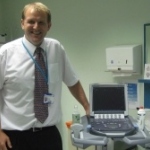
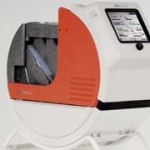
The respiratory unit at Newcastle's Royal Victoria Infirmary (RVI) is using SonoSite's M-Turbo system for management of pleural effusions, particularly in patients with lung tumours.

The respiratory unit at Newcastle's Royal Victoria Infirmary (RVI) is using SonoSite's M-Turbo system for management of pleural effusions, particularly in patients with lung tumours.

GE Healthcare in partnership with Deep Breeze Ltd, the leader in vibration response imaging (VRI™) technology, announced that FDA granted marketing clearance for the VRIxv™, a non-invasive, radiation-free lung imaging system.

Experts starts to identify nutrition's components that might support the fight against diseases. Recently researchers from John Hopkins Medical School found that a decrease in lung concentrations of NFR2-dependent antioxidants, key components of the lung's defense system, is linked to the severity of chronic obstructive pulmany disease (COPD) in smokers.
The Czech Republic's first cardiac transplant took place in 1984; now about 40 take place annually. The country's first lung transplants began ten years ago; to date around a hundred have been performed by Professor Pavel Pafko and colleagues at the Motol Faculty Hospital, in Prague.
Only few imaging modalities lend themselves to imaging of the lungs. Conventional chest radiography is the most commonly used tool in the investigation of pulmonary pathology but yields the perhaps most difficult, plain radiographs to interpret.

A multi-institutional study recently compared whether positron emission tomography (PET) or computed tomography (CT) performs more efficient in the characterization of solitary lung nodules (SPNs). Previously performed studies were either limited by small sample sizes or carried out more than a decade ago with outdated technology and methods.

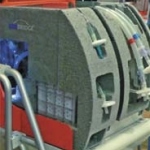
Lifebridge is the first portable heart-lung machine which promises a great success for the clinlical use.

Although modern respirators present ever increasing features to enhance and simplify ventilation therapy, methods to quantify the efficacy of ventilator changes are limited.
During operative therapy for bronchial carcinoma the surgeon is always faced with two seemingly diametrical demands: Maximum radicalness whilst preserving as much healthy lung tissue as possible.

At the Annual Congress of the European Respiratory Society (ERS), which took place in Stockholm, September 15-19, 2007, researchers from the Imperial College London, UK, presented their study about the successful implantation of lung cells grown from embryonic stem cells into the lungs of mice. In future, this method could be used for the treatment of human lung diseases.

The Lifebridge B2T (bridge-to-transport) is the first, fully portable emergency life support system for patients suffering cardiogenic shock, or those showing signs of imminent cardiogenic shock.

Lung cancer has a high mortality: Despite prevention programms each year 1.3 million people die due to malignant mutation of lung cells. It's the most common cause of cancer-related death in men, second most common in women.

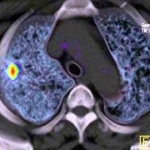
Magnetic resonance imaging (MRI) as a non-invasive diagnostic method has been evolving into an attractive alternative to methods associated with radiation exposure.

SpiroStar is the smallest lung function testing system in the world, reports its Finnish manufacturer Medikro Oy. Weighing just 22 grams, this also became one of the first to satisfy the new and changed requirements for the calculation of lung function testing, meeting the latest ATS/ERS spirometry standards.
syngo Lung CAD, the second generation of nodule detection software from Siemens received FDA approval letter.

After previous meetings in the USA (2002) and Japan (2004), this October the 3rd International Workshop of Pulmonary Functional Imaging (IWPFI) took place in the German Cancer Research Centre, based in Heidelberg University, Germany. " 'The clinicians' need for earlier and more detailed diagnosis in pulmonary disease demands a joint interdisciplinary effort to push the limits in pulmonary…

German medical technology firm Novalung GmbH (est. 2002) produces extracorporeal artificial lungs.

Lung cancer (pulmonary carcinoma) is one of the most common cancers worldwide and the leading cause of cancer-related deaths globally. The diagnostic and therapeutic options for lung cancer have expanded significantly in recent years. Keep reading for latest developments in screening, biomarker testing, treatment innovations, and ongoing research.