

Medicine and the Internet of Things
According to Gartner, the IT research and advisory company, the Internet of Things (IoT)*, excluding PCs, tablets and smartphones, will grow to 26 billion devices by 2020.

According to Gartner, the IT research and advisory company, the Internet of Things (IoT)*, excluding PCs, tablets and smartphones, will grow to 26 billion devices by 2020.
Hospital management seek more economic viability and efficiency in the operating theatre (OT) when deciding on the procurement of advanced Management Systems. The special software/hardware of systems achieve shorter operation and documentation times with uniform intervention outcomes.

Barmer GEK, Germany’s second largest statutory health insurer, is covering the expense of a web-based stimulation therapy developed by Caterna Vision GmbH, a spin-off from the University of Dresden. Report: Cornelia Wels-Maug

Reading radiology exams has become a real pain. According to Piet Candeel, General Manager for Healthcare at visualisation expert Barco, ‘Today there are more studies of more patients with more images and typically with fewer people.’ Report: John Brosky
The DRX-Ascend delivers high-end DR system features for imaging centers, orthopedic facilities, urgent care clinics and hospital radiology departments.

Horsens Regional Hospital is a two-hour train ride from Copenhagen in the Central Region of Denmark. Disembarking at the small town’s train station nothing suggests the presence of a pioneering hospital and flagship facility of the Danish healthcare system. Then, meeting Chief Medical Officer Jørgen Schøler Kristensen and Chief Nursing Officer Inge Pia Christensen it is immediately clear:…

We live in a connected world, a very different world than it was a decade ago, said Eric Topol MD. Mobile devices, wearable devices are driving a creative revolution, reducing costs of healthcare, increasing patient access to health information.

IBM announced significant advances in Watson's cognitive computing capabilities that are enabling researchers to accelerate the pace of scientific breakthroughs by discovering previously unknown connections in Big Data.

Viktor Mayer-Schönberger is a visionary author of the book Big Data, which, as its subtitle suggests, defines the debate over the ‘Revolution That Will Transform How We Live, Work, and Think.’

By recognition and early intervention against the most significant risk factors, many heart diseases can be prevented.

Developers of medical apps will have the opportunity to present their creations live at the App Competition during Medica 2014, World Forum for Medicine, to be held from November 12 – 15, 2014 at the fairgrounds in Düsseldorf, Germany.

Health analysts have predicted that DNA sequencing will shift from a laboratory-based setup to point of care testing within the next five years.

Acquisition to further industry innovation with a combined $650 million annual R&D investment Complementary client bases expand global presence.

New molecular technologies to screen drug-resistant TB are replacing, for example, culture-based tests that are slow, require experienced personnel, and need stringent microbiological safety precautions.

No provider has yet been able to cover all IT topics and processes in laboratory software. The solutions currently marketed either support key lab tasks, from requests down to results, or they cover topics such as quality assurance and billing, according to Dr Markus Neumann MD of Dr Neumann & Kindler.

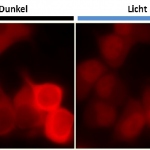
Researchers from the University of Heidelberg and the German Cancer Research Center (DKFZ) have developed a new method that uses light to control processes in living cells.

Laboratories are an essential part of effective modern healthcare. They provide clinicians with vital information that helps them make life-saving decisions, diagnose conditions and monitor patient treatment.

The GenSPEED Test System developed by Greiner Bio-One combines crude lysis of bacteria with multiplex-PCR before the final automated analysis of PCR-products in the new GenSPEED R2 device.

Having convinced medical labs across Denmark that its suite of image analysis software can provide a solution to the crushing burden of in vitro diagnostics (IVD), VisioPharm is offering it to pathologists worldwide

Some years ago telepathology – a complex but well developed procedure where histology specimens are photographed using a camera mounted on a microscope and transmitted – was thought to be the wave of the future.

For several decades, pathologists worldwide have been under increasing pressure to handle a steady increase in laboratory tests with a steady decrease in the amount of financial and staff resources. Add to this the escalating volume of increasingly complex, sophisticated testing and the importance of pathology informatics is evident.

Coping with the side effects of chemotherapy treatment is challenging for people with cancer. When fatigued or nauseous, it is not easy to assess if these conditions are acceptable treatment side effects or require medical assistance.

Amongst the historic churches and palazzos of the Northern Italian city of Parma lies the University of Parma, which, founded in the 12th Century is one of the oldest academic establishments in the world. The city is served by Parma University Hospital (Azienda Ospedaliero-Universitaria Di Parma) a large and renowned hospital offering 1,218 public beds.

There are five big names in ultrasound that sell three out of four systems. Then there is Esaote, the biggest name among hundreds of small companies competing for a place in what is by far the largest, and most innovative market for medical imaging.

About four years ago, Samsung Electronics Co. – specialist in electronic components and mobile phone sets, was recognised by its revenues as the world’s largest IT company, displacing Apple Inc.