Investigating the HFN1 virus
Dutch virologist Ron Fouchier and his colleagues around the world stopped their research into the bird flu virus H5N1 for a whole year to allow an international debate surrounding the benefits and risks of their work.



Dutch virologist Ron Fouchier and his colleagues around the world stopped their research into the bird flu virus H5N1 for a whole year to allow an international debate surrounding the benefits and risks of their work.
Copenhagen’s Hilleroed Hospital now has the world’s most advanced medical laboratory system, providing full automation from the point of drawing a blood sample to results delivery.
Israel - Researchers are using breath-test technology to detect volatile organic compounds to tell whether a patient has stomach cancer.
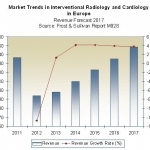
The European market for interventional radiology and cardiology is heading towards maturity, especially in Western Europe. Although the economic slowdown and fewer orders had a negative impact on revenues in 2012, it is expected that expanding applications of interventional systems and the popularisation of hybrid solutions will drive market growth over the 2013-2017 period.

Numerous cardiac muscle cells die following myocardial infarction, due to reduced blood flow in the affected muscle areas. What remains is a scar, which also mechanically affects cardiac pumping. The muscle itself has no, or hardly any, capacity to regenerate itself.
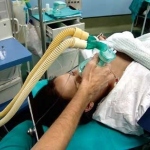
A UK study has highlighted the issue of patients waking up from a general anaesthetic while undergoing surgery. The research, which questioned more than 7,100 consultant anaesthetists, revealed that there was about one episode of accidental awareness in every 15,000 general anaesthetics cases in the three million UK operations in 2011.
In developed countries, bladder cancer is the fourth most frequent cancer in men and the ninth in women, and it greatly challenges patient management and cost containment. However, it is under-represented in public awareness and in cancer research.
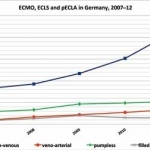
There is little evidence on respiratory support with extracorporeal systems – enough of an argument for most of those doubting the procedure not to use it, or even make it available.
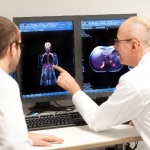
The German Cancer Research Center (Deutsches Krebsforschungszentrum, DKFZ) is sending a promising duo into the race against cancer: A new PET/MR system that can combine high-resolution images with functional information to improve cancer diagnosis.
Robert Koch Award 2013 goes to Jeffrey I. Gordon for pioneering studies of the human microbiome; Anthony S. Fauci receives the Robert Koch Gold Medal 2013 for outstanding scientific contributions to HIV research
The German Cancer Research Center (DKFZ) and Bayer HealthCare (Bayer) will extend their successful strategic research alliance in search of novel cancer therapeutics by focusing their activities also on the field of immunotherapy.
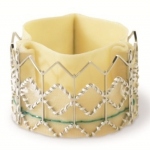
Edwards Lifesciences Corporation, the global leader in the science of heart valves and hemodynamic monitoring, announced the three-year results of a pivotal clinical study of severe aortic stenosis patients at high-risk for surgery.
Scientists from the German Cancer Research Center (DKFZ) in Heidelberg have been the first to prove that genetic and environmental risk factors for breast cancer do not act independently of each other.
The international research project ‘The Definition of new types of tumours containing potential mutations sensitivity to drugs’ has begun in Petrov Research Institute of Oncology in St Petersburg, the oldest Russian oncology institute.
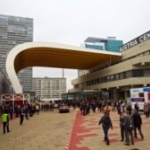
The 25the European Congress of Radiology ended yesterday in Vienna.
It is said a picture is worth 1,000 words. Advanced medical imaging, such as 3D views of the heart or brain have certainly proven the value of this statement by advancing our understanding of the complex biological structures and processes of disease.
MRI has become the gold standard for many indications in cardiac imaging, apart from imaging the coronary arteries. For function and morphology assessment, MRI is the leading technology. A further advance into as yet unknown territory is myocardial imaging aided by one of the first integrated 3-Tesla PET/MR systems currently used at the Institute of Radiology, Essen University Hospital,…
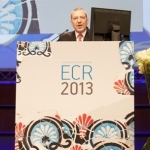
The Opening Ceremony on Thursday evening, enhanced by music from Spain, drew an enormous crowd.

Mark Nicholls discovers how a CT scan at a British hospital played a critical role in identifying the long-lost remains of a 15th Century English king

‘This is a dramatic demonstration that medical genomics is no longer a technology of the future – it is a technology of the here and now' Report: Mark Nicholls

Over 32% of HIV+ people in Europe remain undiagnosed. This large untapped pool and the development of novel nucleic acid test (NAT) and non-NAT technology based platforms offers growth potential for HIV diagnostics manufacturers.

A hospital is not the best place to get a good night’s sleep, especially in a noisy intensive care unit.
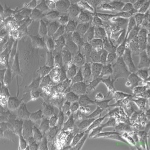
In laboratory studies, scientists at the Johns Hopkins Kimmel Cancer Center have developed a way to personalize chemotherapy drug selection for cancer patients by using cell lines created from their own tumors.
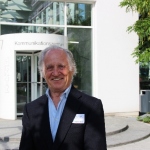
‘We aim to develop an understanding of which novel research activities could bring benefits for patients,’ explained Professor Christof von Kalle, Director of the Department of Translational Oncology, NCT (German National Centre for Tumour Diseases) and the German Cancer Research Centre (DKFZ), speaking on translational activities during the New Cancer Targets gathering in Heidelberg this…
‘The disease “cancer” is increasingly classified into sub-groups. Today, we are already dealing with a number of orphan diseases,’ says Professor Richard Greil MD, head of LIMCR at University Hospital Salzburg.