


First synthesis of molecules that cause rapid cell death in cancer
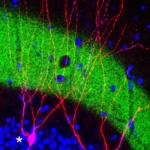
Dartmouth researchers and their colleagues have carried out the first total syntheses of certain compounds involved in excessive cell death in leukemia.

Dartmouth researchers and their colleagues have carried out the first total syntheses of certain compounds involved in excessive cell death in leukemia.

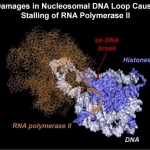
A group of researchers, lead by Vasily M. Studitsky, professor at the Lomonosov Moscow State University, discovered a new mechanism of DNA repair, which opens up new perspectives for the treatment and prevention of neurodegenerative diseases. The article describing their discovery is published in AAAS' first open access online-only journal Science Advances.

New research in The FASEB Journal suggests that clinical trials of omega-3 and antioxidant supplementation should be undertaken for people with Alzheimer's disease with mild clinical impairment.

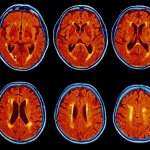
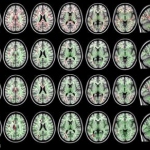
Degeneration of the white matter of the brain may be an early marker of specific types of Alzheimer's disease (AD), including early-onset AD, according to results of a new study published in the journal Radiology.

Low-frequency alternating magnetic fields such as those generated by overhead power lines are considered a potential health risk because epidemiological studies indicate that they may aggravate, among other things, neurodegenerative disorders such as Alzheimer's disease and amyotrophic lateral sclerosis (ALS). However, a recent study by researchers at the Institute of Pathobiochemistry at the…

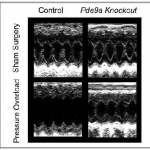
Working with lab animals and human heart cells, scientists from Johns Hopkins and other institutions have identified what they describe as "the long-sought culprit" in the mystery behind a cell-signaling breakdown that triggers heart failure.
The ELEKIN research group of the UPV/EHU-University of the Basque Country is working to develop various non-invasive methodologies for the early detection of Alzheimer's disease.

New insights into the ways the human brain functions – that is the promise of mapping the entire web of connections in the brain, the so-called connectome. New developments in connectome imaging are one of the major topics at this year’s European Congress of Radiology (ECR).

‘We finally have tools to non-invasively study the human brain in normal subjects and diseased patients,’ says Professor Stefan Sunaert, Head of Translational MRI at the Department of Imaging & Pathology, Leuven University Hospital (Belgium)

According to Molly Polen, at the AACC, great opportunities lie ahead for laboratory medicine and, to seize them, ‘meeting with colleagues and learning about new technologies is a critical first step. The 2013 AACC will provide these and other opportunities, such as informative sessions and live demonstrations of new technology.’

“We finally have tools to non-invasively study the human brain in normal subjects and diseased patients,” says Professor Stefan Sunaert, Head of Translational MRI at the Department of Imaging & Pathology at Leuven University Hospital (Belgium).

PredictAD is an EU-funded research project that develops objective and efficient methods for enabling earlier diagnosis of Alzheimer's disease. Diagnosis requires a holistic view of the patient combining information from several sources, such as, clinical tests, imaging and blood samples.

Researchers the world over are advancing positron emission tomography (PET) as an effective method of early detection for Alzheimer’s disease, a currently incurable and deadly neurological disorder. Three studies presented at SNM’s 58th Annual Meeting are providing new insights into the development of Alzheimer’s disease while opening the door to future clinical screening and treatments.

Scientists at the University of Strathclyde in Glasgow are developing a technique based on a new discovery which could pave the way towards detecting Alzheimer’s disease in its earliest stages - and could help to develop urgently-needed treatments.

More than doubling over the last 20 years in most EU Member States, obesity has considerable implications for health, health systems and the economy. Over half our adult population is now overweight or obese, according to the joint European Commission and OECD report "Health at a Glance: Europe 2010".

Researchers at Karolinska Institutet have shown that they may be able to monitor the aging process in the brain, by using MRI technique to measure the brain lactic acid levels. Their findings suggest that the lactate levels increase in advance of other aging symptoms, and therefore could be used as an indicator of aging and age-related diseases of the CNS.

How the brain changes with age is not well-characterized and even less is known about the factors influencing the rate of brain aging. Brain imaging can offer a window into risk assessment into for diseases such as Alzheimer’s disease. A recent study demonstrated that genetic risk is expressed in the brains of even those who are healthy, but carry some risk for AD.

Bayer Schering Pharma AG, Germany, has presented positive data on a global Phase II study with the novel positron emission tomography (PET) tracer florbetaben (BAY 94-9172) at the International Conference on Alzheimer's Disease (ICAD) in Vienna, Austria. This study showed that patients with a clinical diagnosis of Alzheimer´s disease could be differentiated from age-matched healthy volunteers…
Mediterranean diet protects against chronic diseases like heart disease, cancer, Parkinson's and Alzheimer's disease. Italian scientists bolstering one more time the idea that low intake of meat, dairy products and alcohol, but high intake of vegetables, fruits, nuts, olive oil, grains and fish servers as a model of healthy eating, according to a study in the British Medical Journal.

Drug access by older citizens varies widely across 25 EU member countries, according to a new study by IMS Health. Per capita usage of drugs to treat Alzheimer's disease in the five EU countries where utilization was highest was 20 times greater than in the five lowest-use countries.

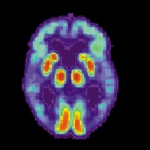
The so-called 11-labeled Pittsburgh Compound B ([11C]PiB) type of positron emission tomography (PET) may be useful in a non-invasive assessment of the formation of Alzheimer's disease-related plaques, according to a study that will appear in the October 2008 issue of Archives of Neurology.

The 10/66 Dementia Research Group warns that dementia is often not diagnosed in low-income and middle-income countries. Latest research shows that these figures has been underestimated and the economic costs of dementia and other age-related illnesses are rising.

Latest estimates predict that the global prevalence of Alzheimer's disease will quadruple by 2050. The EU funded research project "PredictAD" aimed at developing new diagnostic tools by combining data from imaging biomarkers, electrical brain activity measurement and blood based markers.

Amyloidb (Ab) plaque formation is a hallmark of Alzheimers disease (AD) and precedes the onset of dementia. Australian researchers reported the first data on the validity in humans of a new PET tracer binding to Ab. Their data suggest that 18F-BAY94-9172 of Bayer Schering Pharma AG can reliably detect Ab deposition and thereby aid early diagnosis, differential diagnosis, and therapeutic…

The Technology initiative “Molecular Imaging” aims to strengthen the synergies of science and industry in research and development of new technologies in order to significantly improve diagnostic and treatment options, for example for cardiovascular diseases, cancer or Alzheimer's.