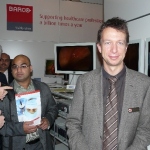
Highlights from the visualization specialists at Medica 2012
Last November, Barco, the medical visualization experts, showcased numerous highlights at their booth at Medica 2012.



Last November, Barco, the medical visualization experts, showcased numerous highlights at their booth at Medica 2012.
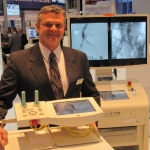
The rapid growth of less-invasive interventional radiology procedures is fueling growth for the German company dedicated to mobile C-arms.
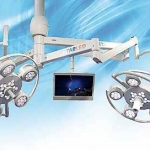
ACEM Medical Company, specialising in the manufacture of medical equipment, scialytic and surgical lamps, is demonstrating the following products at Medica 2012:
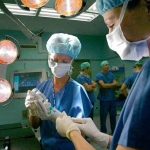
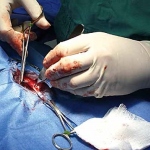
Although scientists and medics have sought ways to grow artificial skin in laboratories since the 1970s, only now has it become possible to reproduce the top layer of skin, thanks to work at the Trauma Surgery and Orthopaedics Clinic in Berlin (ukb).
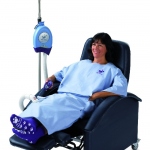
Even mild perioperative hypothermia can have significant effects on rates of surgical site infections (SSIs), morbid myocardial outcomes, blood loss and transfusion requirements, altering the response to drugs, extending recovery rates, hospital stay and patient discomfort.
Surgeons at a leading UK hospital are pioneering robotic endovascular surgery to treat patients with complex conditions.
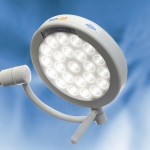
Designed for diagnostics, minor surgery and universal applications, the Soled LED examination light is a helpful tool for use in intensive care units, the recovery room, for first aid and more.
Cardiologists are increasingly concerned about patients with persistent hypertension demanding a new technique, in the absence of clinical proof of its long-term benefit. As more related devices are launched, John Brosky reports on the procedure, drawbacks, and a potential €2 billion market.
One heart – One Team, the motto for this year’s German Society for Thoracic and Cardiovascular Surgery Congress emphasises that cardiac surgeons and cardiologists must now work more in tandem for their mutual patients. This is not just a short-lived three-day slogan, but a daily reality at the University Heart Centre Hamburg, as EH correspondent Holger Zorn reports
Are surgeons still opting for surgical procedures solely for medical need – or are economics forcing their decisions? That vexatious question, posed at the 129th Congress of the German, was spurned at the outset by Markus W Büchler MD, President of the Society and Medical Director of the Department of General, Visceral and Transplant Surgery at University Hospital Heidelberg. ‘We surgeons…
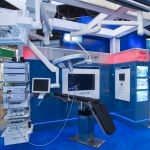
The European operating room solutions market, comprising surgical lights, surgical tables and pendants, is primarily a replacement market. Although tightening budgets are hindering market prospects, the need for state-of-the-art operating rooms are creating lucrative growth opportunities.
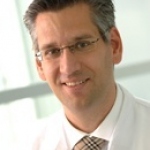
Meeting with EH editor Brigitte Dinkloh, Congress Secretary Professor Alexis Ulrich MD (left), Assistant Medical Director at the Clinic for General, Visceral and Transplant Surgery at the University of Heidelberg, outlined the scientific programme, discussed some impressive advances in surgical procedures, and explained why the gathering bears the slogan Surgery in Partnership.
The world’s first gene cancer therapy study of an innovative oral vaccine is underway at the Surgical Clinic of Heidelberg University Hospital.
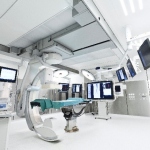
Philips and MAQUET mark milestone with 50th shipment of Philips’ hybrid operating room (OR) with MAQUET’s surgical table to Banner Good Samaritan Medical Center in Phoenix, Arizona.
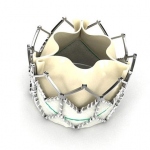
Cohort A and B Results. Aortic stenosis is characterised by the hardening and narrowing of the aortic valve that pumps blood into the body’s main artery. It affects nearly 5% of those over 75 in Europe, with an estimated 16,000 Britons suffering from severe aortic stenosis.
Swiss surgical patients can check on and correct their treatment data and thereby facilitate reliable hospital benchmarking. In 1995, surgeons in the Biel, Burgdorf and Zurich Limmattal hospitals founded the Working Group for Quality Assurance in Surgery (AQC) to collect and compare reatment data.

Johns Hopkins surgeons have established a facial transplantation team and are in the process of obtaining approval from the University’s Institutional Review Board (IRB) of their protocol to perform the complicated procedure.
The list of post-operative complications is long. Most common are fever, chest infection, pneumonia, wound infection, bleeding or deep vein thrombosis. As these post-surgical complications can range from minor, self-limiting problems to major life-threatening events, their definition and severity staging can be challenging.
People who donate a portion of their livers for transplant to a relative or friend whose liver is failing can generally expect to live long, healthy lives and recover safely from the donation surgery, Johns Hopkins researchers have found.
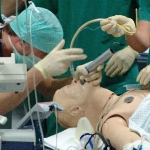
Surgical simulations can save lives, Anja Behringer reports Medical errors occur more frequently than traffic accidents and clearly better systems are needed to improve patient safety. Thus the importance of medical training using human simulation models is increasingly emphasised in Germany.
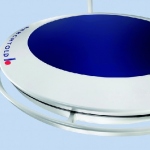
Berchtold has been among the world’s leading manufacturers of quality surgical equipment for almost 90 years, today offering operating theatre lights, tables, ceiling supply units, video and camera systems, information and communications systems and customised surgical solutions. Recently the firm launched a radically new surgical lighting system. We sked Jochen Weisser, the firm’s technical…