
Trends in stents and balloon angioplasty
Stent fever, first diagnosed in 1997, has been spreading throughout the medical world – fuelled by new technologies, says Holger Zorn



Stent fever, first diagnosed in 1997, has been spreading throughout the medical world – fuelled by new technologies, says Holger Zorn
A drop of blood can unlock secrets of the heart. By analysing the biological elements present in a blood, a physician can better understand the extent of damage or disease for patients with heart failure and more confidently prescribe a course of treatment.
A hefty debate on controversial issues in cardiology is the definite intent of Congress President Professor Michel Komajda and the ESC 2011 congress organisers. To that end, he plans to open the event with a focus on disagreements among cardiologists over treatment methods. This is not the only promise of a lively meeting for congress participants, as Prof Komajda explained in conversation with…
Studies show that when a nurse follows patients after a cardiovascular crisis those patients stay healthier, live longer and reduce the risk of returning to hospital. Now the challenge is how to convince insurers to pay for this care, reports John Brosky.
This two-day international scientific symposium follows two previously successful conferences held by the New York Academy of Sciences (NYAS), ‘la Caixa’ Welfare Projects, and the International Centre for Scientific Debate (ICSD) for researchers, physicians, scientists and representatives of the related industries, working in cardiology, vascular disease, inflammation, regenerative medicine,…
A modern-day childhood totally differs from what was common just a few decades ago. It is mostly spent sitting -- at school desks, in front of TV screens or before computer monitors – all combined with the sweet temptations of the kid’s food industry. According to a WHO worldwide estimate, an estimated 10% of school-age children between five and 17 years old are overweight or obese. The…
France – Re-opening clogged arteries with metal stents has proved a life-saver for a majority of patients with coronary disease. Yet the high rates of complications and mortality for patients with diabetes following a percutaneous coronary intervention (PCI) continue to baffle cardiologists. Report: John Brosky
Research introduced at SNM’s 58th Annual Meeting may lead to much-needed cardiovascular disease screening for diabetic patients at risk of ischemic heart disease, a disorder marked by significantly reduced blood flow in the heart. Ischemia of the myocardium, or cardiac muscle, can signal diminished oxygenation of the heart tissue and trigger a heart attack if left untreated.
One year ago interventional cardiologists raised champagne glasses to celebrate the first publication of clinical evidence showing that transcatheter valve implants (TAVI) is safe and effective. In May at EuroPCR 2011, cardiologists raised magnifying glasses to look closer at further clinical results. John Brosky reports from Paris
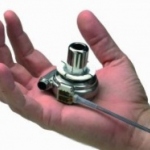
Initially meant to bridge the gap before a heart transplant is performed, today ventricular assist devices (VADs) are increasingly considered ‘a lasting therapy option’, according to Professor Heinrich Schima, Head of the Centre for Medical Physics and Biomedical Technology at the Medical University of Vienna.
Bypass surgery figures declined again in 2010. Reason: Most coronary heart disease (CHD) patients are being treated by removal of the obstruction followed by stent implantation -- a situation criticised by Professor Jochen Cremer, first Vice President of the DGTHG (German Society for Thoracic and Cardiovascular Surgery).
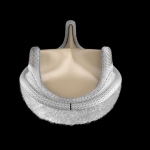
Edwards Lifesciences Corporation, a global leader in the science of heart valves and hemodynamic monitoring, announced that interim data from a multi-center European prospective study of the investigational EDWARDS INTUITY Valve System showed promising results for patients undergoing surgical aortic valve replacement (AVR).
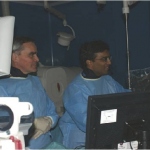
CardioFocus, Inc., developer of the Endoscopic Ablation System for the transcatheter treatment of Atrial Fibrillation (AF), convened international leaders in electrophysiology to discuss the advantages of direct optical visualization to guide catheter ablation for the treatment of paroxysmal AF.
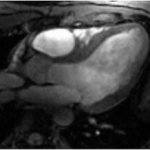
Scientists of the Charité – Universitätsmedizin Berlin and the Max-Delbrück-Center for Molecular Medicine (MDC) Berlin-Buch have developed a highly efficient approach for imaging the beating human heart. The images produced in one of the world's most powerful MRI systems whose power is equivalent to 150.000 times the earth’s magnetic field are of a much higher detail than cardiac images…
Neurocardiology – especially atrial fibrillation (AF) – was the key topic during a press conference held during the 55th Annual Congress of the Germany Society for Clinical Neurophysiology and Functional Imaging (DGKN) this March. For good reason: Worldwide, there are around six million AF sufferers -- and it is one of the most common causes of stroke because this cardiac irregularity can…
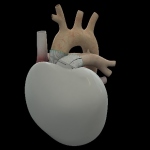
A little over three decades after the world's first human heart transplant (HT), Carmat’s life-size artificial heart, a mix of animal tissue, titanium and missile technology that perfectly replicate a human heart, might save the lives of thousands.
This April the 77th Annual Meeting of the German Cardiac Society (DGK) presented over 300 events with 1,800 speakers, covering the entire spectrum of cardiovascular diseases, from fundamental research to clinical routine. Professor Gerd Hasenfuss, Director of the Department of Cardiology and Pulmonology and Chair of the Heart Research Centre in Gottingen, particularly requested a focus on …
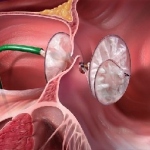
Adults with congenital heart failure (CHD) are a growing special subset of patients with specific needs; most need lifelong care, but in adulthood many fail to receive it. By Holger Zorn
A specially customised pulse oximeter attached to the finger can be used to detect changes in heart and vessel function while you sleep, and this simple technique can even identify patients at increased risk of cardiovascular disease, reveals research from the University of Gothenburg, Sweden.
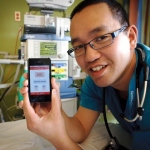
Doctors who used a free iPhone application provided by the UK Resuscitation Council performed significantly better in a simulated medical emergency than those who did not, according to a study in the April issue of Anaesthesia.
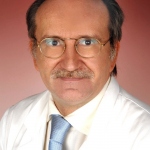
Metabolic syndrome, diabetes and vascular disease: What do we need to know? During ECR session this important question is addressed by vascular specialist Professor Erich Minar, Assistant Head of the Department of Angiology at the Vienna General Hospital (AKH), President of the Austrian Society of Angiology, and scientific researcher working closely with research centres in the USA.

With its spotlight theme of ‘Controversial Issues in Cardiology’, the 2011 edition of the European Society of Cardiology (ESC) Congress promises lively discussions and ground-breaking debate. The ESC Congress is well established as the world’s premier cardiovascular conference and regularly attracts around 30,000 international cardiologists and members of related professions through its…
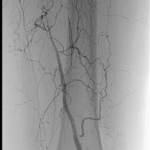
Around 18,472 angioplasty procedures and 4,752 stent procedures were completed in Germany in 2008. By comparison, only 7,710 angioplasty procedures and 438 stent procedures were completed in the same year in the UK.
Every year thousands of patients with less than one year to live are denied a heart valve replacement because they are too frail to undergo surgery. These patients tend to be over 75 years of age and suffering from multiple health problems, such as respiratory conditions that preclude general anaesthesia, end-stage failure of liver or kidneys, or a history of coronary surgery. Two years ago they…
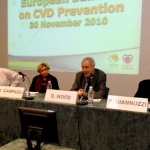
"Some progress, but the big challenges remain". This was the verdict after the European Society of Cardiology (ESC) hosted the 2010 European Summit on CVD Prevention on 30 November. The summit was attended by a broad cross-section of medical experts, healthcare organisations, national societies, regulators and representatives from the European Union (EU). The aim of this bi-annual event is to…